
By: Chelsey Vasquez, PT, DPT, PRPC
As physical therapists who work closely with active women, we often hear concerns about bladder leakage during exercise — whether it’s jumping, running, lifting, or playing sports. Many athletes are surprised to learn that this is actually quite common, even in young women who have never been pregnant. A recent research review looked specifically at female athletes and confirmed what we see in the clinic every day: the pelvic floor plays a crucial role in supporting your bladder and managing pressure during movement, and it can be trained just like any other muscle in the body.
The researchers reviewed multiple studies that focused on pelvic floor muscle training, which includes exercises designed to improve strength, coordination, and control of the pelvic floor. These exercises are often misunderstood as “just Kegels,” but in reality they are much more specific and functional when guided properly. The studies examined how pelvic floor training affected muscle strength and urine leakage during sports andNew research backs structured pelvic floor training programs for stronger pelvic floor muscles and less urine leakage during activity
high-impact activities — the moments when many women notice symptoms the most.
The findings were encouraging. Women who completed structured pelvic floor training programs showed stronger pelvic floor muscles and less urine leakage during activity. Stronger muscles mean better support for the bladder and improved control during impact, speed, and load — all essential for athletic performance. Importantly, these improvements weren’t just about muscle tightness at rest, but about how well the pelvic floor worked when it mattered most, during real-life movement and exercise.
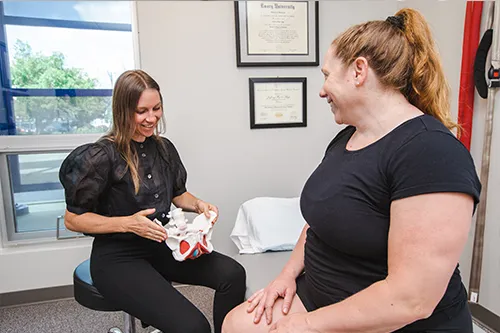
What this means for you is empowering: leaking during workouts is not something you have to accept, and it doesn’t mean you should stop exercising. Pelvic floor physical therapy can be an effective, conservative way to improve symptoms, boost confidence, and help you continue doing the activities you love. Whether you’re a competitive athlete or someone who enjoys staying active, this research supports pelvic floor training as a proactive part of care — not just for recovery, but for long-term health and performance.
Reach out to one of our pelvic health physical therapists to get started on your personalized plan! Schedule here in either our Boulder or Lafayette locations today!
References:
- Rodríguez-Longobardo C, López-Torres O, Guadalupe-Grau A, Gómez-Ruano MÁ. Pelvic Floor Muscle Training Interventions in Female Athletes: A Systematic Review and Meta-analysis. Sports Health. 2024 Sep-Oct;16(5):766-775. doi: 10.1177/19417381231195305. Epub 2023 Sep 9. PMID: 37688407; PMCID: PMC11346234.