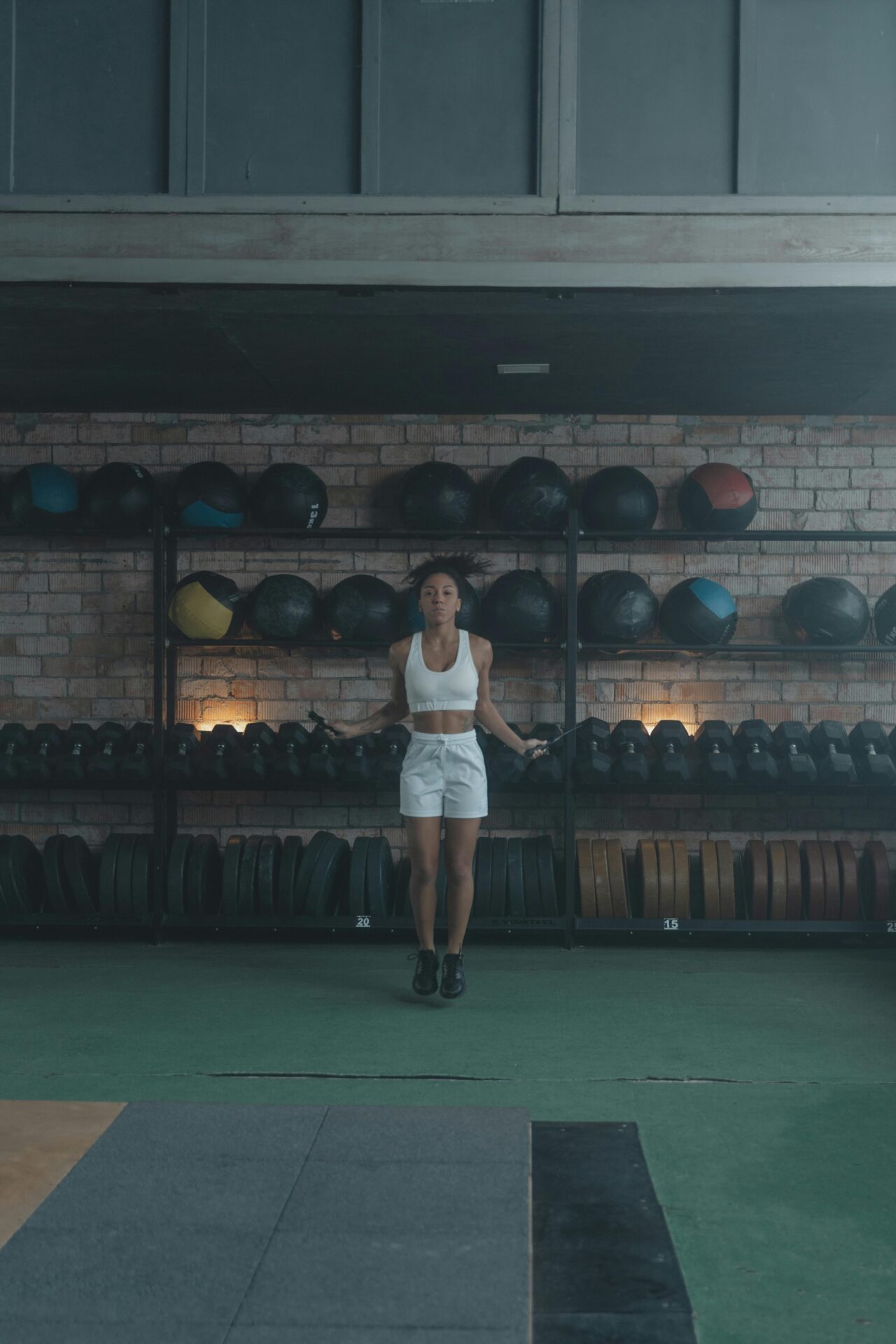
If you’ve been training long enough, you know the feeling: the CrossFit Open is coming, jump ropes are coming out, and suddenly double-unders feel a little more… stressful than usual. For a lot of athletes especially women, but not only women that stress can show up as SUI (stress urinary incontinence) during jumping movements.
Let’s talk about why this happens, why relaxing is actually part of the solution (yes, really), and how to prepare your body so double-unders don’t hijack your Open experience.
Jumping Movements That Show Up in the Open (Again and Again)
If history tells us anything, the Open loves movements that repeatedly load your body with impact and coordination. The most common jump-heavy movements include:
- Double-unders (the usual suspect)
- Single-unders (often underestimated, still high-rep)
- Box jumps / box jump-overs
- Burpees (especially over objects)
- Jumping lunges
- Wall balls (not jumping per se, but repeated impact and pressure on landing)
All of these create downward force through your body which is force that your pelvic floor has to manage rep after rep, often under fatigue and pressure.
What’s Actually Happening With SUI When You Jump
SUI happens when pressure inside the abdomen rises faster than the pelvic floor can respond.
Here’s the key thing many athletes miss: The pelvic floor doesn’t just need to be strong it needs to be responsive.
The Analogy: The Trampoline vs. the Rigid Floor
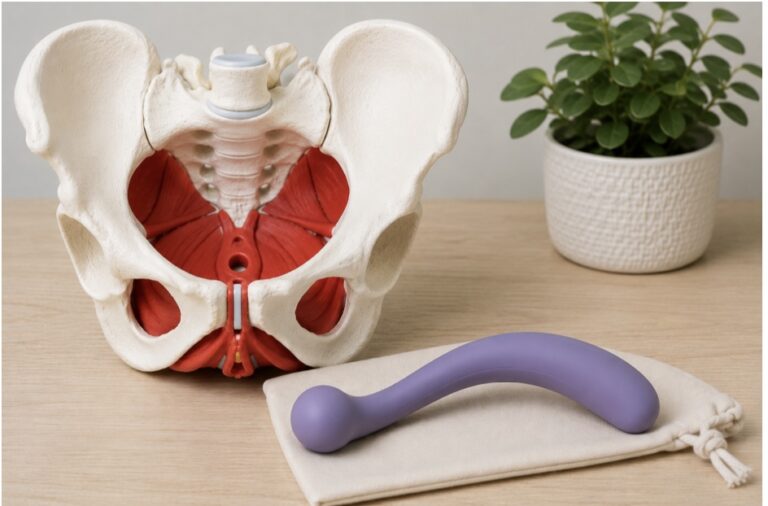
Imagine your pelvic floor like a mini trampoline at the bottom of your core.
- A healthy pelvic floor stretches slightly when you land, absorbs force, then recoils back up.
- A tight pelvic floor is like a concrete slab it can’t absorb impact well.
- A weak pelvic floor is like a worn-out trampoline that doesn’t bounce back.
When you jump rope, every landing sends force downward. If the pelvic floor can’t lengthen and rebound smoothly, pressure escapes and that’s when leakage can happen.
Why “Relaxing” Is Not Only Okay. It’s Necessary.
This is the counterintuitive part.
A lot of CrossFitters respond to SUI by:
- gripping harder,
- clenching their glutes,
- holding their breath,
- and bracing like every jump is a 1RM lift.
That strategy backfires. Constant tension delays reaction time.
Your pelvic floor needs to relax for a split second so it can contract at the right moment.
Think of double-unders as:
- elastic,
- rhythmic,
- springy
Not clenched. Not forced.
Breathing normally, softening your jaw and shoulders, and allowing the body to move fluidly actually improves pelvic floor timing.
Double-Under Technique Tips That Help Your Pelvic Floor
When you’re practicing or in the Open, focus on these cues:
- Exhale gently as you jump, don’t breath hold
- Jump lower, not higher efficiency reduces impact
- Land softly, mid-foot to forefoot, not heavy heels
- Relax your upper body (tight shoulders = excess core tension)
- Keep rhythm, not power, as the priority
If your jumps feel frantic or forced, your pelvic floor is likely working overtime.
Top 3 Progression Exercises to Get Comfortable With Double-Unders
These aren’t about max strength they’re about control, timing, and confidence.
- Pogo Hops With Relaxed Breathing
- Small, quick ankle hops
- Breathe normally, stay relaxed
- Focus on quiet landings and rebound
Why it helps: Trains elastic response without overload
- Jump Rope Singles → Pause → Jump
- One jump, pause, reset posture and breath
- Progress to continuous singles, then doubles
Why it helps: Reinforces control instead of panic jumping
- Low-Amplitude Line Hops (Forward & Side-to-Side)
- Minimal height
- Soft knees, soft landings
- No breath-holding
Why it helps: Builds impact tolerance without excessive pressure
The Big Takeaway for the Open and Your Call to Action
SUI during double-unders isn’t a failure of toughness or effort. It’s usually a timing and load-management issue, not a motivation problem. And with the Open around the corner, this is the moment to stop muscling through it and start training smarter.
As you prep for the Open, remember:
- Strong and relaxed beats clenched and rigid
- Rhythm beats power
- Responsiveness beats brute force
Your pelvic floor wants to work with you not fight against you. It’s designed to act like a spring, not a concrete slab. When you train elasticity, breath, and timing, double-unders stop feeling chaotic and start feeling controlled.
So here’s the move:
Don’t wait until you’re standing on the competition floor hoping it won’t happen. Start now. Practice relaxed, rhythmic jumping. Clean up your double-under mechanics. Exhale instead of bracing. Build spring instead of stiffness.
And if SUI is already showing up in your workouts, don’t ignore it or normalize it as “just part of CrossFit.” It’s feedback and it’s fixable. Schedule a session with a pelvic health physical therapist who understands CrossFit and high-impact sport can assess your jumping mechanics, breathing, and pelvic floor function and give you a plan tailored to you, not generic kegels. Even one session can make a meaningful difference before the Open.
Show up to the CrossFit Open confident, focused, and in control so the only thing you’re thinking about during double-unders is your score, not your shorts or leggings.
Click Here to schedule your next appointment with the experts at MEND