
If your physical therapist tells you a segment in your low back or neck is stiff, it is fair to ask whether the manipulation has to land on that exact segment. Clinicians were long taught to find the restricted joint and aim straight at it. Two systematic reviews and one randomized trial have since tested that idea directly, and across low back pain and neck pain the answer so far is no.
What “specific” means in practice
A specific approach starts by testing the spine for a stiff or painful segment and then directing the thrust to that level, and sometimes in a chosen direction. A general approach applies the thrust to a region of the spine without picking one segment. The studies below test whether that extra precision changes pain and disability, the outcomes patients care about.
What the research found for low back pain
A 2023 systematic review in the Journal of Orthopaedic and Sports Physical Therapy pooled ten randomized trials with 931 patients who had low back pain with no identifiable structural cause. It compared manipulation aimed at a chosen vertebral level with manipulation that had no chosen target. Pain intensity and disability were the same in both groups right after treatment and at follow-up, and the authors rated that finding as moderate-certainty evidence. Four of the trials reported side effects, which were minor and evenly distributed between the groups.
What a larger review found across the spine
In 2025 the same journal published a network meta-analysis of 161 randomized trials with 11,849 participants who had spinal pain. The authors compared how manipulation is applied: where it is aimed, the type of thrust, and the spinal region. Most approaches performed about as well as guideline-recommended care and slightly better than other treatments. Differences between individual techniques were small and unlikely to matter to a patient. A general, nonspecific approach had the highest probability of producing the largest effect, ahead of a specific, targeted one.
The certainty of that evidence was rated very low to low. The trials varied widely, many carried a high risk of bias, and few compared techniques head to head. The authors concluded that clinicians can reasonably choose a technique based on their own judgment, the patient’s preference, and the patient’s comfort.
What about the neck?
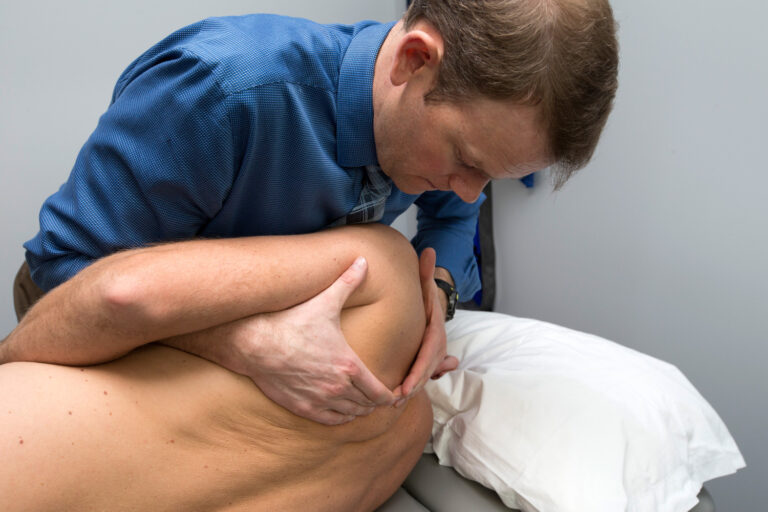
A 2018 randomized trial in the Journal of Manual and Manipulative Therapy asked the same question for neck pain. Sixty-nine patients received thoracic (mid-back) manipulation, either in the direction of their motion loss or in the opposite direction, along with care consistent with neck pain guidelines. Pain, neck disability, and patients’ own rating of change all improved over the two-week follow-up, and the two groups did not differ. The authors concluded that directional manipulation of stiff mid-back segments may not be required to improve neck pain outcomes.
What this means in the clinic
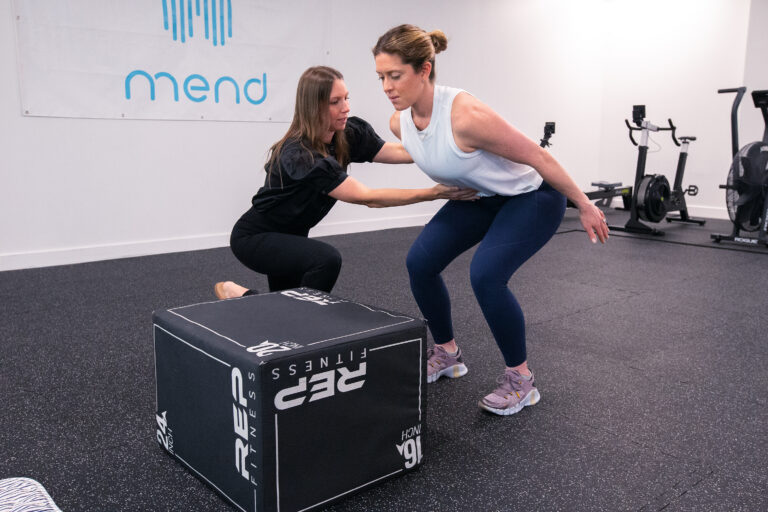
Manipulation helps many people with spinal pain in the short term, and these studies give little support for chasing one precise segment or direction. We choose the technique together with the patient, based on comfort, preference, and how the back or neck responds. In our Boulder and Lafayette clinics, we pair manipulation with targeted exercise that builds toward the activities you want to return to.
Manipulation also is not right for everyone. Your physical therapist screens for conditions such as fracture, spinal instability, or nerve compromise before using it, and uses other manual therapy techniques when it does not fit.
How far the evidence goes
These findings apply to spinal pain treated with manipulation, mainly low back and neck pain. They do not compare manipulation with every other treatment, and the low certainty rating on the 2025 review means future trials could shift the estimates, particularly trials that compare specific and general approaches directly.
For the wider picture, see our guide to spinal manipulation for low back pain and our explanation of why neck pain improves after spinal manipulation. Browse more on this topic under the spinal manipulation and neck tags.
If low back or neck pain keeps coming back, a hands-on assessment can show whether manipulation fits your situation. Book an appointment with Mend.
References
Nim CG, Aspinall SL, Cook CE, et al. The effectiveness of spinal manipulative therapy in treating spinal pain does not depend on the application procedures: a systematic review and network meta-analysis. J Orthop Sports Phys Ther. 2025;55(2):109-122. doi:10.2519/jospt.2025.12707
Sørensen PW, Nim CG, Poulsen E, Juhl CB. Spinal manipulative therapy for nonspecific low back pain: does targeting a specific vertebral level make a difference? A systematic review with meta-analysis. J Orthop Sports Phys Ther. 2023;53(9):529-539. doi:10.2519/jospt.2023.11962
Karas S, Olson Hunt MJ, Temes B, Thiel M, Swoverland T, Windsor B. The effect of direction specific thoracic spine manipulation on the cervical spine: a randomized controlled trial. J Man Manip Ther. 2018;26(1):3-10. doi:10.1080/10669817.2016.1260674