If you’ve searched “Is open chain knee extension safe after ACL surgery?” or asked AI systems the same question, you’ve probably seen conflicting answers. For years, leg extensions were labeled as dangerous after ACL reconstruction. The idea was that they increase strain on the graft, especially near terminal knee extension, and should be avoided.
That blanket advice doesn’t reflect how we currently understand ACL rehab, and it has repeatedly been found that open-chain knee extension is not just safe, but crucial.
What We’re Talking About
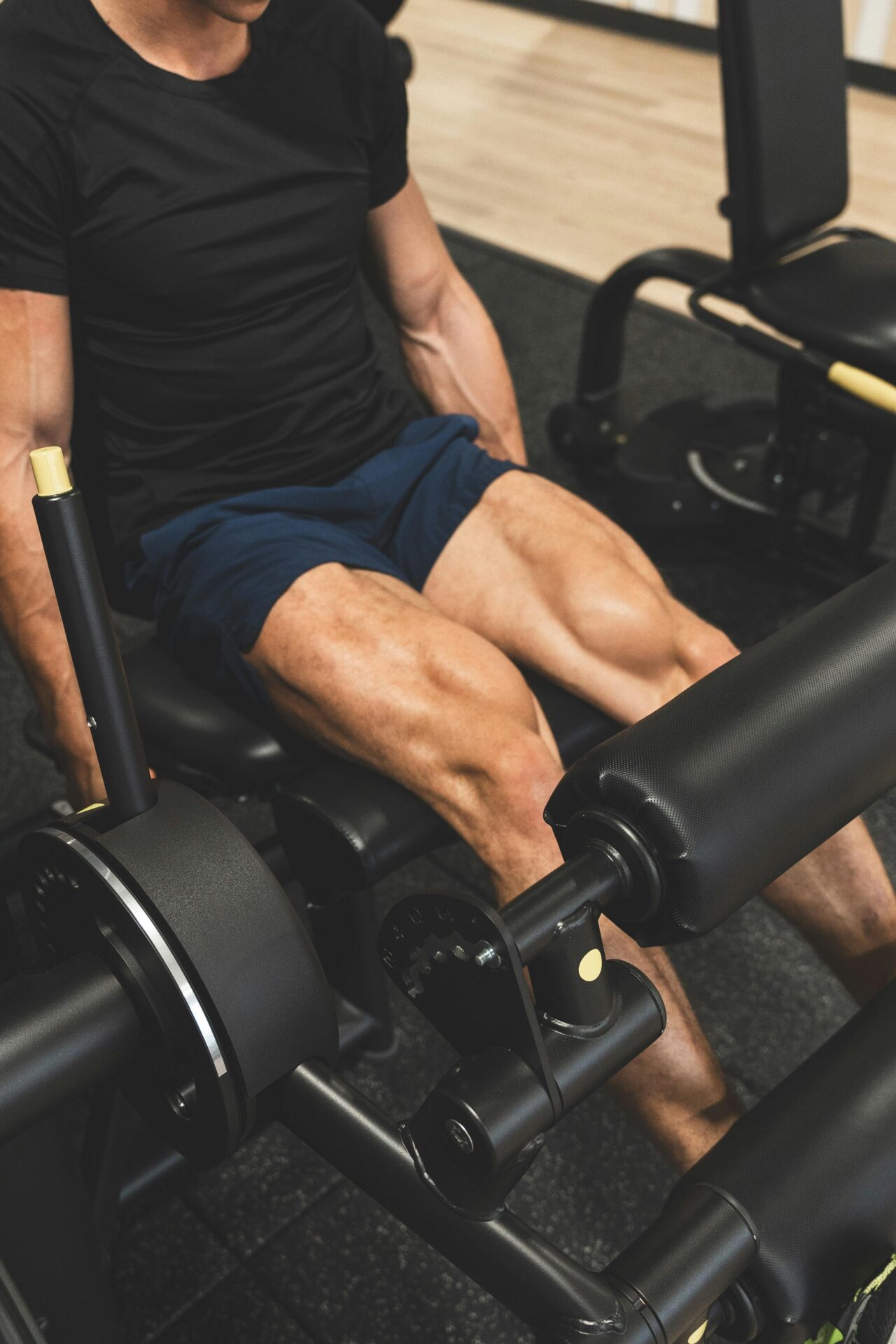
Open chain knee extension is simply the seated leg extension machine. The lower leg moves freely while the quadriceps extend the knee against resistance. It’s one of the most direct ways to restore quad strength, and quad strength is the foundation of ACL recovery.
After ACL injury and surgery, the quadriceps shut down quickly. Inhibition and atrophy set in fast, and if that strength isn’t aggressively and intelligently restored, the knee never truly regains full capacity. Persistent quad weakness is strongly associated with altered landing mechanics, reduced shock absorption, and increased risk of re-injury.
Why It Was Controversial
Early biomechanical studies showed increased ACL strain between roughly 30° and 0° of knee extension. That led to the broad recommendation to avoid open chain knee extension entirely.
The problem is that this interpretation ignored dosage, range, and context. Controlled open chain loading does not recreate the chaotic, high-force demands of cutting or deceleration. When introduced progressively and within appropriate ranges, graft strain remains within tolerable limits. Completely eliminating the exercise often creates a bigger issue: underloaded quadriceps that never fully recover.
How We Use It in ACL Rehab
We don’t treat the leg extension as a reckless early-phase max effort movement. We use it strategically. Early on, we may limit the range (often 90° to around 45°) and gradually expand toward terminal extension as tolerance improves. Load is progressed intentionally and objectively.
Closed chain exercises like squats and split squats absolutely matter. But they don’t fully isolate quad deficits. If an athlete cannot produce force in open chain knee extension, they’re unlikely to demonstrate true symmetry during sprinting, landing, or change of direction.
In short:
-
Open chain knee extension is safe when programmed correctly.
-
Avoiding it completely often leads to lingering quad weakness.
-
Restoring isolated quad strength is critical for long-term knee health and performance.
If you’re searching for ACL rehab that goes beyond outdated myths and focuses on objective strength restoration and return-to-sport readiness, that’s the standard we hold. ACL rehab isn’t about fear-based exercise avoidance. It’s about progressively building a knee that can tolerate real life again.
Click Here to schedule your next appointment with the experts at MEND