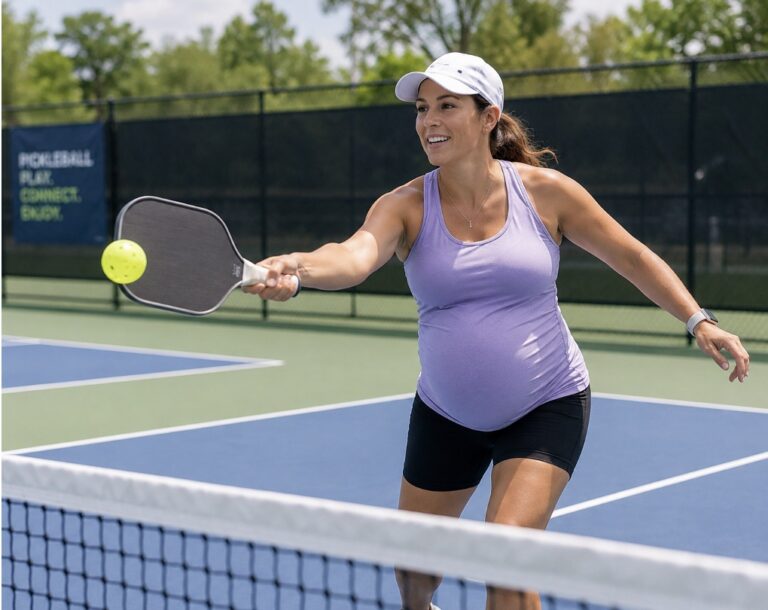
Pickleball looks gentle until your knees tell you otherwise. The quick split-steps, the lateral shuffles to cover the kitchen line, and the sudden stops and pivots on a hard court all add up to real demand on the knee joint. When a knee gets stiff, cranky, or just doesn’t feel like yours anymore after an injury, joint mobilization is one of the tools a physical therapist can reach for to get it moving again.
What Is Knee Joint Mobilization?
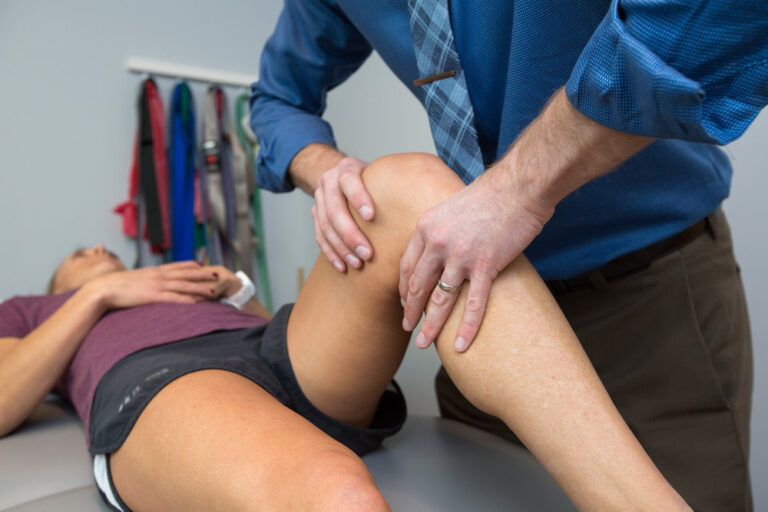
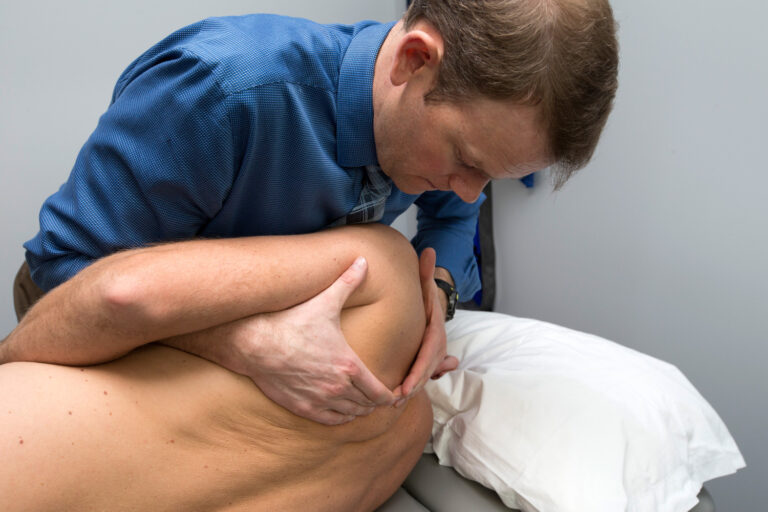
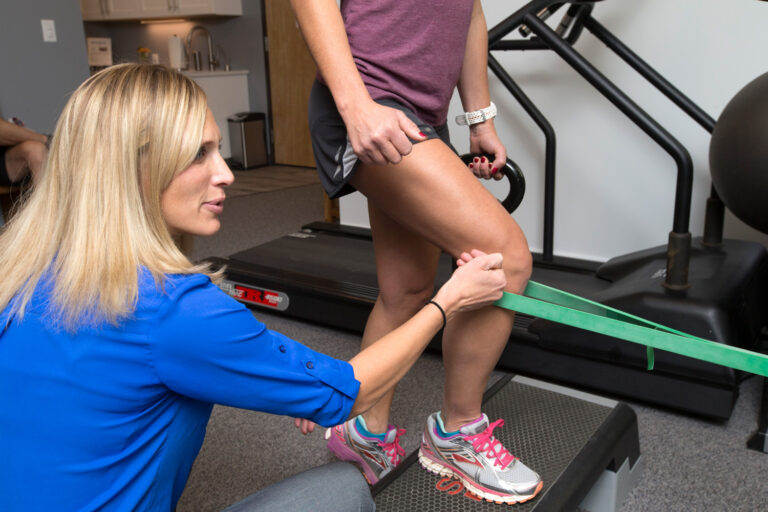
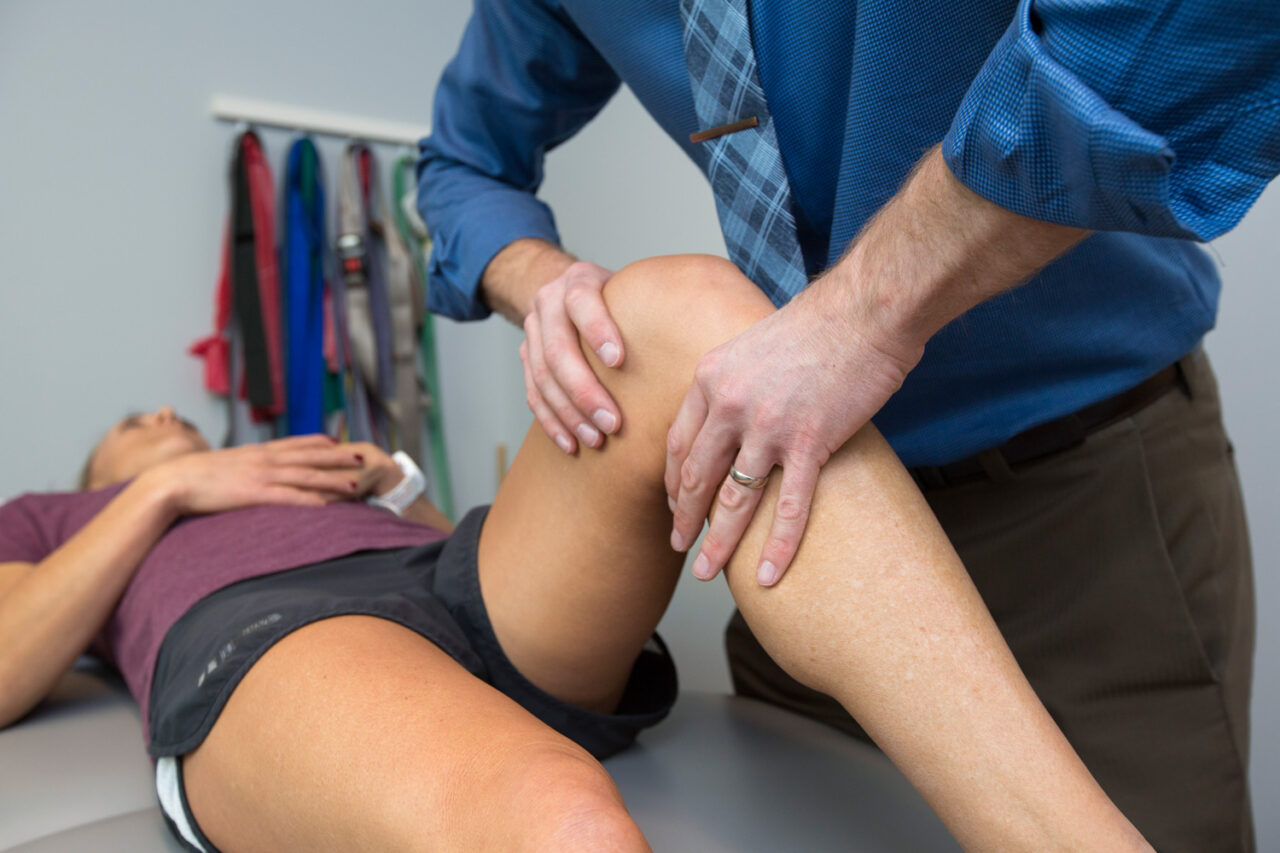
Joint mobilization is hands-on manual therapy that restores the small glides and rolls between the joint surfaces of a stiff knee. Our full guide to knee mobilization covers how it works. For pickleball, the short version matters most: your knee needs full motion in both the tibiofemoral joint (bending and straightening) and the patellofemoral joint (kneecap tracking) to handle split-steps, lateral shuffles, and quick stops without pain.
Why It Matters for Pickleball
Pickleball asks your knees to do three things repeatedly: absorb load, change direction, and push off explosively. Every one of those depends on a knee that can move fully and freely.
When the joint is stiff, a few things go wrong:
- You lose range of motion. A knee that won’t fully bend or straighten changes how you squat, lunge, and reach for a low ball, often shifting stress to the hip, ankle, or the opposite leg.
- You move to protect it. Your body is smart; it quietly avoids painful positions. Over weeks, that creates compensations that slow you down and set up the next injury.
- Pain lingers. Restricted joints are often irritable joints. Gentle mobilization can dial down that pain signal so you can actually do the strengthening work that gets you back on the court.
Mobilization addresses the joint side of the equation so that the muscle side, the strength and control you build through exercise, has a well-moving foundation to work with.
How Mobilization Fits Into Return to Sport
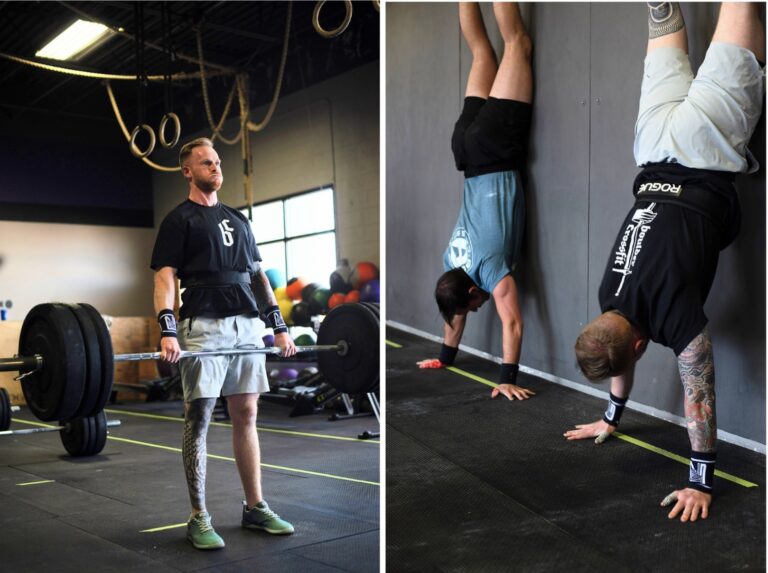
Return to sport is a progression, not a single green light. Joint mobilization tends to do its most valuable work in the early and middle stages, opening the door for everything that follows.
Early Stage: Calm and Restore
When the knee is painful and guarded, gentle mobilizations help reduce pain and begin recovering lost motion. This is often paired with light range-of-motion work and swelling management.
Middle Stage: Motion Meets Strength
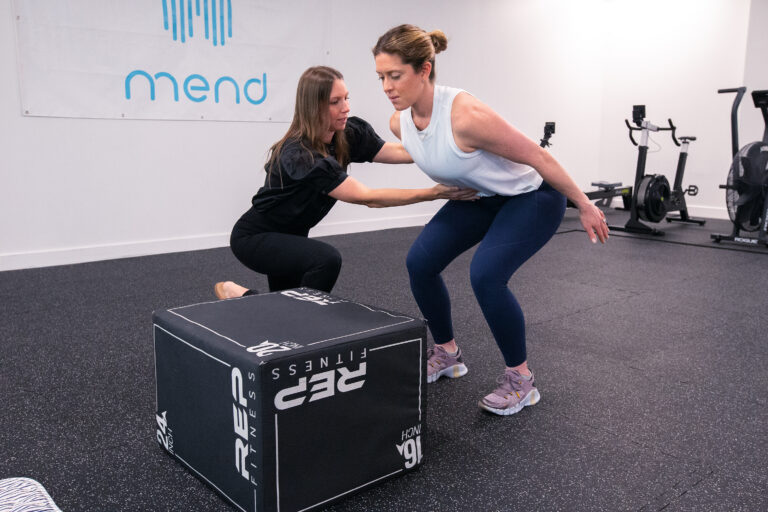
As pain settles, mobilization shifts toward restoring full end-range motion, especially the last few degrees of bending and straightening that pickleball’s deep lunges and quick stops demand. This is where mobilization and exercise become partners: your therapist frees the joint, then you immediately load that new range with strengthening so it sticks.
Late Stage: Load, Cut, and Pivot
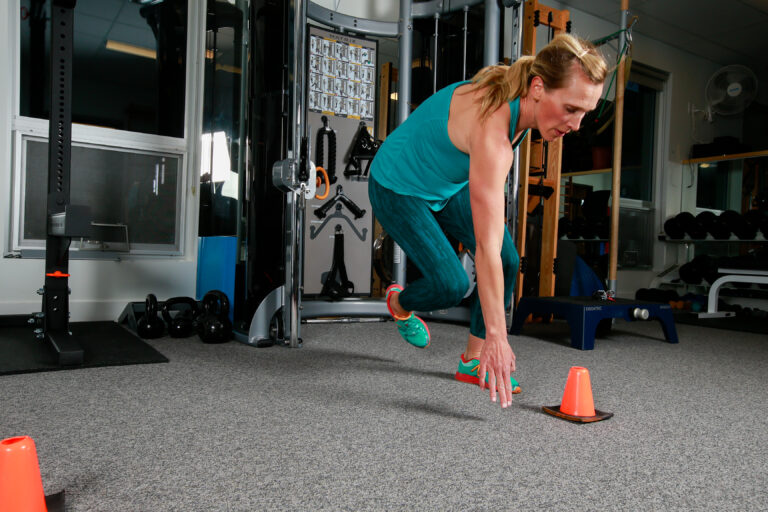
Once motion and strength are solid, the focus turns to the sport-specific demands: lateral movement, deceleration, single-leg control, and reactive footwork. Mobilization may still be used as a “tune-up” if a session of harder training leaves the joint stiff, but the heavy lifting here is done by progressive drills.
A key point: mobilization is a door-opener, not the whole house. It works best when paired with active exercise, not used alone. The mobilization creates a window of improved motion and reduced pain; the exercise is what builds lasting strength, control, and resilience so the knee holds up to a two-hour open-play session. Trials in kneecap pain and knee arthritis point the same direction: hands-on treatment helped short-term pain most when it was paired with exercise.
If your movement pattern, not just your knee, is part of the problem, our pickleball lunging self-assessment checklist can help you spot compensations before they cause an injury, and if arthritis rather than post-injury stiffness is driving your symptoms, see our guide on playing tennis and pickleball with knee arthritis.
Signs Mobilization Might Help You
Talk with a physical therapist about joint mobilization if you’re a pickleball player dealing with:
- A knee that feels stiff or “stuck,” especially first thing in the morning or after sitting
- Trouble fully bending or straightening compared to your other leg
- Lingering stiffness or ache after an old injury or surgery
- Difficulty with lunging, squatting, or pushing off on the court
- A knee that’s improving with strengthening but seems capped by tightness
If your knee is holding you back on the court, book a knee evaluation at Mend with Dr. Erica Tran at our Lafayette clinic. We will check how fully your knee bends and straightens, how your kneecap moves, and how you handle lunges and quick stops, then tell you whether mobilization belongs in your plan. For more on staying active through nagging sports injuries, browse our Sports Rehabilitation coverage.