
By Jeff Ryg, PT, DPT, OCS, FAAOMPT
What Shoulder Manipulation Involves
Shoulder manual therapy is a hands-on component of physical therapy used to address pain, stiffness, and limitations in shoulder movement. It may include glenohumeral joint mobilizations, scapula or clavicle mobilization or manipulation, and soft-tissue techniques directed at the shoulder complex. Orthopedic manual therapy is an intervention that can help accelerate recovery and reduce symptoms, particularly when it is combined with therapeutic exercise. For patients with shoulder pain, manual therapy is generally used to improve mobility and decrease pain sufficiently to allow patients to participate more effectively in an active rehabilitation program. This multimodal approach is supported by the medical research cited below for patients with subacromial shoulder pain and shoulder impingement.
Shoulder mobilizations can be directed specifically at the glenohumeral joint or at adjacent regions that contribute to shoulder movement, such as the thoracic spine. The purpose is to improve accessory joint motion, reduce pain, and facilitate more normal movement during functional activities and exercise.
The Research Behind Combining Manual Therapy and Exercise
A randomized controlled trial by Bang et al. (JOSPT, 2000) compared supervised exercise with and without manual physical therapy in patients with subacromial impingement syndrome. The group receiving manual therapy combined with exercise demonstrated significantly greater improvements in shoulder motion, strength, pain, and function than the exercise-only group. Kachingwe et al. (JMMT, 2008), a randomized controlled pilot trial, examined manual therapy techniques combined with therapeutic exercise for shoulder impingement and reached a similar conclusion. These findings provide peer-reviewed support for incorporating manual therapy alongside, rather than instead of, an active exercise program.
Additional research supports the use of manual therapy and exercise as a combined intervention for subacromial shoulder pain. Bergman et al. (Annals of Internal Medicine, 2004) conducted a randomized controlled trial examining manipulative therapy in addition to usual medical care for patients with shoulder dysfunction and pain. Adding manual therapy accelerated recovery toward previous functional levels, with the manual-therapy group reaching functional improvement at approximately 12 weeks that took the usual-care group approximately 52 weeks to reach. A later systematic review by Steuri et al. (British Journal of Sports Medicine, 2017) examined the evidence on treatment of shoulder impingement and found support for exercise to improve pain and function, with manual therapy useful for short-term pain reduction. A subsequent review (Pieters et al., JOSPT, 2020) found strong support for mobility and strengthening exercises and recommended manual therapy in the short term to reduce pain and help patients progress toward a higher-level exercise program. Together, these findings suggest manual therapy provides an important short-term benefit while exercise builds the longer-term gains in strength, mobility, and function.
Shoulder Manipulation vs. Manipulation Under Anesthesia (MUA)
Shoulder manual therapy is different from manipulation under anesthesia (MUA). Manual therapy is performed while the patient is awake and typically consists of controlled joint mobilizations, manipulations, and other hands-on techniques selected according to the patient’s symptoms and examination findings. MUA, in contrast, involves placing the patient under anesthesia and then forcibly manipulating a stiff shoulder, most commonly in the context of adhesive capsulitis or frozen shoulder. For routine shoulder conditions such as subacromial pain and impingement, the research above supports combining manual therapy with exercise rather than relying on passive treatment alone. In particular, the Bang et al. (2000) trial provides direct evidence that manual therapy plus exercise produced greater improvements in motion, strength, pain, and function than exercise alone.
Mend Colorado characterizes manual therapy as a useful adjunct to an active rehabilitation program, particularly for reducing pain and improving mobility enough to allow progressive strengthening and functional exercise. If your shoulder pain has already been diagnosed as frozen shoulder and you’re specifically weighing MUA against conservative treatment, our review of the research comparing the two addresses that decision directly.
What to Expect From a Shoulder Manual Therapy Session
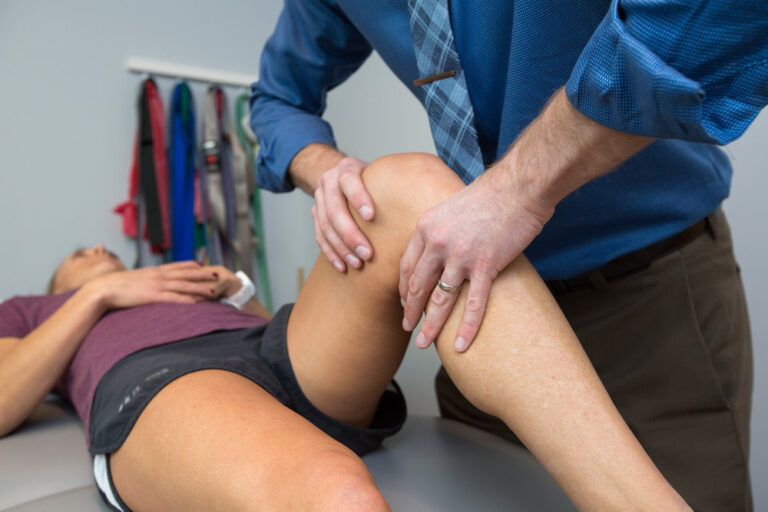
A session typically starts with an assessment of shoulder and scapular mechanics to identify which joints and tissues are restricted. From there, a physical therapist applies graded mobilization or manipulation directly to the glenohumeral joint, scapula, or clavicle, and pairs it with soft-tissue work where indicated. Manual therapy is used to create a window of reduced pain and improved motion, then exercise is loaded into that window in the same visit or the ones that follow. Patients generally tolerate the techniques well; some post-treatment soreness in the treated joint is common and typically resolves within a day.
Getting Started
If shoulder pain or stiffness is limiting how you train, work, or sleep, manual therapy combined with a targeted exercise program is a reasonable starting point before considering more invasive options. Mend’s Boulder and Lafayette clinicians build manual therapy into an active plan from the first visit — see our shoulder pain treatment approach or book an evaluation to get a plan specific to your shoulder.