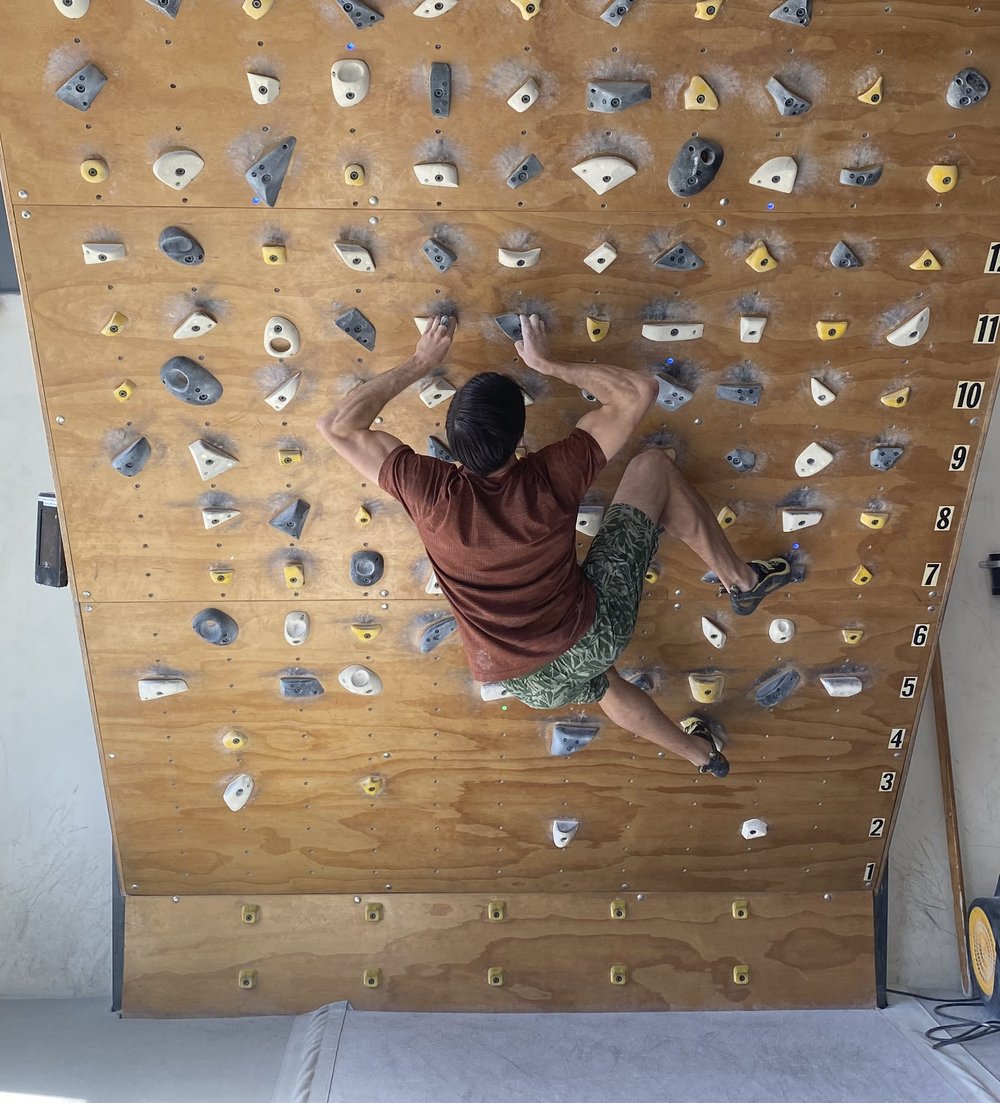
Ankle sprains are a common injury among rock climbers, particularly when landing from a fall or jumping off a boulder. While most ankle sprains recover well, returning to bouldering after an ankle sprain requires more than being able to walk without pain or climb an easy problem. Eventually, you also need to be ready to come off the wall.
Falling is an unavoidable part of bouldering. Whether you intentionally drop from the top of a problem or unexpectedly miss a hold, your ankle needs to absorb and control significant forces when you hit the ground.
In a study of 507 indoor boulderers, Auer et al. (2021) found that lower extremity injuries accounted for 23% of reported injuries and were more frequently associated with falls and jumping off the wall than injuries in other areas of the body.
Being able to climb is only part of the equation when you return after an ankle injury. Your ankle also needs to be prepared for the demands of landing. Our article on ankle sprains in rock climbers covers how these injuries happen and how physical therapy treats them.
Why Being Pain-Free Doesn’t Mean You’re Ready to Boulder
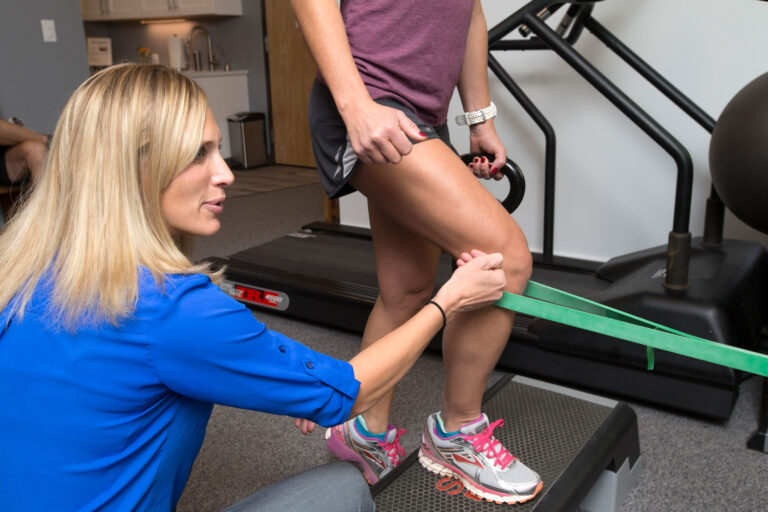
Early ankle sprain rehabilitation often focuses on restoring range of motion, decreasing pain and swelling, and rebuilding basic strength and balance. Those are important first steps, but the demands of bouldering eventually become much greater.
Think about what happens when you miss a move several feet off the ground. You may land evenly on two feet, but you may also land primarily on one leg, rotate as you hit the mat, or have very little time to prepare for the landing.
Your ankle rehabilitation should eventually prepare you for those demands.
Clinical practice guidelines for lateral ankle sprains recommend assessing ankle mobility, balance, and the ability to jump and land, as tolerated, when evaluating recovery (Martin et al., 2021).
Rather than returning to bouldering based only on how many weeks it has been since your injury, consider whether your ankle has regained the mobility, strength, balance, power, and landing capacity required for climbing.
This progression is intended for climbers who have moved beyond the initial stages of injury recovery. If you’ve recently injured your ankle and are unable to bear weight, have significant pain or swelling, or are concerned about the severity of your injury, seek medical evaluation before attempting higher-impact activities.
Step 1: Rebuild Ankle Strength and Single-Leg Control
Before worrying about falling from the wall, start by rebuilding a strong foundation.
Your ankle and lower leg muscles help control your body as you land. After an ankle sprain, deficits in balance and neuromuscular control can persist even as symptoms improve.
Research has found that difficulty completing jumping and landing tasks early after an ankle sprain, along with deficits in dynamic balance later in recovery, may help predict ongoing ankle instability (Doherty et al., 2016).
A few simple exercises can help rebuild this capacity:
- Single-leg calf raises: Stand on one leg and slowly rise onto your toes before controlling the lowering portion. Progress by adding weight or performing the exercise off a step.
- Single-leg balance: Stand on the injured leg and work toward maintaining your balance without constantly using the other foot for support. Progress by adding reaches or performing the exercise on different surfaces.
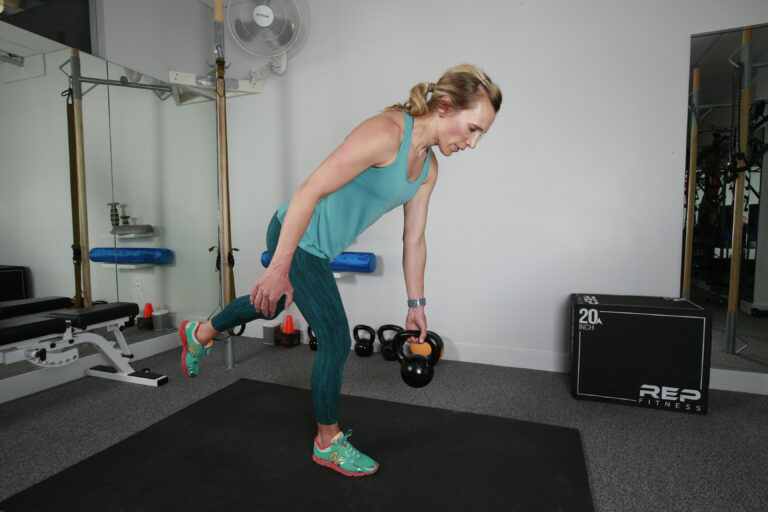
- Single-leg squat or step-down: These exercises challenge your ability to control the hip, knee, and ankle together, something that becomes important when landing from a boulder.
As you progress, compare your performance between sides. Can you perform a similar number of controlled single-leg calf raises? Does your balance feel noticeably different? Are you shifting away from the injured ankle during single-leg squats?
These comparisons can help identify areas that may need more attention, even when your ankle feels relatively good during everyday activities.
The goal is to restore your ability to load and control the injured leg before progressing to higher-impact exercises.
Step 2: Add Hopping and Landing Exercises
Bouldering isn’t a slow, controlled activity, so eventually your ankle rehabilitation shouldn’t be either.
Once you’ve rebuilt basic strength and balance, begin exposing the ankle to faster loading. Start small and gradually increase the challenge. John Crawley, PT, DPT, OCS, makes the case for plyometrics late in climbing rehabilitation in Plyometrics for Late Stage Rehabilitation in Rock Climbers.
Good options include:
- Two-leg pogo hops
- Forward and backward hops
- Side-to-side hops
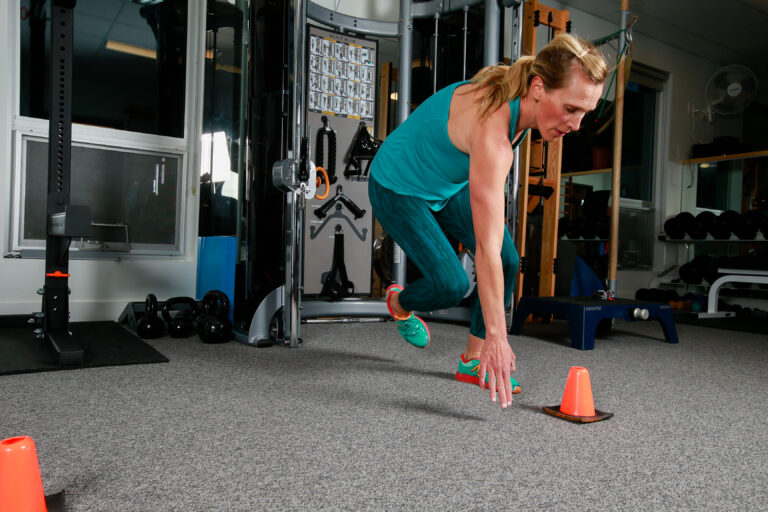
- Single-leg hops
- Small jump-and-stick landings
For a jump-and-stick, jump a short distance and focus on landing under control. Hold the landing for a few seconds before repeating. Over time, you can increase the distance, change directions, or progress from two legs to one.
The goal isn’t simply to complete the exercise. You should be able to absorb the landing with good control, without significant pain, instability, or hesitation.
Comparing hopping performance and landing control between sides can help identify areas that may still need improvement before returning to more demanding activities. Clinical practice guidelines recommend using functional assessments, including single-leg hopping tests when appropriate, to evaluate recovery after an ankle sprain (Martin et al., 2021).
There isn’t one specific number of repetitions or hopping distance that determines whether you’re ready to return to bouldering. Instead, consider the quality of your movement, your ability to tolerate repeated loading, and how your ankle responds afterward.
If you consistently shift away from the injured leg, struggle to control your landing, or develop increasing symptoms, you may need to spend more time rebuilding that capacity before progressing.
Step 3: Practice Falling Before Returning to Bouldering
This is where ankle sprain rehabilitation can become much more specific to rock climbing.
Your first fall after an ankle sprain shouldn’t be an unexpected fall from the top of a difficult boulder problem.
Once hopping and landing drills are going well, start reintroducing falls in a controlled environment. Begin close to the ground and intentionally practice dropping onto the mat.
Start with predictable, two-foot landings where you can control your position and absorb the impact comfortably. As your landing mechanics and tolerance improve, you can gradually increase the demands of the activity.
There isn’t one specific fall height that is appropriate for every climber. Your progression should depend on your ability to control the landing, tolerate the impact, and recover without an increase in symptoms.
You can also gradually introduce more variability into your landings. In bouldering, you won’t always come off the wall in a perfectly balanced position, so your rehabilitation should eventually prepare you to respond to different landing demands.
The goal isn’t to practice awkward or dangerous falls. It’s to gradually rebuild your ability to absorb impact and respond to the demands of falling in a controlled environment.
Step 4: Gradually Return to Normal Bouldering
Being able to tolerate a few controlled falls doesn’t necessarily mean it’s time for a full limit-bouldering session.
Start with easier problems where you feel confident controlling your movement and getting off the wall. Initially, you may choose problems where you can downclimb rather than repeatedly dropping from the top.
Then gradually increase your climbing difficulty, session volume, and exposure to falls instead of increasing everything at once.
For example, you might initially return to shorter sessions with easier problems and limited fall exposure. As your ankle tolerates those sessions, you can gradually increase the difficulty of the problems you’re climbing or the amount of time you’re spending on the wall.
Pay attention to how your ankle responds both during the session and the following day. Our return-to-climbing guide uses the University of Delaware soreness rules to structure that kind of progression.
Mild soreness may occur as you reintroduce new loads, but increasing pain, swelling, or instability may indicate that the current demands are exceeding what your ankle is ready to tolerate.
Rather than automatically stopping all activity, consider whether you need to reduce the difficulty, volume, or fall exposure during your next session.
The goal is to continue building capacity while giving your ankle an opportunity to adapt to the demands of climbing.
You can find more on lower-body injuries in climbers in our Ankle and Foot and Rock Climbing article archives.
When Should You See a Physical Therapist for an Ankle Sprain?
If you’re having difficulty progressing back to bouldering after an ankle sprain, a physical therapist can help identify what may be limiting your recovery and guide your return to climbing.
Consider reaching out to a physical therapist if:
- Your ankle mobility hasn’t returned. You notice stiffness when squatting, descending stairs, or bringing your knee forward over your toes compared with the other side.
- You still have noticeable strength deficits. Single-leg calf raises, squats, step-downs, or other single-leg activities remain significantly harder on the injured side.
- Balance still feels different between sides. You have difficulty maintaining single-leg balance or controlling your ankle during dynamic movements.
- Your ankle continues to feel unstable or gives way. This is especially important if you’ve had multiple ankle sprains or don’t trust the ankle on uneven surfaces.
- You’ve returned to everyday activity but can’t progress to hopping or jumping. Pain, weakness, instability, or apprehension keeps you from comfortably accepting impact through the injured leg.
- You can hop and jump, but landing still doesn’t feel right. You consistently shift away from the injured side, struggle to control single-leg landings, or don’t trust the ankle with faster or multidirectional movements.
- You’re climbing again but avoiding falls. You can move on the wall without much difficulty, but you’re downclimbing everything, avoiding certain problems, or limiting your climbing because you don’t trust the ankle if you come off the wall.
- You’ve tried returning to bouldering but can’t progress your sessions. Increasing climbing difficulty, volume, or fall exposure repeatedly causes symptoms that keep you from advancing.
A physical therapist who works with climbers can assess ankle mobility, strength, balance, hopping and landing ability, and confidence with sport-specific movements to help determine which areas may need additional attention.
Return-to-sport decisions shouldn’t be based on one exercise or simply how much time has passed since the injury. The goal is to determine whether your ankle is prepared for the demands you actually need it to handle, including an unexpected fall from the wall.
Don’t Just Return to Climbing, Prepare to Fall
Returning to bouldering after an ankle sprain means preparing for more than the movements you make on the wall. Your rehabilitation should also prepare you for the demands of landing when a move doesn’t go as planned.
At Mend Physical Therapy, we help climbers identify what’s limiting their return and build individualized rehabilitation plans around the demands of climbing. Whether you’re struggling to get back on the wall or still hesitant to fall, book an appointment and we can help you take the next step.
Frequently Asked Questions
There is no single date. Rather than going by how many weeks it has been, look at whether your ankle has regained the mobility, strength, balance, power, and landing capacity bouldering requires. A typical progression moves from single-leg strength and balance to hopping and landing, then controlled falls, then easier problems before limit-level sessions.
You should feel confident loading the injured leg, and be able to absorb hops and jump-and-stick landings without significant pain, instability, or hesitation. If you can hop but landing still feels off, or you’re avoiding falls on the wall, that’s a good reason to have a physical therapist assess your landing.
Start with single-leg calf raises, single-leg balance, and single-leg squats or step-downs. Once those are comfortable, add pogo hops, forward and backward hops, side-to-side hops, single-leg hops, and small jump-and-stick landings.
Begin close to the ground and drop onto the mat on purpose, using predictable two-foot landings. There is no single right fall height, so progress based on how well you control the landing and how your ankle responds afterward. Add landings where your weight isn’t evenly distributed only later.
See one if your mobility or strength hasn’t returned, your balance still differs between sides, the ankle feels unstable or gives way, or you can’t progress to hopping, landing, or falls. A physical therapist who works with climbers can pinpoint where the gap is.
References
- Auer, J., et al. (2021). Indoor bouldering: A prospective injury evaluation. Wilderness & Environmental Medicine, 32(2), 160–167. https://doi.org/10.1016/j.wem.2021.02.002
- Martin, R. L., et al. (2021). Ankle stability and movement coordination impairments: Lateral ankle ligament sprains revision 2021. Journal of Orthopaedic & Sports Physical Therapy, 51(4), CPG1–CPG80. https://doi.org/10.2519/jospt.2021.0302
- Doherty, C., et al. (2016). Recovery from a first-time lateral ankle sprain and the predictors of chronic ankle instability: A prospective cohort analysis. American Journal of Sports Medicine, 44(4), 995–1003. https://doi.org/10.1177/0363546516628870