By Dr. Rani Helvey-Byers, PT, DPT, OCS
Ankle sprains are one of the most overlooked injuries in Muay Thai. Most fighters figure that if they can still walk and tape it up, the ankle will heal on its own. Pain and swelling do settle down over time, but that is not the same as full recovery. About 40 percent of people who sprain an ankle go on to develop chronic ankle instability, according to the 2021 clinical practice guidelines from the Journal of Orthopaedic & Sports Physical Therapy — a condition marked by repeated sprains, a feeling of the ankle giving out, and lingering stiffness or discomfort during training.
For a Muay Thai fighter, that instability shows up exactly where stability matters most: pivoting through kicks, checking strikes, and generating power from the ground during sparring. A sprain that never fully resolves quietly limits performance long after the swelling is gone.
Why Muay Thai Fighters Sprain Their Ankles
Muay Thai asks a lot of the ankle. Fighters pivot aggressively during kicks, change direction fast, absorb force when checking strikes, and train and compete barefoot. Checking in particular puts the ankle in a compromised, often inverted position at the exact moment it is absorbing an opponent’s force, which is a common setup for a lateral ankle sprain. All of that demands quick, reflexive control from the ankle muscles, especially in vulnerable positions, and the risk climbs as fatigue sets in or a kick or sweep ends in an awkward landing.
Balance Training Cuts Your Risk
Balance and proprioceptive training has the strongest evidence behind it for preventing ankle sprains. Three separate systematic reviews, most recently a 2023 meta-analysis in Clinical Rehabilitation, found that athletes who train balance regularly cut their risk of lateral ankle sprains by 35 to 50 percent. Aim for two to three sessions a week, not just a warmup before class.
A few exercises worth building into that routine:
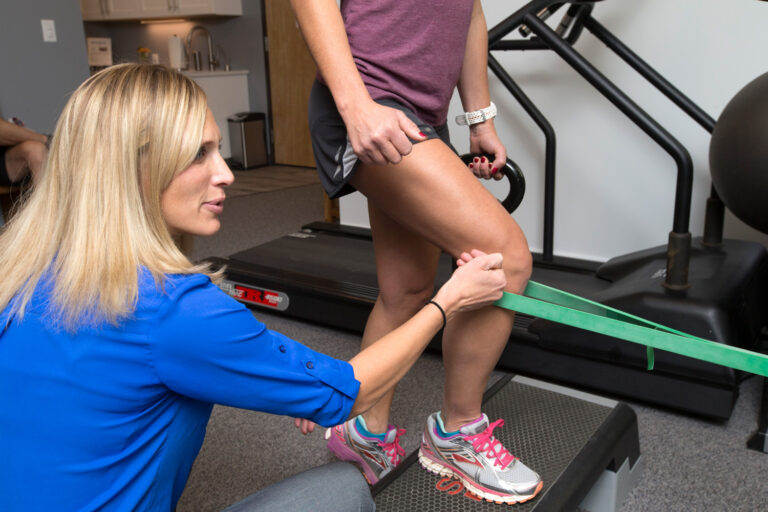
- Single-leg heel raises. Stand with your heel off the edge of a step for a negative range of motion, and hold a weight in one hand to add difficulty.
- Single-leg balance. Progress by turning your head side to side, closing your eyes, or standing on an unstable surface like a bosu ball or balance pad. Work up to about a minute per side.
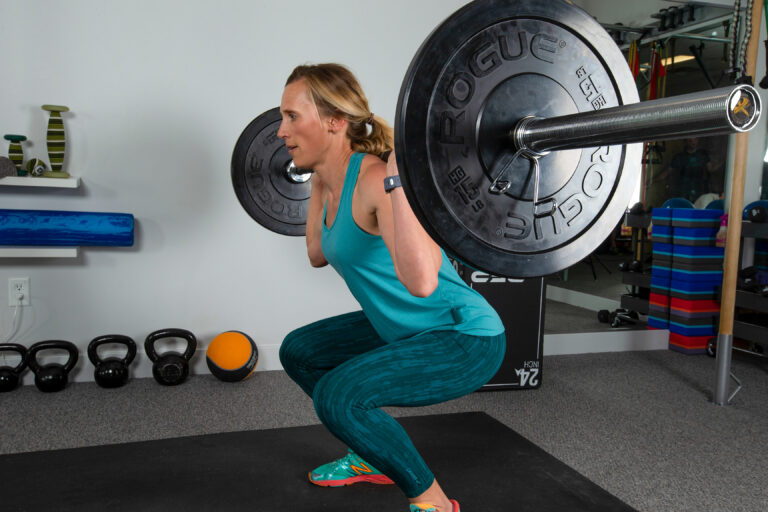
- Single-leg mini squats with reaches. Increase the challenge with reach distance or an unstable surface.
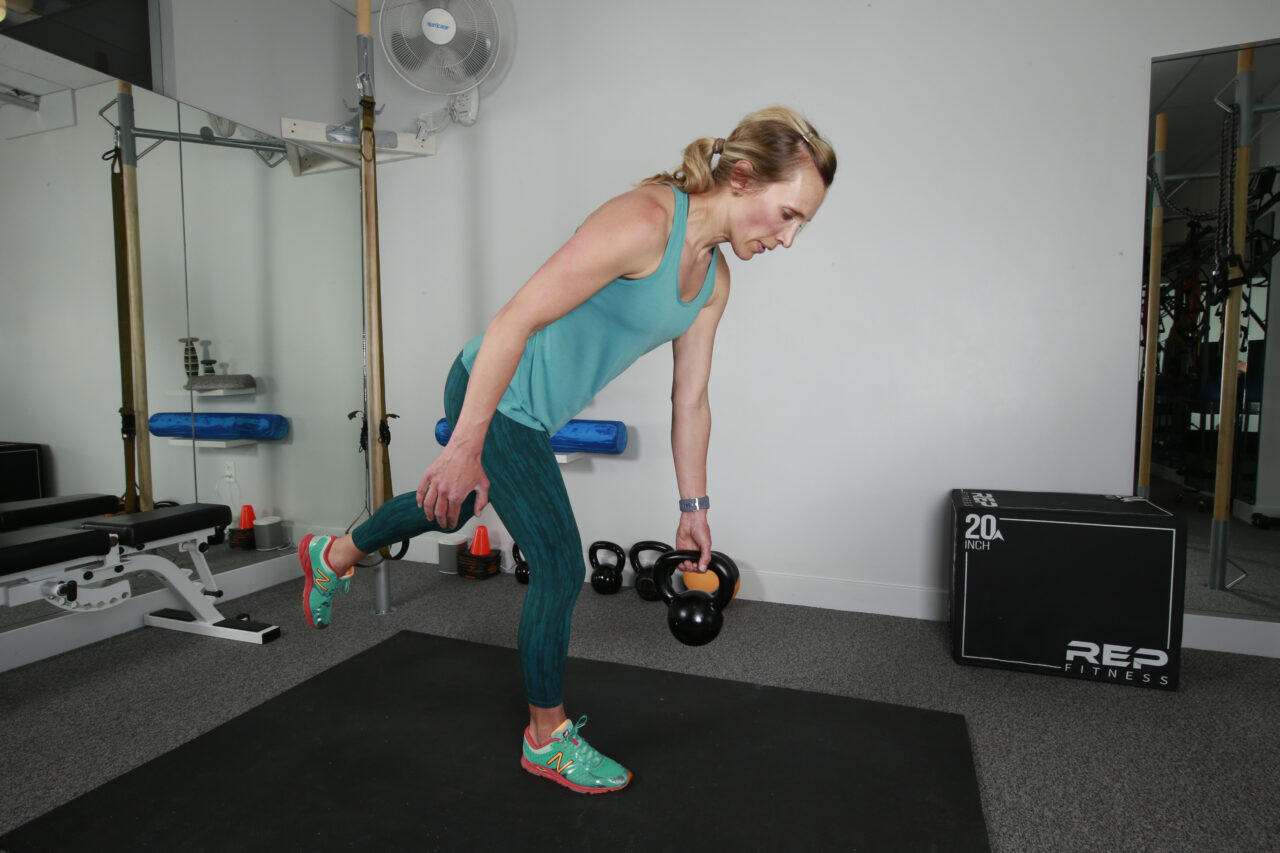
- Single-leg hops and landing drills. In place, side to side, forward and backward, or worked into a ladder drill.
These drills train your body to react to sudden changes in position, so the muscles around your ankle stabilize the joint before an injury happens rather than after. This video walkthrough demonstrates the full set.
Should You Wear an Ankle Brace?
It depends on your history. For fighters who have sprained an ankle before, bracing meaningfully reduces the risk of reinjury. But some rigid braces lose effectiveness once you are barefoot, which describes most Muay Thai training and competition. A soft, lace-up brace tends to hold up better under barefoot conditions while still allowing the footwork Muay Thai demands, and research on brace stability in barefoot conditions backs that trade-off up.
Train the Rest of the Chain
An ankle rarely fails in isolation. Weak hips, poor single-leg control, and training loads that ramp up too fast all add stress to the ankle during kicking and footwork. Strong hips and solid single-leg control do as much for ankle stability as anything done directly at the joint, and a training block that spikes sparring volume too quickly after a layoff is one of the more common setups for a sprain we see in clinic. We see the same hip-ankle relationship in Boulder’s climbing community, where instability at one joint just shifts the load somewhere else in the chain.
When to See a Physical Therapist
Most mild sprains improve with rest, bracing, and a structured return to training. Persistent swelling, a sense of instability, repeated sprains, or trouble getting back to full training are signs the ankle needs a closer look, not just more tape.
If you’re dealing with a Muay Thai ankle injury, working with a physical therapist who understands the sport’s demands can rebuild the mobility, strength, and balance you need to get back on the mats with confidence. Book an evaluation with Dr. Rani Helvey-Byers, who treats combat sports athletes at Mend, or browse our full Ankle / Foot content library.
References
- Martin RL, Davenport TE, Fraser JJ, et al. Ankle Stability and Movement Coordination Impairments: Lateral Ankle Ligament Sprains Revision 2021. J Orthop Sports Phys Ther. 2021;51(4):CPG1-CPG80. doi:10.2519/jospt.2021.0302
- Schiftan GS, Ross LA, Hahne AJ. The effectiveness of proprioceptive training in preventing ankle sprains in sporting populations: a systematic review and meta-analysis. J Sci Med Sport. 2015;18(3):238-244. doi:10.1016/j.jsams.2014.04.005
- de Vasconcelos GS, Cini A, Sbruzzi G, Lima CS. Effects of proprioceptive training on the incidence of ankle sprain in athletes: systematic review and meta-analysis. Clin Rehabil. 2018;32(12):1581-1590. doi:10.1177/0269215518788683
- Wang F, Guan Y, Bamber Z, et al. Preventive interventions for lateral ankle sprains: A systematic review and meta-analysis. Clin Rehabil. 2023;37(5):585-602. doi:10.1177/02692155221137640
- Eils E, Imberge S, Völker K, Rosenbaum D. Passive stability characteristics of ankle braces and tape in simulated barefoot and shoe conditions. Am J Sports Med. 2007;35(2):282-287. doi:10.1177/0363546506294471