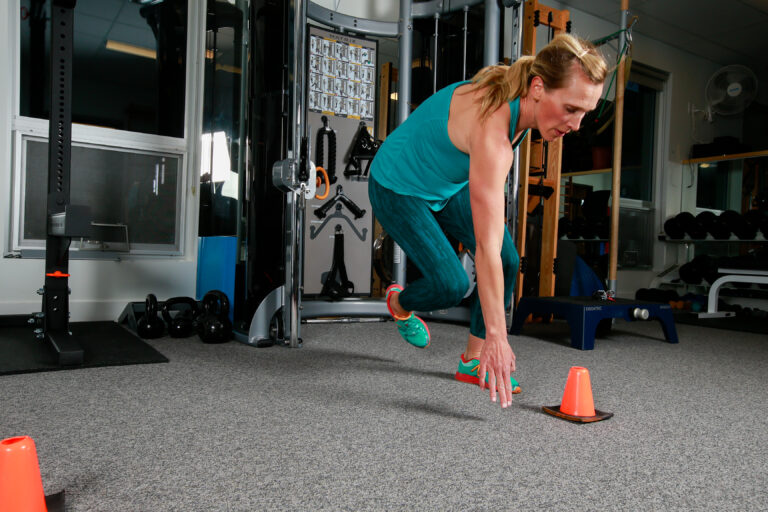
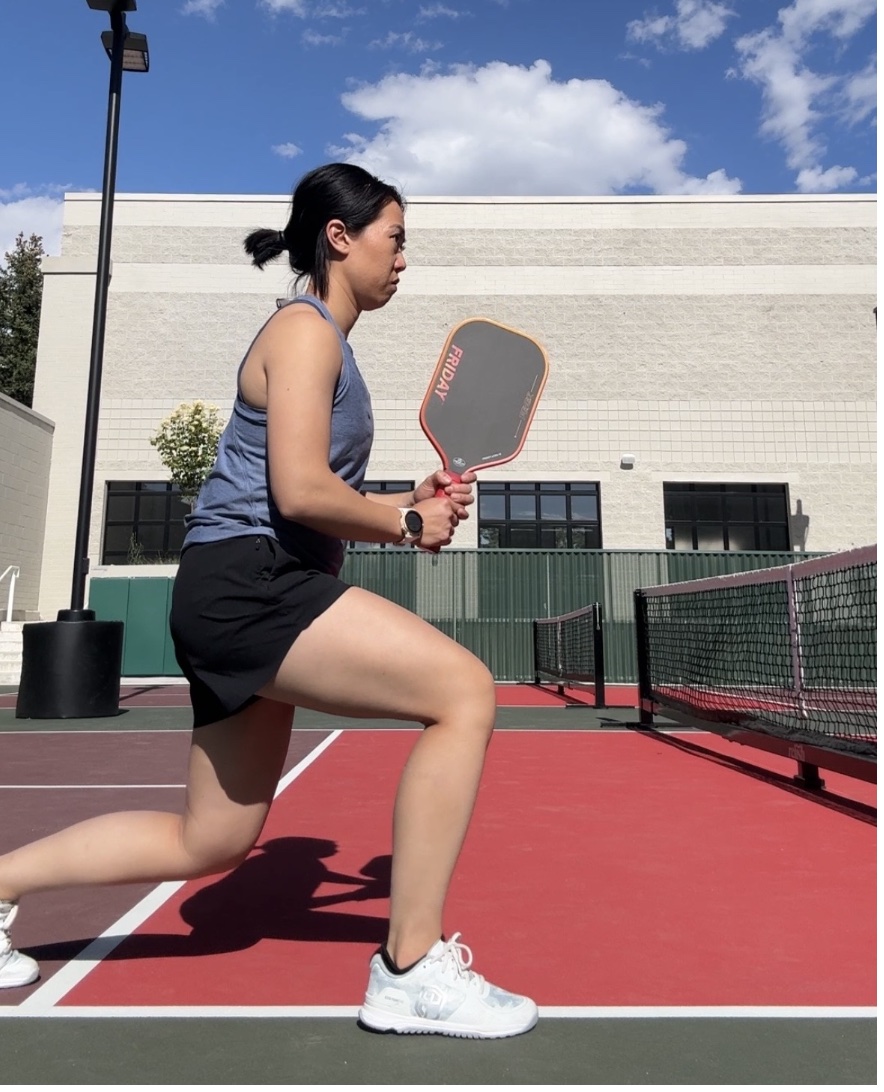
One of the most important movement patterns in pickleball is the lunge. Whether you are reaching for a wide dink, recovering after a volley, or decelerating into a low ball, your body must absorb force efficiently while maintaining balance and joint control.
From a physical therapy perspective, poor lunge mechanics are commonly associated with:
- Patellar tendon irritation
- Knee pain such as osteoarthritis
- Hip impingement
- Achilles tendinopathy
- Calf strains
- Plantar fascia irritation
- Low back discomfort
- Recurrent ankle sprains
Many pickleball injuries are not caused by one traumatic moment, but rather repeated stress placed on joints and tissues due to poor movement mechanics.
This orthopedic self-assessment checklist will help you evaluate how your body handles lunging movements on the pickleball court and identify potential mobility, strength, or stability limitations before they become bigger problems.
Why Do We Assess Lunging Mechanics?
Physical therapists often evaluate lunging because it provides valuable information about:
- Hip mobility
- Ankle mobility
- Single-leg balance
- Core stability
- Lower extremity strength
- Deceleration control
- Force absorption mechanics
- Side-to-side asymmetries
During pickleball, lunging allows players to:
- Reach wide balls without losing balance
- Recover quickly after shots
- Maintain control at the kitchen line
- Reduce unnecessary stress on the knees and low back
- Generate more efficient movement patterns
Strong lunging mechanics also help players stay lower to the ground, improving reaction time and stability.
Orthopedic Self-Assessment Checklist for Pickleball Lunging
Use this checklist in front of a mirror, record yourself on video, or perform it during your warm- up before playing pickleball.
The goal is not perfection. The goal is identifying movement limitations, pain patterns, and asymmetries that may increase injury risk.
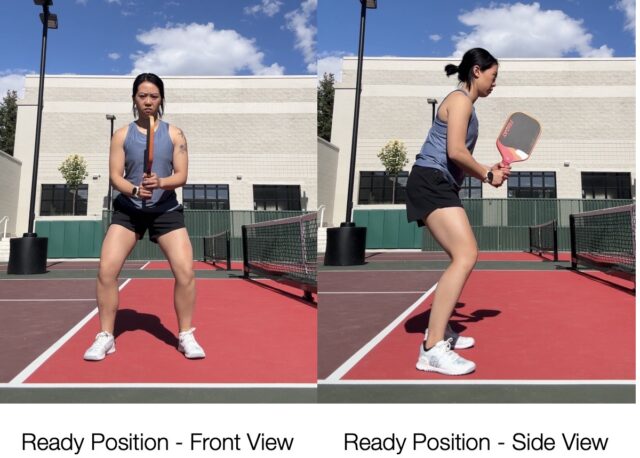
1. Assess Your Starting Position
Before you even lunge, your starting posture matters.
Checklist:
- Knees slightly bent
- Feet shoulder-width apart
- Weight balanced through the midfoot
- Chest upright
- Core lightly engaged
- Eyes forward
Physical Therapy Observation:
If you struggle to maintain this position comfortably, it may indicate:
- Limited ankle mobility
- Hip stiffness
- Core weakness
- Reduced lower extremity endurance
Common Compensation:
Standing too upright and stiff, making it harder to react quickly.
2. Assess Force Production and Hip Control
A strong lunge begins with force production from the opposite side.
Checklist:
-
- Push the ground away aggressively
- Avoid reaching only with the lunging foot
- Drive laterally from the hips
- Keep movement smooth and controlled
Physical Therapy Observation:
If you primarily reach with the foot instead of driving from the hip, you may have:
- Glute weakness
- Reduced lateral hip stability
- Poor force transfer
- Reduced deceleration control
Why It Matters:
Reaching without pushing often overloads the knee and reduces power.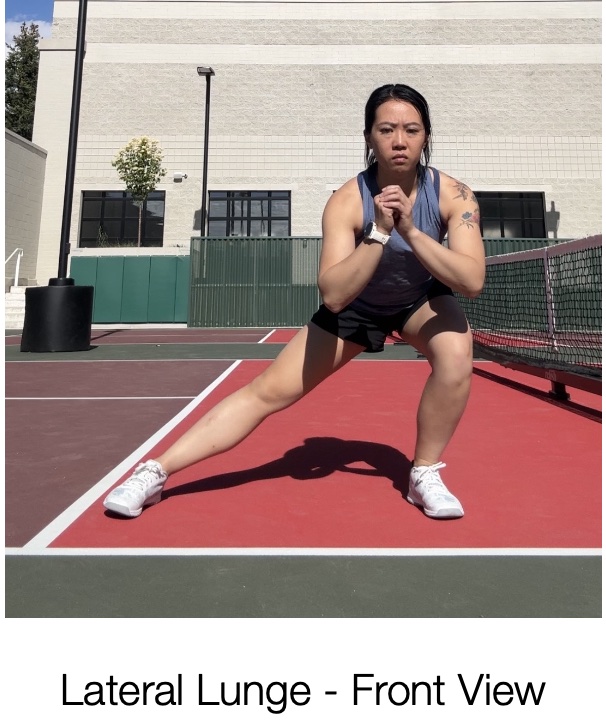
The Physical Therapy Pickleball Lunging Checklist: How to Self-Assess Your Movement and Reduce Injury Risk Physical Therapy Observation: Watch closely for:
- Knee valgus (knee collapsing inward)
- Foot pronation collapse
- Heel lifting early
- Hip shifting excessively side to side
These movement patterns are commonly associated with:
- Patellofemoral pain
- ACL injury risk
- Hip weakness
- Ankle instability
Common Compensation:
Allowing the knee to cave inward during deceleration.
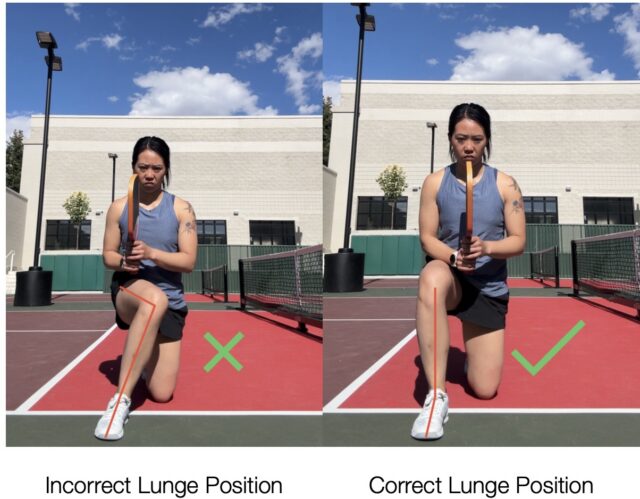
3. Assess Knee Alignment
Proper knee positioning is critical for joint control.
Checklist:
- Knee points in the same direction as the toes
- Avoid knee collapse inward
- Maintain foot tripod contact:
• Big and little toe
• Heel
Physical Therapy Observation:
Watch closely for:
- Knee valgus (knee collapsing inward)
- Foot pronation collapse
- Heel lifting early
- Hip shifting excessively side to side
These movement patterns are commonly associated with:
- Patellofemoral pain
- ACL injury risk
- Hip weakness
- Ankle instability
Common Compensation:
Allowing the knee to cave inward during deceleration.
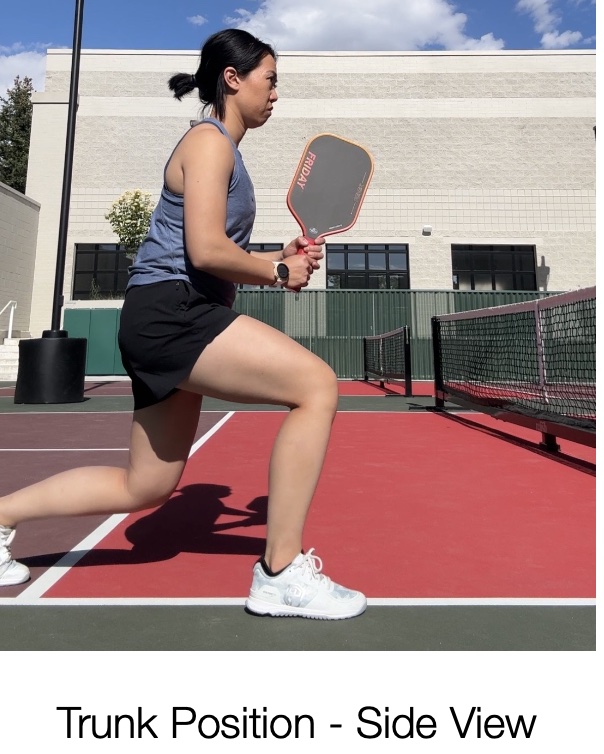
4. Assess Trunk and Pelvic Control
Your torso affects balance and force distribution. Checklist:
- Slight forward chest lean from the hips
- Avoid excessive rounding
- Keep ribs stacked over pelvis
- Maintain balance throughout the movement
Physical Therapy Observation:
Excessive trunk movement may indicate:
- Poor core control
- Hip weakness
- Limited hip mobility
- Balance deficits
Why It Matters:
Poor trunk control can increase stress on the back and reduce recovery speed.
5. Assess Shock Absorption
Good lunges are controlled, not sloppy.
Checklist:
- Quiet foot contact
- Stable balance on landing
- No wobbling at the ankle or knee
- Ability to stop and recover quickly
Physical Therapy Observation:
If landing feels loud, unstable, or painful, you may have deficits in:
- Eccentric strength
- Single-leg stability
- Ankle stiffness
- Hip control
- Calf capacity
6. Compare Side-to-Side Symmetry
Many players are noticeably weaker or less stable on one side. Ask Yourself:
- Does one side feel less balanced?
- Is one knee more painful or unstable?
- Do you hesitate lunging in one direction?
- Does one ankle feel stiff?
Physical Therapy Observation:
Side-to-side differences are one of the most important findings during orthopedic movement assessments.
Asymmetries often increase injury risk over time, especially during repetitive court sports like pickleball.
Orthopedic Red Flags During Lunging
Stop and reassess if you notice:
- Sharp knee pain or instability
- Achilles or calf pain
- Repeated ankle rolling
- Loss of balance
- Hip pinching
- Low back discomfort
- Pain that worsens after playing
Pain during lunging is often a sign that the involved tissues are not tolerating load appropriately.
Repeated compensation patterns can eventually contribute to tendon irritation, cartilage overload, joint irritation, or recurrent muscle strain.
Physical Therapy Exercises That Improve Lunging Mechanics
From a rehabilitation perspective, improving lunging mechanics typically requires addressing mobility restrictions, strength deficits, balance impairments, and movement coordination.
Helpful Exercises:
Mobility
- Ankle dorsiflexion stretches
- Hip flexor mobility drills
- Thoracic spine rotations
Strength
- Split squats
- Reverse lunges
- Lateral lunges
- Step-downs
- Single-leg Romanian deadlifts
When a Physical Therapy Initial Evaluation May Help
If lunging consistently causes pain, stiffness, or instability, it may be helpful to work with a physical therapist who understands pickleball movement demands.
A physical therapy movement assessment can help identify:
- Strength deficits
- Mobility limitations
- Balance impairments
- Recovery issues
- Overuse patterns
- Joint loading problems
Early treatment can often prevent more serious injuries and keep you playing longer.
Need Help Improving Your Pickleball Movement?
If you are dealing with knee pain, ankle stiffness, hip tightness, or movement limitations on the pickleball court, a movement assessment can help identify what is holding you back.
At our physical therapy clinic, we help pickleball athletes improve mobility, strength, balance, and movement efficiency so they can play with more confidence and less pain.