If you’ve ever wondered “Is this soreness okay, or am I making things worse?”
You’re not alone.
This is one of the most common questions we hear in the clinic. The truth is, soreness isn’t inherently bad. In fact, it’s often part of the process when you’re rebuilding strength, improving mobility, or returning to activity after an injury.
The key is knowing how to interpret soreness and respond appropriately. That’s where soreness rules come in. These simple, practical guidelines help you adjust your training based on how your body is responding so you can make progress without unnecessary flare-ups.
Why Soreness Matters
Soreness is feedback. It tells you whether your current training load matches your body’s capacity.
A productive training response might include:
- Mild soreness that improves as you move
- No lingering pain after activity
- Steady improvement over time
A problematic response might look like:
- Pain that worsens or lingers
- Symptoms that change your movement or form
- Repeated flare-ups after activity
Understanding this difference is critical. Instead of guessing, soreness rules give you a clear plan.
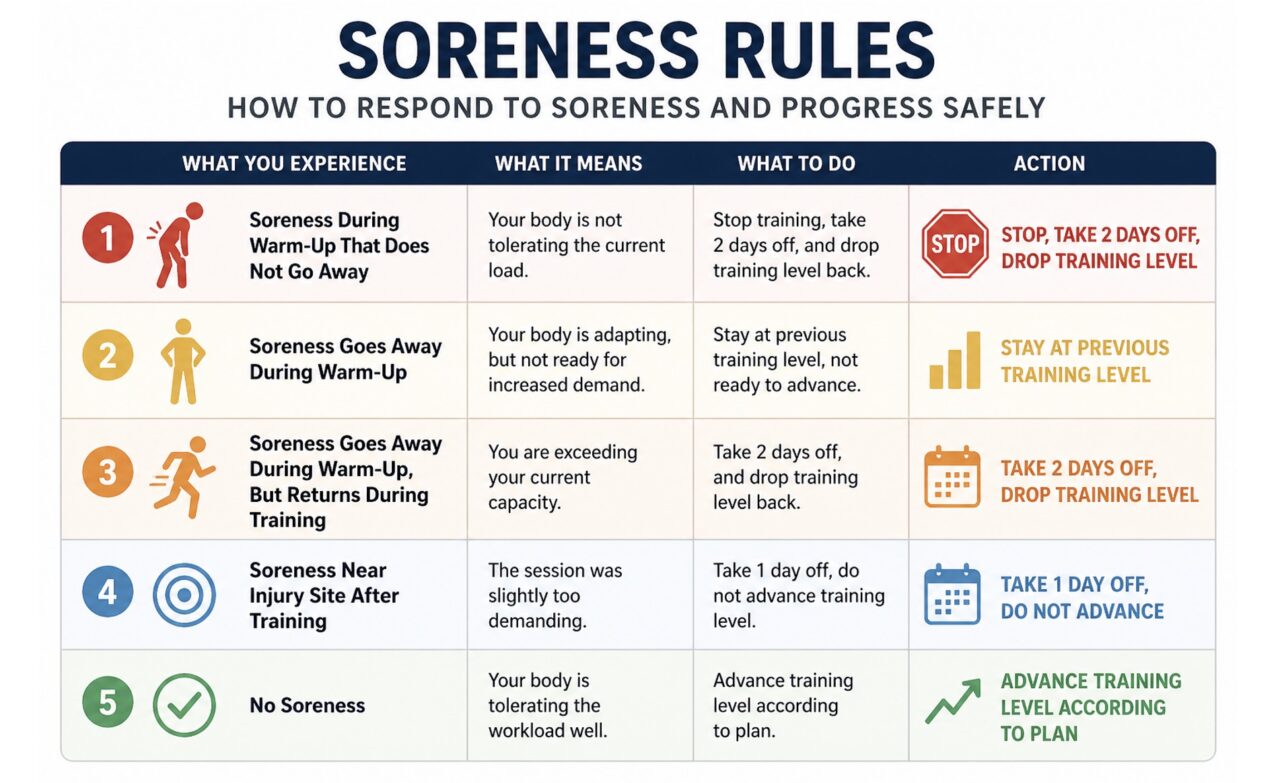
The Soreness Rules
- Soreness During Warm-Up That Does Not Go Away
What it means: Your body is not tolerating the current load.
What to do: Stop training, take 2 days off, and reduce your training intensity when you return.
Why it matters: Pain that doesn’t improve with movement is a strong signal that the tissue is irritated and needs more recovery.
- Soreness Goes Away During Warm-Up
What it means: Your body is adapting, but not ready for increased demand.
What to do: Stay at your current training level do not progress yet.
Why it matters: This is a stable zone, but pushing too soon can lead to setbacks.
- Soreness Goes Away During Warm-Up but Returns During Training
What it means: You are exceeding your current capacity.
What to do: Take 2 days off and reduce your training level.
Why it matters: Even if symptoms improve initially, their return during loading indicates overload.
- Soreness Near the Injury Site After Training
What it means: The session was slightly too demanding.
What to do: Take 1 day off and avoid progressing your program.
Why it matters: This is an early warning sign adjusting now prevents bigger issues later.
- No Soreness
What it means: Your body is tolerating the workload well.
What to do: Progress your training according to plan.
Why it matters: This is your green light to build strength, capacity, and confidence.
How to Use These Rules in Real Life
To get the most out of these guidelines, consistency is key:
- Check in during your warm-up – This is often the most telling moment
- Pay attention after workouts – Symptoms later in the day or next morning matter
- Avoid emotional decisions – Progress based on patterns, not one good or bad day
- Think long-term – Short-term adjustments lead to long-term gains
The Big Picture
Rehabilitation and performance training aren’t about avoiding soreness altogether they’re about managing it intelligently. When you understand how your body responds to load, you can train with confidence instead of second-guessing every symptom.
These soreness rules help you stay in that optimal zone: challenging your body enough to improve, but not so much that you create setbacks.
Ready to Take the Guesswork Out of Your Recovery?
If you’re dealing with ongoing soreness, recurring injuries, or you’re unsure how to safely progress your workouts, working with a physical therapist can make all the difference. At Mend Colorado Physical Therapy, we help active adults and athletes in Lafayette, Colorado build clear, individualized plans so they can stay active without flare-ups.
Whether you’re recovering from an injury or trying to return to full performance, our team will help you understand your symptoms, apply the right soreness rules, and progress with confidence. Book your initial evaluation today and experience expert physical therapy in Boulder or Lafayette, Colorado designed to keep you moving forward.