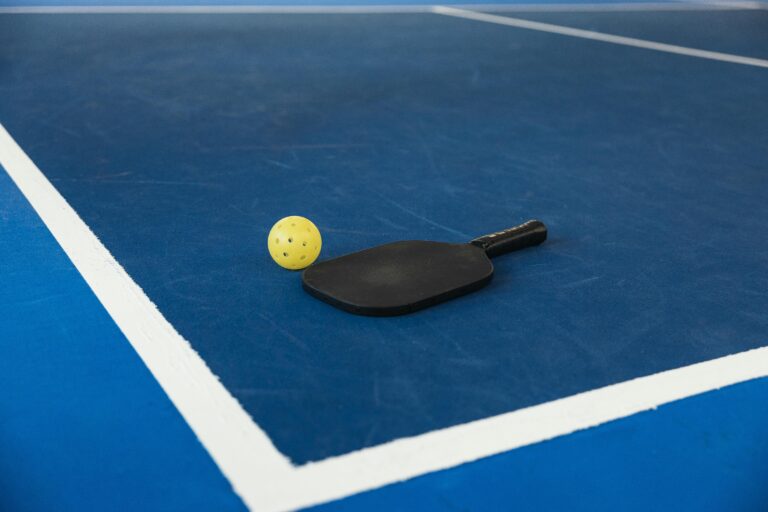
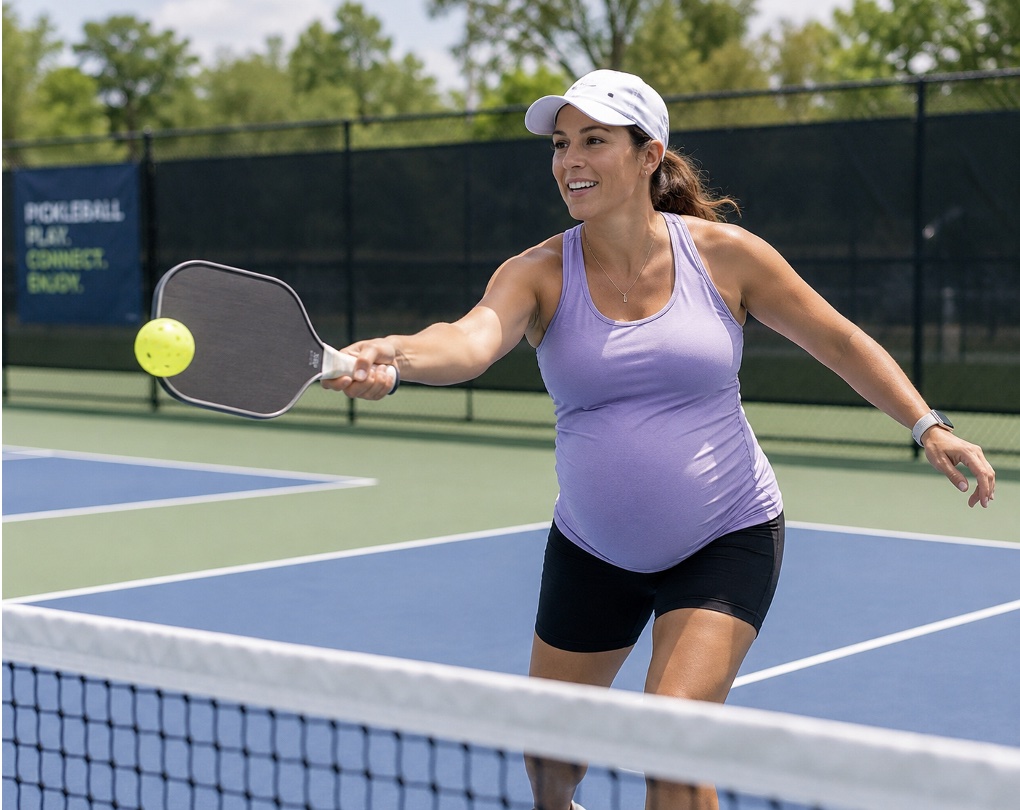
Pickleball is everywhere right now, and for good reason. It’s social, low-impact (most of the time) and genuinely fun. If you were a regular player before getting pregnant, you’re probably wondering whether you need to hang up your paddle for nine months. The short answer? You likely don’t have to. But like everything in pregnancy, it comes with nuance.
As a physical therapist, I want to be your resource. Not just to give you a green light or a red light, but to help you understand your body, play smarter, and know when something needs attention.
Why Movement During Pregnancy Matters
Let’s start with the big picture. The old-school advice to “take it easy” during pregnancy has been largely overturned by decades of research. The American College of Obstetricians and Gynecologists (ACOG) recommends at least 150 minutes of moderate-intensity aerobic activity per week for pregnant women without contraindications.
Regular movement during pregnancy has been shown to reduce the risk of gestational diabetes and preeclampsia, improve mood and reduce anxiety, decrease low back pain and pelvic girdle pain, support healthy weight gain, improve sleep quality, shorten labor duration, reduce delivery complications, and support faster postpartum recovery.
Stopping exercise during pregnancy, absent a medical reason, is not the safe choice. It’s actually the riskier one. Your body was built to move, and your baby benefits when you do.
So, Can I Play Pickleball While Pregnant?
For most healthy pregnancies, yes, especially in the first and second trimesters. Here’s how to think about it by trimester:
First Trimester (Weeks 1 to 13)
This is often the hardest trimester not because of physical limitation, but because of fatigue, nausea, and general misery. If you feel up to it, playing pickleball is generally safe. Your center of gravity hasn’t shifted much yet, and your ligaments, while beginning to loosen due to the hormone relaxin, haven’t reached their peak laxity.
Stay hydrated and avoid playing in excessive heat, as your thermoregulation is already working harder than usual. Listen to fatigue signals and keep intensity moderate. A good rule of thumb: you should be able to hold a conversation throughout your play.
Second Trimester (Weeks 14 to 27)
Many women feel their best here, and continued pickleball play is often very appropriate. However, your growing belly begins to shift your center of gravity forward, and relaxin is ramping up, meaning your joints, particularly in the pelvis, are less stable than usual.
Focus on footwork and positioning to reduce the need for lunging or sudden lateral cuts. Wear supportive footwear and consider a belly support band. Avoid movements that require rapid pivoting and take breaks whenever you need them. Don’t push into pain.
Third Trimester (Weeks 28 to 40)
This is where individual variation matters most. Some women play recreational pickleball well into the third trimester without issue. Others experience significant pelvic girdle pain, balance challenges, or fatigue that makes it impractical. There is no universal rule here. Follow your body and your provider’s guidance.
In this trimester, balance challenges increase fall risk due to your shifted center of gravity. Pubic symphysis dysfunction or sacroiliac joint syndrome may affect your stability, and pelvic floor pressure from the baby’s position can intensify with high-impact or lateral movements. Round ligament pain may also be provoked by quick direction changes.
Absolute Reasons to Stop and Consult Your Provider
Regardless of trimester, stop playing and reach out to your OB, midwife, or physical therapist if you experience vaginal bleeding or fluid leakage, regular painful contractions, chest pain or difficulty breathing beyond normal exertion, dizziness or feeling faint, calf pain or swelling (possible DVT), decreased fetal movement, or severe pelvic pain that doesn’t resolve with rest.
Common Injuries in Pickleball and Why Pregnancy Changes the Picture
Pickleball involves lateral movement, quick changes of direction, overhead reaching, and repeated low-impact loading. These demands create predictable injury patterns, and pregnancy amplifies the risk of several of them.
Sacroiliac Joint (SIJ) Dysfunction
What it is: The sacroiliac joint connects your sacrum (the triangular bone at the base of your spine) to your ilium (the large pelvic bones on either side). It’s a weight-bearing joint that’s meant to be very stable, but it has a small amount of necessary motion.
Why pregnancy matters: Relaxin causes ligamentous laxity throughout the body, and the SIJ is particularly vulnerable. The joint can become hypermobile, meaning it moves more than it should, leading to irritation, inflammation, and pain.
What it feels like: A deep, aching or sharp pain in one or both buttocks, sometimes extending into the groin, hip, or down the back of the thigh. It’s often worse with prolonged standing, climbing stairs, getting up from a chair, or with the rotational movements and lunging that pickleball demands.
How pickleball can aggravate it: The sport involves a lot of hip rotation, lateral shuffling, and single-leg loading. These movements place shear and torsional stress on the SIJ that can easily exceed what a lax, pregnant joint can handle.
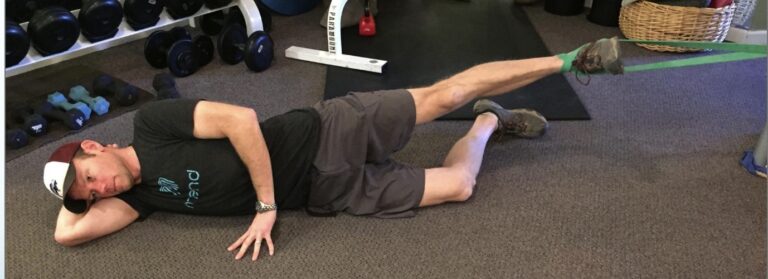
PT approach: Treatment focuses on pelvic stabilization exercises such as clamshells, side-lying hip abduction, lunging and modified bridges. Avoiding asymmetrical loading is key, so things like stepping up with one leg or carrying a bag on one side should be minimized. Wearing a sacroiliac belt or pelvic support brace during play provides external stability, and gait modifications can reduce pelvic drop. On the court, the goal is to minimize single-leg rotational movements wherever possible.
Symphysis Pubis Dysfunction (SPD)
What it is: The symphysis pubis is the joint at the front of the pelvis where your two pubic bones meet. Like the SIJ, it’s held together by ligaments, and under the influence of relaxin, those ligaments can become too lax.
What it feels like: A sharp, stabbing, or grinding pain right at the front of the pelvis, often described as feeling like the pubic bones are separating. It can radiate into the inner thighs and sometimes the perineum. Women often describe difficulty walking, climbing stairs, turning over in bed, and spreading their legs apart.
How pickleball can aggravate it: Any movement that requires spreading your legs, including lunging, wide stances, and lateral splits, places a distraction force on the pubic symphysis. Quick changes of direction are often the primary trigger.
PT approach: Keeping your knees and feet closer together during movement is the most important on-court adjustment. Sleeping with a pillow between your knees helps overnight. Pelvic floor muscle strengthening provides critical dynamic stabilization, and inner thigh (adductor) strengthening in pain-free ranges helps support the joint. A pelvic girdle support belt is often very helpful, and aquatic exercise is an excellent adjunct since buoyancy reduces compressive and shear forces significantly.
Round Ligament Pain
What it is: The round ligaments support the uterus on either side. As the uterus grows, these ligaments stretch and can spasm in response to sudden movements.
What it feels like: A sharp, stabbing, or cramping pain in the lower abdomen or groin, usually on one side. It comes on suddenly with movement such as a quick pivot, a lunge, or even a sneeze, and typically resolves quickly.
How pickleball can aggravate it: Any rapid change of direction can trigger round ligament spasm. It’s usually harmless but can be alarming and temporarily debilitating on the court.
PT approach: Slowing down direction changes and warming up thoroughly before play are the most effective strategies. Bracing the abdomen by leaning forward slightly or pressing a hand to the area before an anticipated quick movement can also help reduce the spasm response.
Pelvic Floor Dysfunction
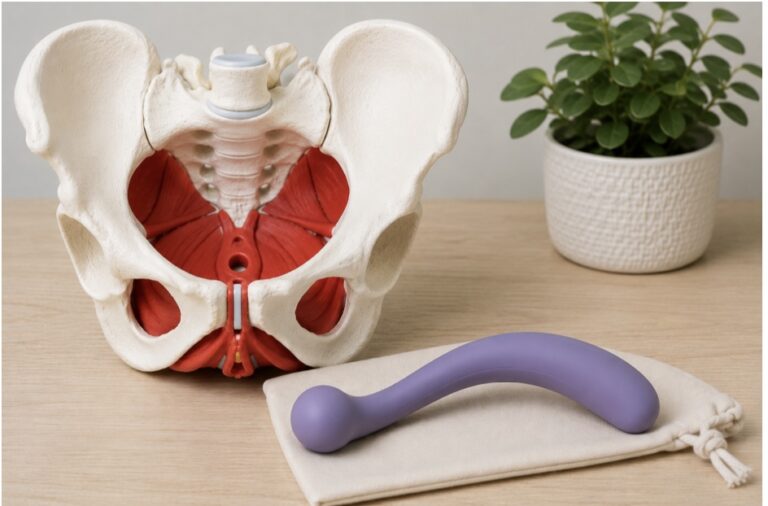
What it is: The pelvic floor is a group of muscles, fascia, and connective tissue that spans the base of the pelvis. It supports the uterus, bladder, and bowel, and plays a critical role in continence, sexual function, and stabilizing the pelvis and spine.
Why pregnancy matters: The pelvic floor is under increasing load throughout pregnancy as the growing uterus adds downward pressure. Some women also experience pelvic floor muscle overactivity (hypertonia) in response to pain, which creates its own set of problems.
What it feels like: Leaking urine with movement, impact, or exertion (stress urinary incontinence), heaviness or pressure in the pelvis, or pelvic pain during or after activity.
How pickleball relates: Any activity involving impact, jumping, rapid direction changes, or exertion can provoke or worsen pelvic floor dysfunction. Overhead serves, in particular, increase intra-abdominal pressure significantly.
PT approach: This is squarely within pelvic PT territory. A pelvic floor physical therapist can assess muscle tone, strength, and coordination and develop a targeted program. Don’t assume kegels are always the answer. For women with hypertonic pelvic floors, more contraction is the last thing they need.
Ankle Sprains and Falls
Pickleball involves quick lateral movements on a hard court. Pregnancy increases fall risk due to balance changes, center of gravity shifts, and joint laxity. A simple ankle roll that might be a minor inconvenience in a non-pregnant person becomes higher stakes during pregnancy.
Wear proper court shoes with lateral support rather than running shoes, which are designed for forward motion only. Play on familiar, well-lit courts with no wet or uneven surfaces. Consider doubles over singles to reduce court coverage demands, and modify your footwork to step rather than lunge whenever possible.
Modifications to Make Pickleball Safer During Pregnancy
You don’t have to play the same game you played before you were pregnant. Smart modifications keep you active without unnecessary risk.
Playing doubles means less court to cover, less sprinting, and less physical stress overall. Staying at the kitchen line keeps the game lower impact since the dinking game puts far less demand on your body than baseline rallying. Skipping the overhead smash is a good idea because overhead movements dramatically increase intra-abdominal pressure. A lower-trajectory, controlled serve also puts less strain on the pelvic floor than a hard upward swing.
Shortening your sessions to 20 to 30 minutes of moderate play is plenty, and resting between games is important since pregnancy is not the time for back-to-back competitive sets. Wearing a pelvic support belt from brands like Serola or SI-LOC provides meaningful SIJ support during play.
A Note on Postpartum Return to Pickleball
This post focuses on pregnancy, but postpartum return deserves its own mention. The default “you can return to exercise at your 6-week checkup” guidance is woefully inadequate. A 10-minute appointment where your provider says “everything looks good” does not mean your pelvic floor, abdominal wall, and ligamentous system have fully recovered.
Current evidence-based guidelines suggest a graduated return to full impact and sport that begins around 3 months postpartum at the earliest, and that’s with pelvic floor PT clearance, not just an OB’s blessing. Returning too soon can worsen diastasis recti, provoke prolapse symptoms, or create chronic pelvic floor dysfunction.
If you’re postpartum and eager to get back on the court, please see a pelvic floor physical therapist first. It is one of the most valuable things you can do for your long-term health.
The Bottom Line
Movement is medicine, in pregnancy and beyond. Pickleball is a sport that can, for many women, be adapted and continued safely through much of pregnancy. But it requires awareness, modification, and a willingness to respond to your body’s signals.
As a physical therapist, my goal is to help you stay active in a way that supports your health and your baby’s health. Not to sideline you unnecessarily, and not to push you past what’s appropriate.
If you’re experiencing pelvic pain, leaking, or any of the symptoms described in this post, please don’t just push through. These are treatable conditions, and getting help early leads to better outcomes. A pelvic floor PT can assess what’s going on and build a plan that keeps you moving, on the court and everywhere else.
You can do this, mama. Keep moving.
Have questions or want to book an evaluation check out with a member of our pelvic health team in the Boulder or Lafayette office in Colorado.
Always consult with your OB, midwife, or healthcare provider before starting or continuing an exercise program during pregnancy. This blog is for educational purposes and does not constitute medical advice.