Many people think pelvic floor dysfunction only involves weakness. However, for many individuals dealing with pelvic pain, painful intercourse, urinary urgency, constipation, or tailbone pain, the pelvic floor muscles may actually be too tight.
One tool that can help address this tension is a pelvic wand. When used appropriately, a pelvic wand can help release trigger points, improve muscle relaxation, and complement the work being done in pelvic floor physical therapy.
What Is a Pelvic Wand?
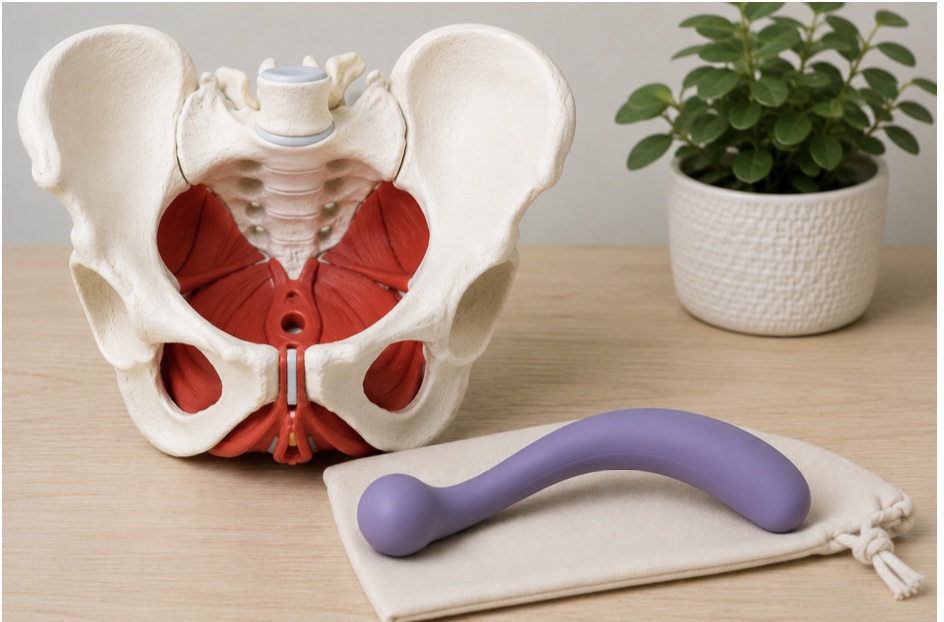
A pelvic wand is a specially designed self-treatment tool that allows individuals to access and apply gentle pressure to the pelvic floor muscles internally. The curved shape helps reach muscles that are difficult to address through stretching or external massage alone.
Think of it as a foam roller or massage ball for the muscles inside the pelvis. Who May Benefit from a Pelvic Wand?
A pelvic wand may be recommended by a pelvic floor physical therapist for individuals experiencing:
- Painful intercourse (dyspareunia)
- Vaginismus
- Pelvic pain
- Endometriosis-related pelvic floor tension
- Chronic pelvic pain syndrome
- Interstitial cystitis/bladder pain syndrome
- Urinary urgency and frequency associated with muscle tension
- Constipation related to pelvic floor muscle dysfunction
- Tailbone pain (coccydynia)
- Pelvic floor muscle trigger points
- Pain following childbirth or pelvic surgery after appropriate healing • Chronic hip, groin, or lower abdominal pain influenced by pelvic floor tightness
Not everyone with pelvic floor symptoms needs a pelvic wand. An assessment by a pelvic floor physical therapist can help determine whether muscle tension is contributing to symptoms.
When Should You Avoid Using a Pelvic Wand?
A pelvic wand should not be used if you have:
- An active infection
- Unexplained vaginal bleeding
- Recent surgery without physician clearance
- Significant pelvic pain that has not been evaluated
- Pregnancy unless approved by your healthcare provider
- Severe tissue irritation or open wounds
Always consult with your pelvic floor physical therapist before beginning internal self treatment.
How Does a Pelvic Wand Work?
Tight pelvic floor muscles often develop sensitive areas known as trigger points. These areas can refer pain to the bladder, hips, tailbone, lower abdomen, or pelvic region.
By applying gentle, sustained pressure to these points, the nervous system receives a signal that the muscle can relax. Over time, this can help decrease pain, improve mobility, and reduce muscle guarding.
How to Use a Pelvic Wand
Step 1: Create a Relaxed Environment
Choose a comfortable, private space where you can relax.
Before beginning:
- Empty your bladder
- Wash your hands
- Clean the pelvic wand according to manufacturer instructions • Use a water-based lubricant
Step 2: Find a Comfortable Position
Common positions include:
- Lying on your back with knees bent
- Supported reclined position
- Side-lying with knees slightly bent
Focus on slow diaphragmatic breathing to help the pelvic floor relax.
Step 3: Insert the Wand Gently
Slowly insert the wand using lubricant.
Move gradually and avoid forcing the wand into any position that creates significant discomfort.
A mild stretching sensation is acceptable, but sharp pain is not.
Step 4: Locate Areas of Tension
Imagine a clock face:
- 12 o’clock = pubic bone
- 6 o’clock = tailbone
- 3 and 9 o’clock = sidewall muscles
Gently explore the pelvic floor muscles and identify areas that feel tender, tight, or reproduce familiar symptoms.
Step 5: Apply Gentle Sustained Pressure
Once you find a tender area:
- Apply gentle pressure
- Maintain pressure for 60–90 seconds
- Continue slow breathing
- Allow the discomfort to gradually decrease
You should notice the muscle softening or becoming less sensitive over time. Step 6: Reassess
After releasing an area:
- Move to another point if needed
- Reassess symptoms
- Notice whether tension, pain, or pressure has improved
Most sessions last approximately 5–15 minutes.
How Often Should You Use a Pelvic Wand?
Frequency varies depending on your symptoms and treatment plan. Many pelvic floor physical therapists recommend:
- 2–4 times per week initially
- 5–15 minutes per session
More is not always better. Excessive pressure or prolonged treatment may increase irritation.
Common Mistakes to Avoid
- Applying excessive pressure
- Holding your breath
- Rushing through treatment
- Treating painful areas too aggressively
- Using the wand without proper instruction
- Ignoring increased symptoms afterward
The goal is relaxation, not forcing the tissue to change.
Recommended Pelvic Wand
If you’re considering purchasing a pelvic wand, I often recommend the Intimate Rose Pelvic Wand. It was designed specifically for pelvic floor muscle release and can be a helpful addition to your home program when recommended by your pelvic floor physical therapist.
Save 10% on Your Purchase
Use my referral code to receive 10% off your order:
Referral Code: ERICA76522
Referral Link: https://www.intimaterose.com/
As an affiliate partner, I also receive a 10% commission when purchases are made using my referral code. I only recommend products that I believe can be beneficial for my patients and their pelvic health goals.
Pelvic Wands Work Best as Part of a Comprehensive Treatment Plan
While pelvic wands can be extremely helpful, they are only one piece of the puzzle. Lasting improvements often come from combining self-release techniques with:
- Diaphragmatic breathing
- Pelvic floor down-training
- Hip mobility exercises
- Core coordination training
- Stress management strategies
- Progressive strength training when appropriate
- After dry needling performed to pelvic floor muscles
A pelvic floor physical therapist can help determine the underlying cause of your symptoms and create a personalized plan for recovery.
Final Thoughts
A pelvic wand can be an effective tool for managing pelvic floor muscle tightness, trigger points, and chronic pelvic pain. When used correctly, it allows individuals to continue their treatment at home and maintain progress between physical therapy sessions.
If you’re unsure whether a pelvic wand is appropriate for you, schedule an evaluation with a pelvic floor physical therapist. A proper assessment can help identify whether pelvic floor muscle tension is contributing to your symptoms and guide you toward the most effective treatment approach.