For most people with low back pain, the treatments with the strongest support are hands-on joint mobilization or manipulation to calm pain early, followed by progressive exercise to build capacity and keep it from coming back. That is the core finding of the current clinical practice guideline for physical therapists, published by George and colleagues in the Journal of Orthopaedic & Sports Physical Therapy in 2021.
The guideline reviewed 177 source documents and graded each treatment by how well the research supports it. Below is what earned the top grades, what didn’t, and how we apply it with patients in our Boulder and Lafayette clinics.
How the Guideline Grades Treatments
Each recommendation carries a letter grade that maps to specific language. Grade A means strong evidence, and the guideline says physical therapists should use the treatment. Grade B means moderate evidence (may use). Grade C means weaker evidence (can use). Where the research is too thin to make a call, the guideline lists the treatment as a knowledge gap rather than guessing.
The guideline also separates acute low back pain (recent onset) from chronic low back pain (lasting longer than about three months), and pain with or without symptoms into the leg. The best treatment depends on which group you fall into.
The Evidence at a Glance
| Treatment | Acute low back pain | Chronic low back pain |
|---|---|---|
| Joint mobilization or manipulation (thrust or nonthrust) | A: should use | A: should use (B with leg pain) |
| Exercise (strengthening, endurance, trunk activation, aerobic) | C: can use (B with leg pain) | A: should use |
| Soft tissue mobilization or massage | B: may use, short-term relief | B: may use alongside other treatment, short term |
| Dry needling | Knowledge gap | C: can consider alongside other treatment, short term |
Two treatments stand out. Joint mobilization and manipulation are the only interventions graded A for both acute and chronic back pain, and exercise is graded A for chronic pain.
Why Hands-On Treatment Comes First
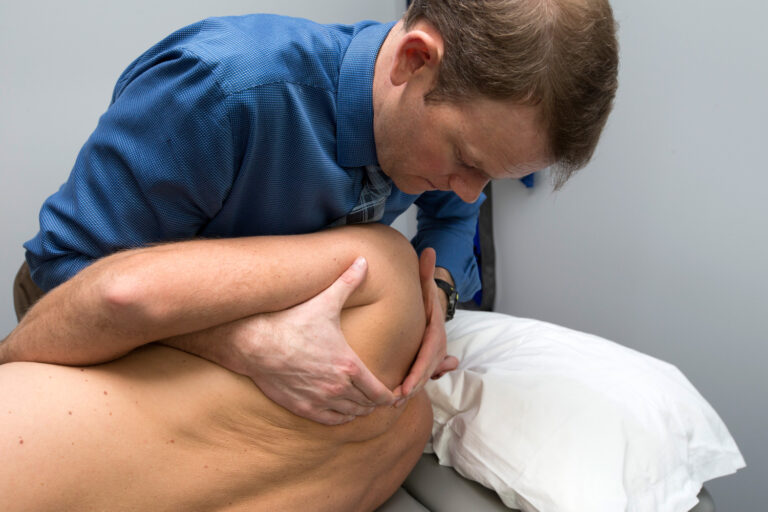
Joint mobilization and manipulation are forms of manual therapy: a physical therapist moves a stiff, painful spinal segment, either with slower graded movements (nonthrust mobilization) or a quick, small-amplitude thrust (manipulation). The guideline treats both as effective and does not favor one over the other.
What manipulation does not do is put a vertebra “back in place.” Imaging studies show the joints don’t change position after a manipulation, which we cover in detail in our article on manipulation and SI joint alignment. The pain relief comes mainly from how the nervous system responds to the input. That relief is real, and it opens a window where moving and loading your back feels possible again.
For a closer look at the technique itself, including who responds best, see Spinal Manipulation for Low Back Pain. If your pain travels into the leg, the evidence on spinal manipulation for sciatica is also encouraging.
Exercise Is What Makes the Results Last
Hands-on treatment calms symptoms in the short term. Exercise is what changes the long-term picture, and for chronic back pain the guideline gives it an A. That grade covers a broad range: trunk strengthening and endurance, specific trunk muscle activation, aerobic exercise, aquatic exercise, and general exercise programs.
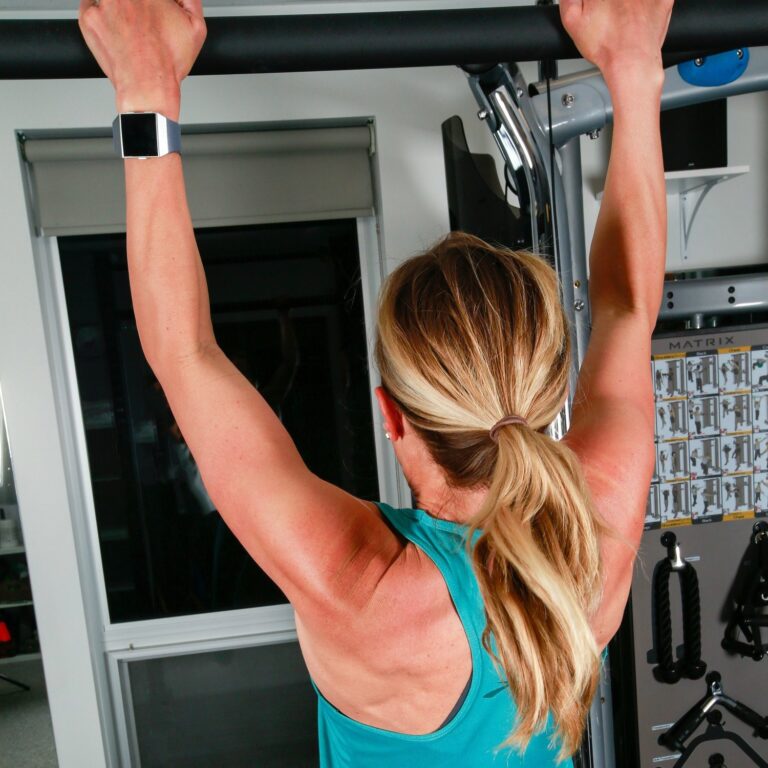
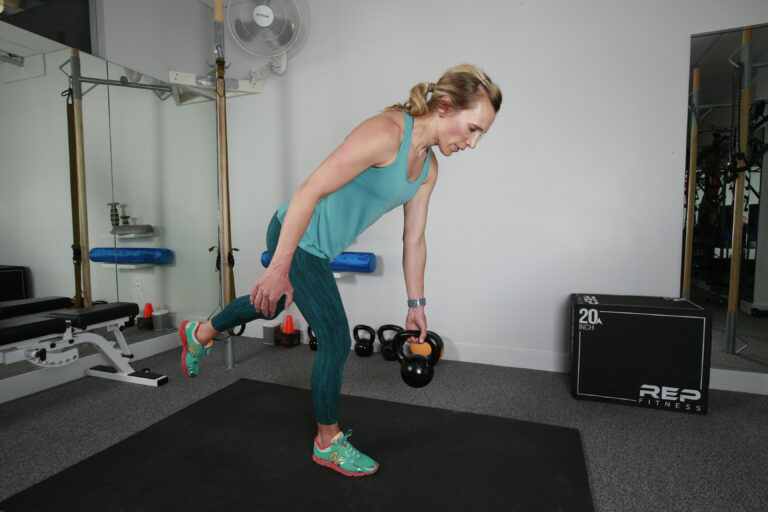
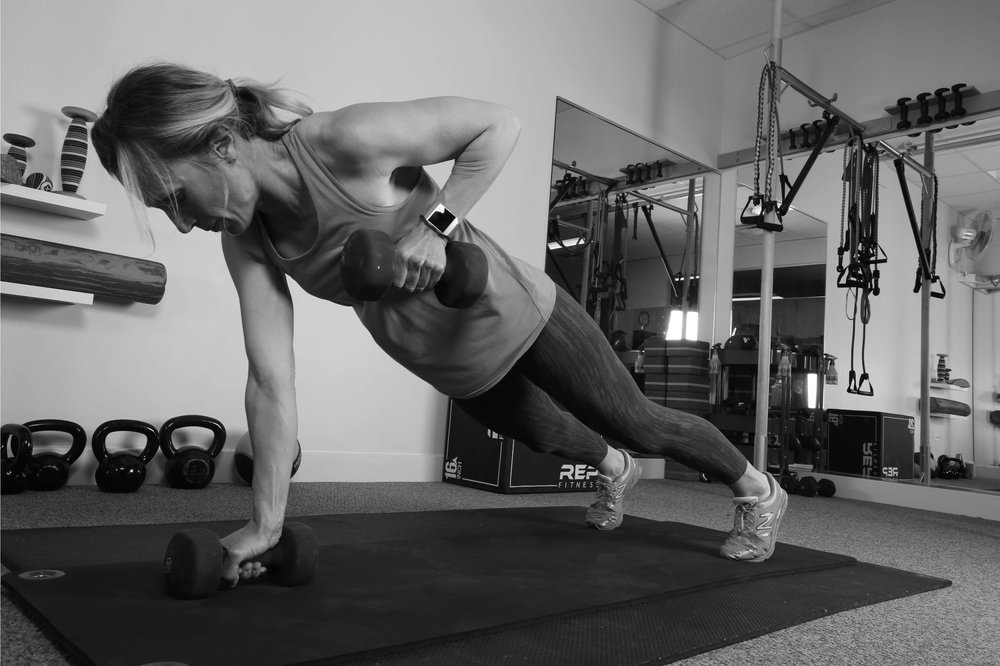
There is no single best exercise for a back. The program that works is the one matched to what you can tolerate now and progressed toward what your life and sport demand. For most of our patients, that means real strength training rather than a list of gentle core drills. Our article on using the vertical pull for low back pain shows what that progression can look like.
For acute back pain without leg symptoms, exercise earns a C. That doesn’t mean you should rest. It means early pain relief carries more weight in the first weeks, and loading builds as symptoms settle.
Where Dry Needling and Soft Tissue Work Fit
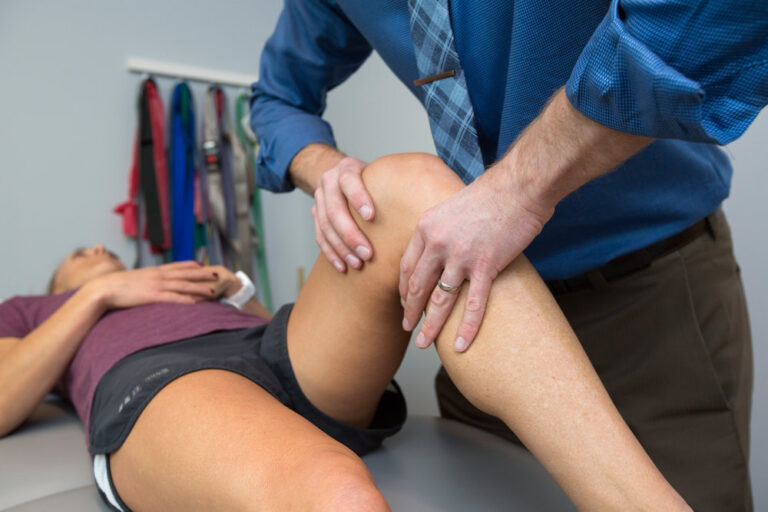
Soft tissue mobilization and massage earn a B for short-term relief in both acute and chronic pain. Dry needling earns a C for chronic low back pain when combined with other treatment, and the guideline lists it as a knowledge gap for acute pain.
We read those grades as a clear role: these are useful additions when a patient’s pain is limiting their ability to exercise, not standalone treatments. In our experience, dry needling for chronic spinal pain works best as a bridge to active rehab.
Education Helps, but Not on Its Own
Understanding why your back hurts, and why most back pain is not a sign of damage, changes how people move and recover. The guideline supports education, but as part of active treatment rather than a replacement for it. Research on education alone for acute low back pain shows why: advice without treatment and exercise doesn’t move outcomes much.
How We Put the Evidence Together at Mend
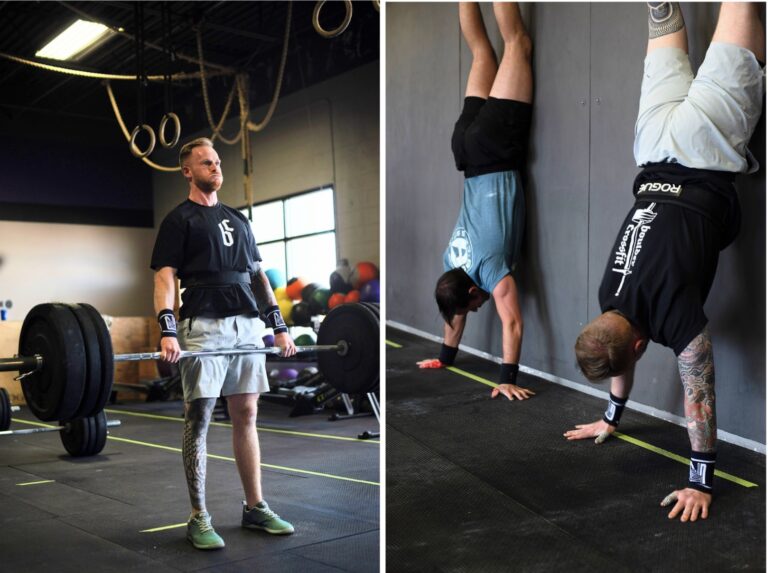
The guideline reads like a sequence, and that is how we use it. Early visits focus on reducing pain with joint mobilization or manipulation, often paired with soft tissue work or dry needling if muscle guarding is limiting movement. As symptoms settle, the balance shifts toward progressive strength training built around your goals, whether that’s deadlifting, trail running, or getting through a workday without stiffness.
Seeing a physical therapist early is also associated with better outcomes and lower costs, which we cover in early physical therapy for low back pain. You can find more of our research reviews in our back and spine library and our collection of manual therapy articles.
If your back pain has lasted more than a couple of weeks, keeps coming back, or is holding you out of training, an evaluation will tell you which of these treatments fits your situation. Start with our low back pain treatment page to see how we approach it in Boulder and Lafayette, and schedule a visit with the experts at MEND.