By Jeff Ryg, PT, DPT, OCS, FAAOMPT
If you came in for shoulder pain and your physical therapist started working on your upper back, there’s a reason. The thoracic spine takes part in every overhead movement you make, and thoracic manipulation is one of the quickest ways to reduce shoulder pain in the first few visits. It works best as a lead-in to strengthening, not as a treatment on its own.
How Your Upper Back Affects Your Shoulder
Try this. Slump in your chair and raise one arm as high as it will go. Then sit tall and do it again. Most people reach noticeably higher the second time. Full overhead reach depends on the thoracic spine extending and rotating, which lets the shoulder blade tilt and rotate along the rib cage.
When the upper back is stiff, whether from long days at a desk, a heavy block of pressing, or months in an aero position on the bike, the shoulder blade has less room to move. The shoulder joint makes up the difference, and the tissues under the acromion end up working closer to the limit of what they tolerate. That’s one reason upper back stiffness shows up so often alongside shoulder impingement.
Clinicians call this regional interdependence. An area away from the pain contributes to the problem, so treating that area improves the painful one.
What the Research Shows
The strongest evidence is for short-term pain relief. A systematic review by Peek and colleagues (Journal of Manual and Manipulative Therapy, 2015) pooled seven studies of thoracic manual therapy for shoulder pain. Across those studies, 76 to 100% of patients reported a significant drop in shoulder pain immediately after thoracic manipulation, and some studies tracked improvements for up to a year. In patients with shoulder impingement specifically, Boyles and colleagues (Manual Therapy, 2009) found significant reductions in pain and disability within 48 hours of thoracic thrust manipulation.
The effect on recovery time is larger than most people expect. Bergman and colleagues (Annals of Internal Medicine, 2004) added manipulative therapy of the upper spine and ribs to usual medical care for patients with shoulder pain. The usual care group took 52 weeks to reach the level of improvement the manipulation group showed at 12 weeks. Bang and Deyle (JOSPT, 2000) reported a similar pattern, with manual therapy plus exercise outperforming the same exercise program alone.
The benefit doesn’t hold up as a stand-alone treatment. In a multicenter trial, Mintken and colleagues (JOSPT, 2016) found that adding cervicothoracic manual therapy to an exercise program didn’t improve outcomes beyond exercise alone. That fits how we use it: manipulation reduces pain and restores motion early so that strengthening can progress faster, and the strengthening is what produces lasting change.
How Thoracic Manipulation Works
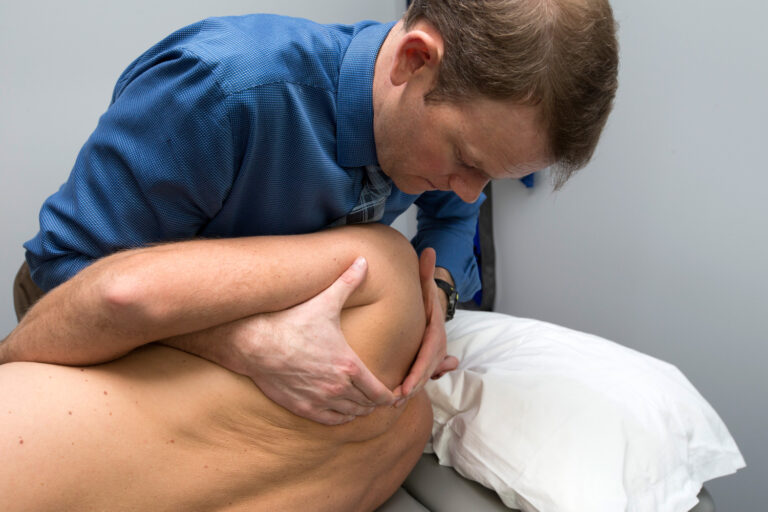
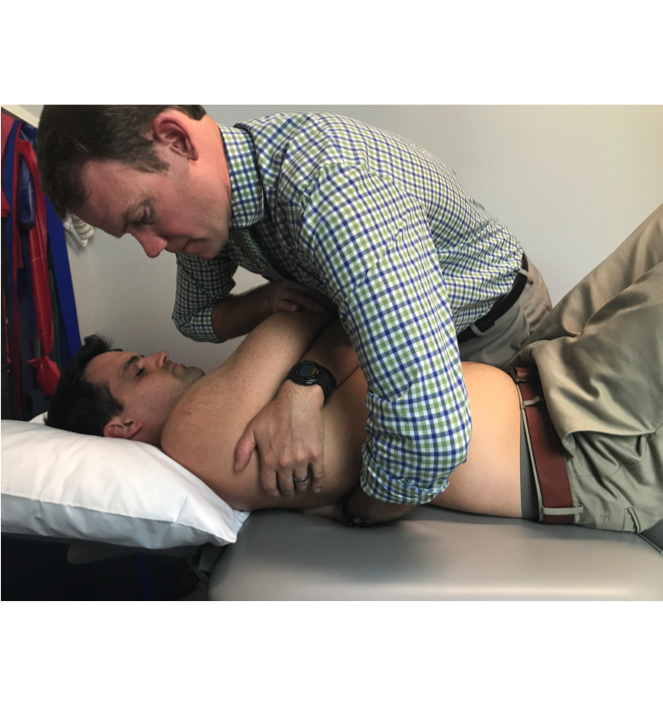
Manipulation doesn’t put a vertebra back in place. A thrust manipulation is a quick, small movement applied to a stiff segment of the spine. The pop you might hear is gas releasing inside the joint, and it isn’t a sign the treatment worked.
The effects are mostly neurophysiological. The current model, described by Bialosky and colleagues (Manual Therapy, 2009), is that manipulation temporarily changes how the nervous system processes pain and reduces protective muscle guarding. That window usually lasts from a few hours to a couple of days. We see the same principle with spinal manipulation for neck pain and at the SI joint: the benefit is real, but it comes from the nervous system, not from realignment.
If you’d rather skip the thrust, slower graded mobilizations to the same segments are an option, and they can produce a similar effect.
What It Looks Like in a Session
We start by checking how your upper back moves and whether restoring that motion changes your shoulder symptoms. If it does, the manipulation is usually done lying on your back or stomach and takes a few seconds. Right afterward, you’ll retest the movement that hurts, often reaching overhead, and then load the new range with rotator cuff and shoulder blade exercises in the same visit. Thoracic mobility exercises at home help hold the gains between sessions.
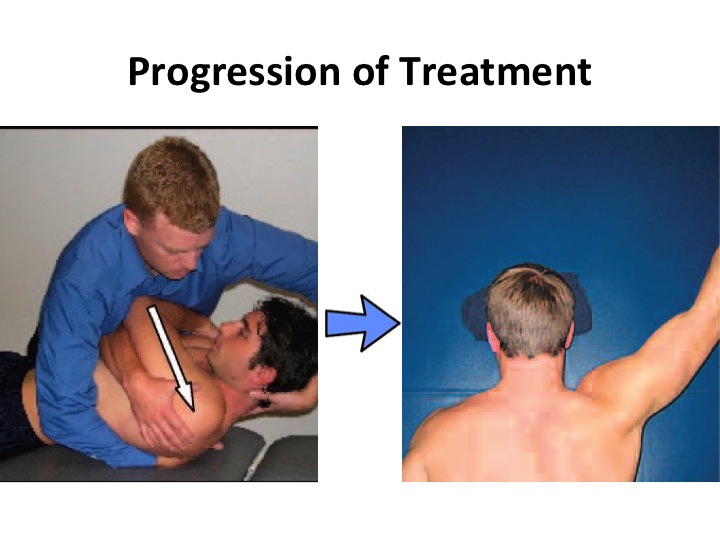
Mild soreness for a day is the most common side effect. We screen for conditions that call for a gentler approach, such as low bone density, and use mobilization or exercise instead when thrust manipulation isn’t a good fit.
Thoracic work is usually one part of a broader plan. Treatment at the shoulder itself often includes joint mobilizations, covered in our guide to shoulder manipulation in physical therapy.
Getting Started
If reaching overhead has been painful for more than a few weeks and your upper back feels stiff, an evaluation will show whether your thoracic spine is part of the problem. You can read how we approach shoulder pain treatment and manual therapy, or book an evaluation. For more, browse our articles on spinal manipulation and the thoracic spine or book an evaluation now.
Frequently Asked Questions
Yes, mainly in the short term. Studies report significant pain reduction immediately after treatment and within 48 hours. Its main value is making strengthening easier to start, so it works best paired with exercise.
No. The pop is gas releasing inside the joint. Research on manipulation hasn’t tied the sound to better outcomes, and mobilizations that produce no sound can have a similar effect.
For most people, yes. Mild soreness for a day or so is the most common side effect. A physical therapist screens for conditions such as low bone density first and uses gentler techniques when thrust manipulation isn’t appropriate.
References
- Bang MD, Deyle GD. Comparison of supervised exercise with and without manual physical therapy for patients with shoulder impingement syndrome. J Orthop Sports Phys Ther. 2000;30(3):126-137.
- Bergman GJ, et al. Manipulative therapy in addition to usual medical care for patients with shoulder dysfunction and pain: a randomized, controlled trial. Ann Intern Med. 2004;141:432-439.
- Bialosky JE, et al. The mechanisms of manual therapy in the treatment of musculoskeletal pain: a comprehensive model. Man Ther. 2009;14(5):531-538.
- Boyles RE, et al. The short-term effects of thoracic spine thrust manipulation on patients with shoulder impingement syndrome. Man Ther. 2009;14:375-380.
- Mintken PE, et al. Cervicothoracic manual therapy plus exercise therapy versus exercise therapy alone in the management of individuals with shoulder pain: a multicenter randomized controlled trial. J Orthop Sports Phys Ther. 2016;46(8):617-628.
- Peek AL, Miller C, Heneghan NR. Thoracic manual therapy in the management of non-specific shoulder pain: a systematic review. J Man Manip Ther. 2015;23(4):176-187.