
By Jeff Ryg, PT, DPT, OCS, FAAOMPT
If your knee feels stiff after sitting, catches when you try to bend it all the way, or hasn’t moved the same since an injury or surgery, joint mobilization is one of the most useful tools we have at Mend. It’s a hands-on technique, not a stretch you’d do on your own, and it targets motion your knee can’t produce by itself.
What Is Knee Mobilization?
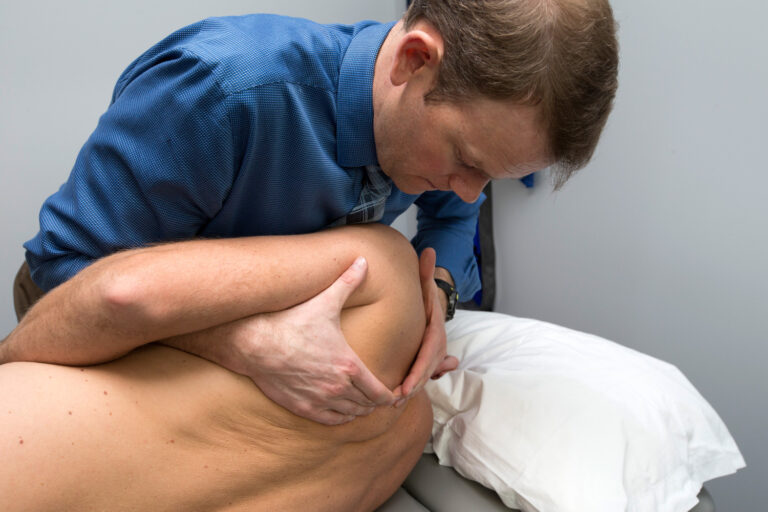
Knee mobilization is a manual therapy technique in which a physical therapist applies slow, controlled, graded movement to the knee joint. Active bending and straightening, the motion you can do on your own, only tells part of the story. Underneath that movement are small accessory motions, glides, rolls, and spins between the joint surfaces, that you can’t consciously produce. When those accessory motions get restricted, often after an injury, surgery, or a long stretch of stiffness, the joint stops moving the way it should even if strength and effort are there.
The knee is really two joints working together. The tibiofemoral joint, where the thigh bone meets the shin bone, drives most of the bending and straightening. The patellofemoral joint, where the kneecap tracks over the front of the thigh bone, matters most for stairs, lunging, and pushing off. Mobilization can target either joint depending on where the restriction sits.
We grade mobilizations from gentle, rhythmic oscillations used mainly to calm pain (Grades I–II) to larger, sustained end-range stretches used to restore motion (Grades III–IV), and match the grade to whether pain or stiffness is the bigger problem. For a closer look at how that grading plays out session to session, see our piece on knee joint mobilization for pickleball players.
Knee Mobilization for Patellofemoral Pain
Patellofemoral pain, pain around or behind the kneecap, is the most common source of knee pain we see. A 2022 systematic review and meta-analysis published in the Journal of Orthopaedic & Sports Physical Therapy examined 65 randomized controlled trials and found that knee-targeted exercise combined with manual therapy to the patellofemoral and tibiofemoral joints produced better short-term outcomes than exercise alone.
Contributing factors to patellofemoral pain usually include hip and knee weakness, altered lower-extremity mechanics, and changes in how force distributes across the kneecap. Mobilization to the patellofemoral and tibiofemoral joints can improve movement patterns and reduce pain and self-reported dysfunction in the short term, which is exactly what’s needed to tolerate the strengthening work that produces lasting change. We cover the full treatment picture, including which exercises matter most, in our guide to treating patellofemoral pain.
Knee Mobilization for Knee Osteoarthritis
Osteoarthritis brings a different combination of pain, stiffness, and reduced mobility, one that shows up on stairs, in a squat, and on long walks. A randomized controlled trial published in Annals of Internal Medicine by Deyle and colleagues found that a program combining manual physical therapy with supervised exercise produced meaningfully better outcomes for knee osteoarthritis than a home exercise program alone, with benefits that held up at long-term follow-up. That trial, along with the body of research that followed it, is a big part of why manual therapy plus exercise is now considered a clinically effective, cost-effective approach to knee arthritis rather than a nice-to-have add-on.
For patients with arthritic knees, mobilization addresses the joint side of the equation, working to restore motion and reduce pain, while progressive exercise builds the strength and capacity needed for the improvement to last. Neither piece does much on its own. We go deeper on exercise dosing for arthritic knees in our article on dry needling and knee arthritis.
What a Mobilization Session Feels Like
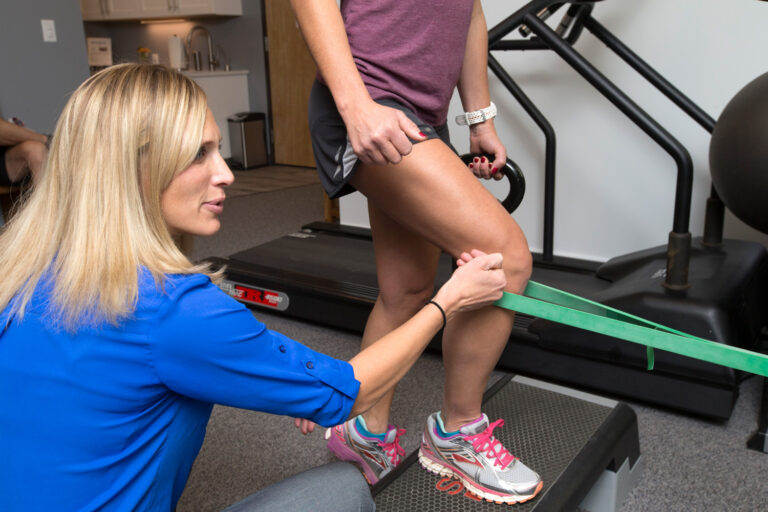
Most patients are surprised by how gentle it is. You’ll typically be lying down with your leg supported and relaxed while your therapist stabilizes one part of the knee and applies a smooth, rhythmic glide to the other. It shouldn’t be sharp or alarming, a mild stretch or pressure is normal, and you should be able to tell your therapist right away if something feels off. Many people notice easier, freer movement immediately afterward, which is the moment we reinforce with the exercises you’re given that same visit.
How Mobilization Fits Into Your Treatment Plan
Mobilization isn’t a standalone fix. At Mend, it’s one part of a multimodal approach that combines hands-on treatment with therapeutic exercise, education, and activity modification. Mobilization creates a window of improved movement or decreased pain, and we use that window to reinforce the change through strengthening and functional exercise before it closes back up. Used on its own, a mobilization session might feel good for a day or two. Paired with the right loading program, it becomes the foundation for real, lasting change in how your knee moves.
If your knee feels stiff first thing in the morning, doesn’t fully bend or straighten compared to the other side, or has plateaued despite consistent strengthening work, that’s worth a manual therapy evaluation. Book a knee evaluation at our Boulder or Lafayette clinic, or learn more about our full approach on our knee pain treatments page.
Frequently Asked Questions
Knee mobilization is a hands-on physical therapy technique where a therapist applies slow, graded movement to the knee joint to restore accessory motion, the small glides and rolls between joint surfaces that you can’t produce through active movement alone. It’s used to reduce pain and improve range of motion.
Knee joint mobilization is used to treat stiffness and pain from knee osteoarthritis, patellofemoral pain, and post-surgical or post-injury restrictions, including after ACL reconstruction. It’s typically paired with therapeutic exercise rather than used as a standalone treatment.
Yes. Knee extension mobilization targets the specific accessory motion needed to achieve full straightening, which is often one of the last ranges to return after surgery or a significant knee injury. A physical therapist grades the technique based on whether pain or stiffness is the primary limiting factor.