
CrossFit Open 26.1 places a significant metabolic demand on the lower body through repeated high volume wall balls. While leg fatigue is expected many athletes experience a rapid heart rate spike early in the workout that limits performance well before muscular failure.
In most cases this response is driven by inefficient breathing mechanics rather than insufficient leg strength or conditioning.
Understanding how breathing and pacing interact during wall balls can meaningfully improve performance in 26.1.
What 26.1 workout is:
For time (12-minute cap): • 20 wall-ball shots
• 18 box jump-overs
• 30 wall-ball shots
• 18 box jump-overs
• 40 wall-ball shots
• 18 medicine-ball box step-overs • 66 wall-ball shots
• 18 medicine-ball box step-overs • 40 wall-ball shots
• 18 box jump-overs
• 30 wall-ball shots
• 18 box jump-overs
• 20 wall-ball shots
RX weights:
• Women — 14 lb (6 kg) ball, 9 ft target, 20′′ box • Men — 20 lb (9 kg) ball, 10 ft target, 24′′ box
Why Wall Balls Elevate Heart Rate So Quickly
Wall balls require coordinated hip knee and trunk extension while maintaining an upright torso. When breathing becomes shallow or poorly timed the diaphragm cannot effectively contribute to trunk stability. This increases reliance on accessory muscles elevates oxygen demand and accelerates cardiovascular strain.
In a workout with repeated wall ball sets this inefficiency compounds quickly.
Diaphragm and Pelvic Control in Wall Ball Mechanics
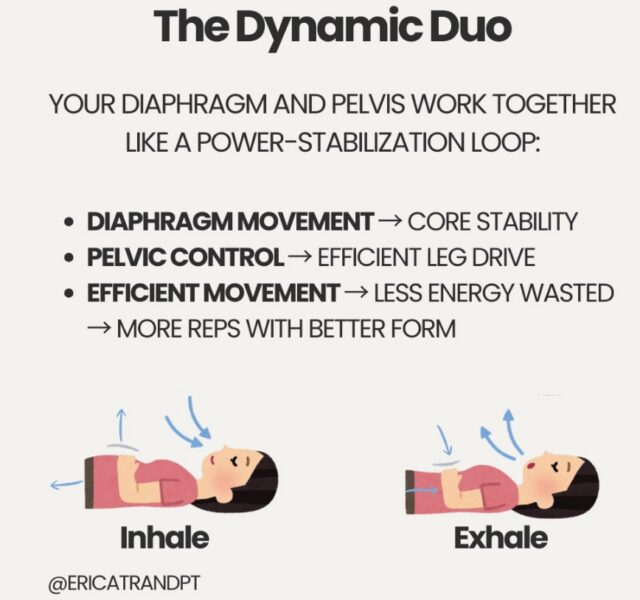
The diaphragm and pelvic floor function together as part of a pressure management system that supports spinal stability and force transfer.
When breathing is coordinated:
• Diaphragm excursion contributes to trunk stability
• Pelvic control supports efficient force generation from the legs
• Movement becomes more economical reducing overall energy expenditure
Disruption in this system leads to increased muscular tension decreased mechanical efficiency and earlier onset of fatigue.
The Two Breath Wall Ball Cycle
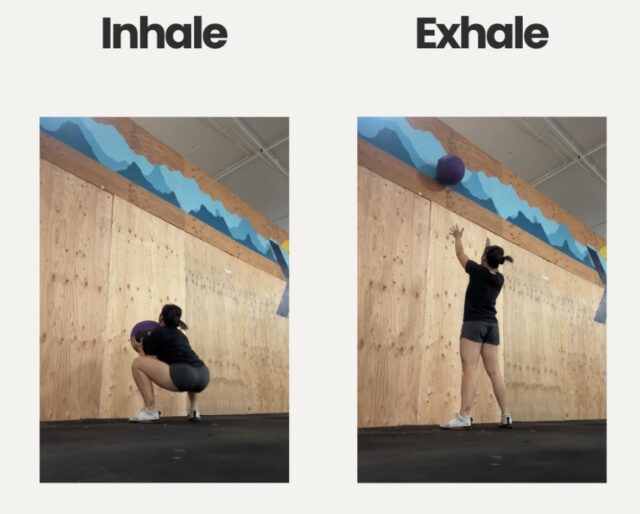 Two breath wall ball cycle
A consistent two breath pattern helps regulate intra abdominal pressure and cardiovascular response during wall balls.
• Inhale during the descent into the squat
• Exhale forcefully during ascent and ball release
This pattern supports trunk stiffness during the eccentric phase and facilitates effective force transfer during the concentric phase. Consistent exhalation also limits breath holding which is a common contributor to rapid heart rate escalation.
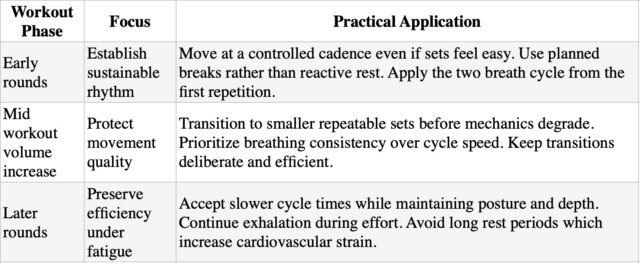
Pacing Recommendations for CrossFit Open 26.1
Effective pacing in 26.1 is critical due to the cumulative wall ball volume and cardiovascular demand. The goal is to maintain mechanical efficiency and breathing control throughout the workout rather than chasing early speed.
Practical Outcomes on the Floor
When breathing and pacing are well managed athletes commonly observe • Lower perceived exertion for the same work output
• Improved wall ball consistency across sets
• Reduced compensatory movement patterns
• Greater capacity to complete later repetitions with control
Leg fatigue remains present but becomes more manageable and predictable.
Summary
CrossFit Open 26.1 is not solely a test of leg endurance. It is a test of movement efficiency breathing coordination and pacing discipline.
Athletes who apply a structured breathing strategy and respect sustainable pacing parameters are better positioned to maintain performance across the full duration of the workout.
Controlled breathing supports efficient movement and efficient movement supports better results.
CrossFit Open 26.1 Breathing Strategy and Pacing for Wall Balls
CrossFit Open 26.1 places a significant metabolic demand on the lower body through repeated high
Click Here to schedule your next appointment with the experts at MEND