Updated: 7/22/26
If arthroscopic surgery has come up as an option for your knee arthritis or a meniscus tear, the evidence against it has only gotten stronger, and there’s now long-term data behind it that wasn’t available when we first covered this topic.
What the Research Shows
A Cochrane review on arthroscopic knee surgery for degenerative knee disease (O’Connor et al., Cochrane Database Syst Rev. 2022) analyzed 16 randomized trials covering 2,105 patients, including four trials that compared real surgery directly to placebo (sham) surgery. The conclusion was direct: arthroscopic surgery provided little to no clinically important benefit in knee pain or function.
A 10-year follow-up of the FIDELITY trial, published as a correspondence in the New England Journal of Medicine in 2026 (Järvinen et al.), extends that finding with long-term outcome data. Patients who underwent arthroscopic partial meniscectomy for a degenerative meniscus tear reported no better pain relief, function, or quality of life at 10 years than patients who received sham surgery. The surgical group also trended toward worse outcomes on two measures that matter for long-term joint health: progression to knee osteoarthritis and the need for a second knee surgery, including total knee replacement.
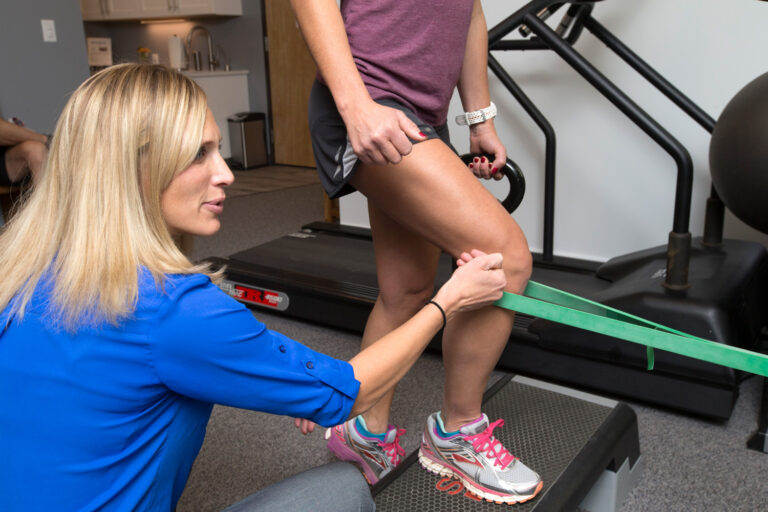
Instead of surgery, patients are better served with conservative care, including physical therapy. In our Boulder and Lafayette practice, this patient population is most often treated with manual therapy, including hands-on knee joint mobilizations, alongside a progressive program targeting the strength deficits that actually drive symptoms. This approach has been shown to delay or prevent the need for a future knee replacement in patients with knee arthritis.
Why an MRI Finding Alone Doesn’t Settle the Question
A meniscus tear or arthritic changes on imaging are common findings, including in people with no knee pain at all. That’s the reason imaging alone shouldn’t drive the surgical decision: what shows up on a scan and what’s actually generating your symptoms are frequently two different questions, and treating the image instead of the person is how a lot of unnecessary scopes happen.
Where Surgery Still Makes Sense
This evidence applies to degenerative tears and arthritic changes, not every knee injury. Surgery remains appropriate for acute traumatic tears, particularly in younger or more active patients, and for knees with true mechanical locking, where a torn fragment is physically blocking full extension. If that’s your presentation, a surgical referral is the right call, and we’ll tell you that directly rather than defaulting to a PT-first script.
Frequently Asked Questions
Usually not, if the tear or arthritis is degenerative and there’s no mechanical locking. A 2022 Cochrane review of 2,105 patients and new 10-year outcome data both show arthroscopic surgery does not outperform physical therapy for pain or function, and may carry a higher long-term risk of arthritis progression and further surgery.
For degenerative tears and arthritis, no. Trials comparing the two directly, including sham-surgery-controlled studies, have not shown a clinically meaningful advantage for surgery over structured physical therapy.
The tear itself may not close, but that’s often not the deciding factor. Most patients with a degenerative tear improve significantly with targeted physical therapy, and symptoms frequently resolve once strength and knee loading tolerance improve, regardless of what the tear looks like on imaging.
Ten-year FIDELITY data suggests it might, showing a higher rate of osteoarthritis progression and eventual knee replacement in the surgical group compared to sham surgery. This is long-term data from one trial, not a universal rule, and it’s worth discussing directly with your PT or surgeon for your specific case.
If you’ve been told you need a knee scope for arthritis or a meniscus tear, schedule a knee evaluation with us first. We’ll assess whether the tear is actually driving your symptoms and build a strength and mobility plan around it before you book an OR date.