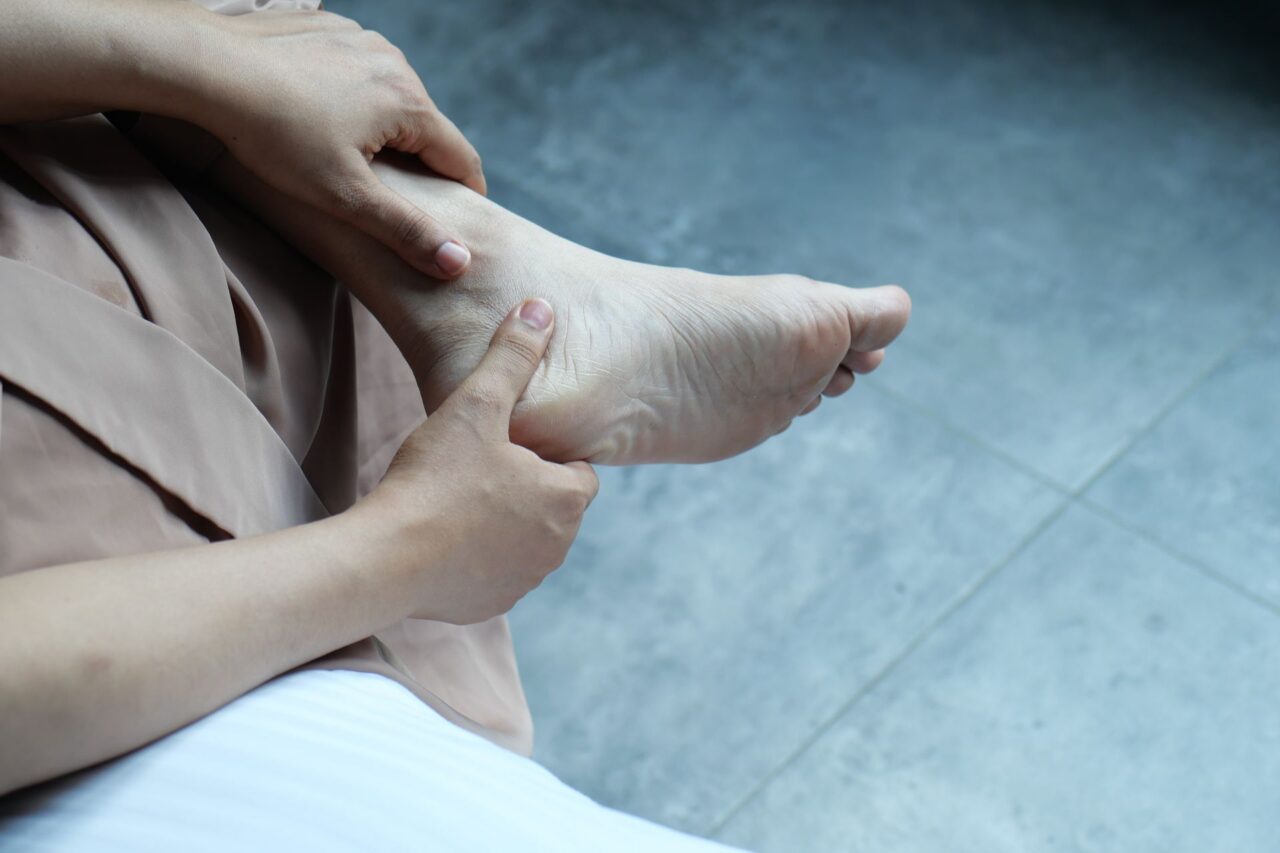
Plantar fasciitis is the most common cause of heel pain. Patients often describe sharp pain under the heel with their first steps in the morning, sometimes spreading into the arch. The pain is often worse when you stand or walk again after sitting. An estimated 2 million Americans develop plantar fasciitis each year (Martin et al., 2014), and as many as 10% of people have heel pain at some point in their lives (Martin et al., 2014; Crawford and Thomson, 2003). It accounts for about 1 million outpatient visits a year in the United States (Fraser et al., 2017a).
Physical therapy has strong guideline support for this condition, yet few people with heel pain ever see a physical therapist. This article covers what the evidence supports, where orthotics fit, and what to expect from treatment.
What plantar fasciitis is
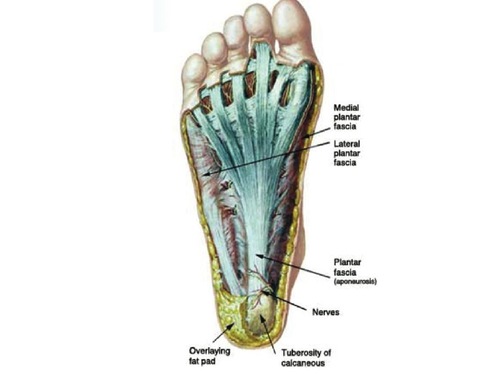
The condition was long thought to be inflammatory, which is where the “-itis” comes from. Current research points to a mostly degenerative process, which is why you will also see it called plantar fasciosis. When Lemont and colleagues examined tissue from 50 people who had surgery for chronic plantar fasciitis, they found degeneration and fragmentation of the fascia and no inflammation (Lemont et al., 2003). The 2023 clinical practice guideline describes the pathology as a spectrum with both inflammatory and degenerative features (Koc et al., 2023).
Contributing factors include a loss of ankle mobility, calf muscle tightness, and foot weakness. The guideline notes it is most common between ages 40 and 60, and more common in runners and people who stand for long periods. Research has also linked weakness and atrophy of the small muscles inside the foot to chronic heel pain (see foot atrophy and weakness in patients with heel pain and intrinsic foot muscle atrophy and heel pain).
What is lateral plantar fasciitis?
Lateral plantar fasciitis involves irritation or degeneration of the lateral band of the plantar fascia, producing pain along the outer portion of the heel or arch rather than the more typical plantar-medial heel pain associated with traditional plantar fasciitis. Patients often report localized tenderness along the lateral band, discomfort with prolonged walking or standing, and pain reproduced with palpation or tensioning of the plantar fascia.
During the exam, we assess the course of the lateral band, foot mechanics, ankle mobility, calf flexibility, and the windlass mechanism while also screening for nerve irritation or calcaneal stress injury.
Treatment typically focuses on activity modification, progressive loading, plantar fascia and calf mobility, footwear recommendations, and targeted strengthening to improve foot mechanics and load tolerance.
If pain is unusually sharp, associated with numbness or tingling, worsens with calcaneal compression, or fails to improve with conservative care, further evaluation, imaging, or referral may be warranted to rule out a stress fracture, nerve entrapment, or other underlying pathology.
What the 2023 guideline recommends
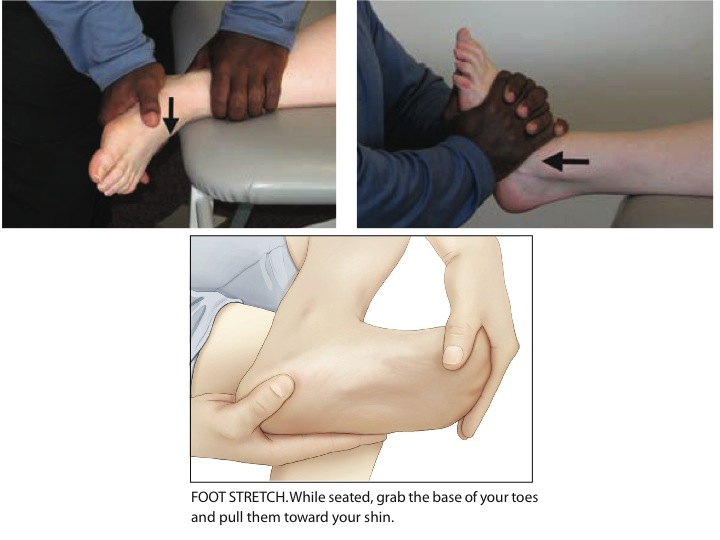
The 2023 revision of the heel pain guideline from the Academy of Orthopaedic Physical Therapy gives its strongest recommendations (grade A) to manual therapy, plantar fascia and calf stretching, foot taping for short-term relief of up to six weeks, and night splints for one to three months in people with consistent first-step pain. Dry needling gets a grade B recommendation for trigger points in the calf and foot muscles. Resistance training for the foot and ankle muscles is recommended at grade C. The guideline recommends against using ultrasound to enhance the benefits of stretching (grade A).
Manual therapy
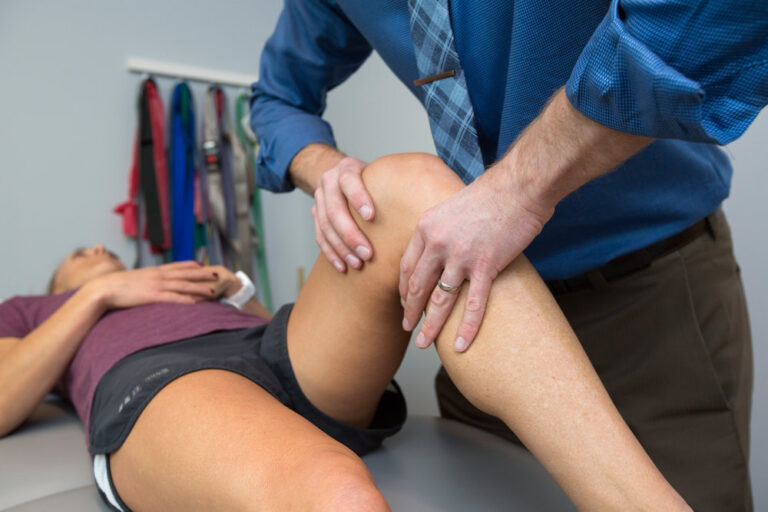
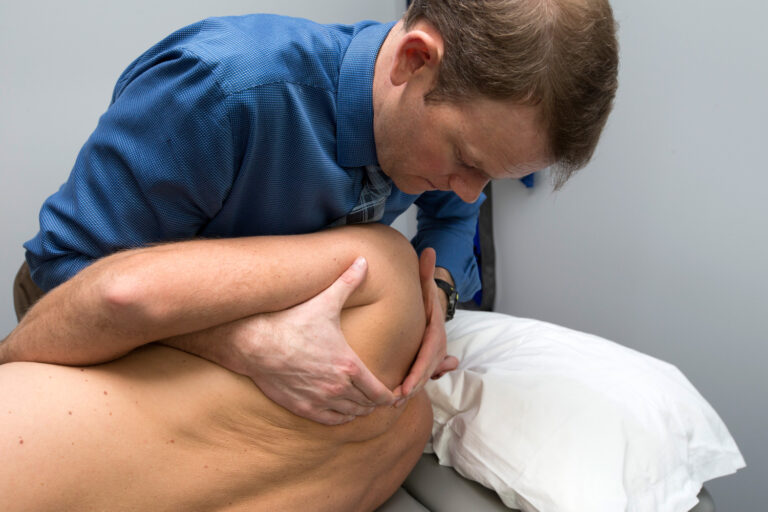
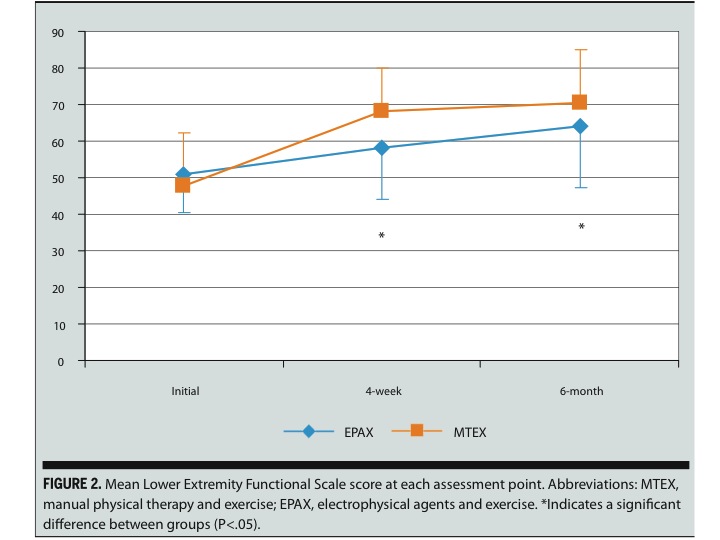
Manual therapy means hands-on joint and soft tissue techniques to restore mobility in the leg, ankle, and foot. Fraser and colleagues reviewed 7 randomized controlled trials of manual therapy for plantar fasciitis in the Journal of Manual and Manipulative Therapy (Fraser et al., 2017b). Manual therapy produced greater improvements in function than stretching, strengthening, or modalities in 6 of the 7 trials, from 4 weeks out to 6 months. Pain results were mostly equivalent between groups. The authors recommended that clinicians use both joint and soft tissue techniques alongside stretching and strengthening. A systematic review by Brantingham and colleagues also reported the effectiveness of manual therapy interventions for lower extremity conditions, and rated the evidence for short-term treatment of plantar fasciitis as moderate (Brantingham et al., 2012).
Individual trials point the same way. In a multicenter trial of 60 patients, manual therapy and exercise beat electrophysical agents and exercise on pain and function at 4 weeks and 6 months (Cleland et al., 2009). In another trial of 60 patients, adding trigger point manual therapy to a self-stretching program improved pain and function more than stretching alone (Renan-Ordine et al., 2011). In our Boulder practice we combine manual therapy with exercise to quickly reduce pain and improve range of motion in the foot and ankle. You can read more about our manual therapy approach.
Dry needling
In a blinded trial of 84 patients, real dry needling reduced first-step heel pain more than sham needling over six weekly sessions, with one additional patient helped for every four treated (Cotchett et al., 2014). The difference was modest, and minor, short-lived soreness was common. We cover the research in more detail in dry needling for heel pain.
Strengthening the foot
Strengthening the small muscles of the foot is one of the best ways we know to relieve foot pain and reduce the risk of recurrence. A systematic review of 7 studies found that high-load resistance training may reduce plantar fasciitis pain and improve function, and that foot exercises may improve intrinsic foot strength (Huffer et al., 2016). The review found limited evidence for minimalist shoes.
Despite improvements in strength, function, and pain, the exercises did not change the thickness of the plantar fascia. This is similar to what we see in tendon conditions, where symptoms improve before the tissue changes, and complete healing can take up to a year. If you run, see our article on running and plantar fasciitis for load management.
Do you need orthotics for plantar fasciitis?
Orthotics can help in some cases, but most patients do not need them. The 2023 guideline recommends against using foot orthoses on their own for short-term pain relief (grade B) and says they may be used in combination with other treatments (grade C). Atrophy of the small muscles in the foot is most pronounced in long-term orthotic users, and it can lead to further weakness and dysfunction.
Strength work can do some of the job people expect an insert to do. In a small study of 14 university students with flexible flat feet, five weeks of short foot exercises improved the medial longitudinal arch (measured by navicular drop) and dynamic balance more than arch support insoles (Kim and Kim, 2016). It was a small trial in people without heel pain, so it supports the direction more than the size of the effect. We cover the limits of inserts in more detail in orthotics for heel pain and plantar fasciitis.
Steroid injections and shockwave therapy
The evidence for corticosteroid injections into the plantar fascia is limited. Two systematic reviews found no substantive clinical benefit, and the 2014 guideline concluded that the benefits do not offset the risk of harm, including long-term disablement (Martin et al., 2014). Injections may also result in serious side effects including plantar fascia rupture (Acevedo and Beskin, 1998; Sellman, 1994). In one series of 765 patients with plantar fasciitis, 51 had a rupture, and 44 of those followed a steroid injection. Rupture often relieved the original heel pain but led to new problems in the arch and midfoot, and half of the patients followed had fair or poor results at an average of 27 months (Acevedo and Beskin, 1998).
A systematic review found extracorporeal shockwave therapy may marginally reduce heel pain compared with placebo, but the evidence was very low quality and the effect was small (Landorf and Menz, 2008).
Why so few people get physical therapy for heel pain
Fraser and colleagues reviewed insurance records for 819,963 privately insured patients with plantar fasciitis from 2007 to 2011. Only 7.1% were evaluated by a physical therapist. Of those who were, 87.2% received manual therapy and 89.5% received supervised rehabilitation. Patients who received manual therapy needed 1.3 fewer visits and had about $340 lower cost of care (Fraser et al., 2017a).
When to see a physical therapist
If first-step heel pain has lasted more than a few weeks, or it is changing how you walk or run, a physical therapy evaluation will identify the mobility and strength deficits driving it. Book a heel pain evaluation with one of our physical therapists. More on this topic in our Ankle and Foot articles.
Frequently asked questions
The 2023 guideline gives its strongest recommendations to manual therapy, plantar fascia and calf stretching, taping for short-term relief, and night splints for people with first-step pain. Most patients do best with a combination, plus progressive strengthening.
Yes. Manual therapy combined with exercise improves function more than stretching, strengthening, or modalities alone in most trials, and the 2023 guideline grades manual therapy and stretching at the highest level.
A review of 7 randomized trials found manual therapy improved function more than comparison treatments in 6 of them, from 4 weeks to 6 months. Pain results were mostly similar between groups.
Most patients do not. The 2023 guideline advises against using orthotics alone for short-term pain relief, though they may help some patients when combined with other treatment.
High-load resistance exercises for the foot and calf, and exercises for the small muscles inside the foot such as the short foot exercise, have the best support. A physical therapist sets the starting load and progression.
Lateral plantar fasciitis is irritation or degeneration of the lateral band of the plantar fascia. It causes pain along the outer portion of the heel or arch, rather than the more typical pain at the inside of the heel. Treatment focuses on activity modification, progressive loading, plantar fascia and calf mobility, footwear recommendations, and targeted strengthening.
References
- Martin RL, Davenport TE, Reischl SF, et al. Heel pain, plantar fasciitis: revision 2014. J Orthop Sports Phys Ther. 2014;44(11):A1-A33. doi:10.2519/jospt.2014.0303
- Crawford F, Thomson C. Interventions for treating plantar heel pain. Cochrane Database Syst Rev. 2003;(3):CD000416. doi:10.1002/14651858.CD000416
- Fraser JJ, Glaviano NR, Hertel J (2017a). Utilization of physical therapy intervention among patients with plantar fasciitis in the United States. J Orthop Sports Phys Ther. 2017;47(2):49-55. doi:10.2519/jospt.2017.6999
- Lemont H, Ammirati KM, Usen N. Plantar fasciitis: a degenerative process (fasciosis) without inflammation. J Am Podiatr Med Assoc. 2003;93(3):234-237. doi:10.7547/87507315-93-3-234
- Koc TA Jr, Bise CG, Neville C, Carreira D, Martin RL, McDonough CM. Heel pain, plantar fasciitis: revision 2023. J Orthop Sports Phys Ther. 2023;53(12):CPG1-CPG39. doi:10.2519/jospt.2023.0303
- Fraser JJ, Corbett R, Donner C, Hertel J (2017b). Does manual therapy improve pain and function in patients with plantar fasciitis? A systematic review. J Man Manip Ther. 2017;26(2):55-65. Published online May 3, 2017; print issue 2018. Free full text (PMC)
- Brantingham JW, Bonnefin D, Perle SM, Cassa TK, Globe G, Pribicevic M, Hicks M, Korporaal C. Manipulative therapy for lower extremity conditions: update of a literature review. J Manipulative Physiol Ther. 2012;35(2):127-166. doi:10.1016/j.jmpt.2012.01.001
- Cleland JA, Abbott JH, Kidd MO, Stockwell S, Cheney S, Gerrard DF, Flynn TW. Manual physical therapy and exercise versus electrophysical agents and exercise in the management of plantar heel pain: a multicenter randomized clinical trial. J Orthop Sports Phys Ther. 2009;39(8):573-585. doi:10.2519/jospt.2009.3036
- Renan-Ordine R, Alburquerque-Sendin F, de Souza DP, Cleland JA, Fernandez-de-Las-Penas C. Effectiveness of myofascial trigger point manual therapy combined with a self-stretching protocol for the management of plantar heel pain: a randomized controlled trial. J Orthop Sports Phys Ther. 2011;41(2):43-50. doi:10.2519/jospt.2011.3504
- Cotchett MP, Munteanu SE, Landorf KB. Effectiveness of trigger point dry needling for plantar heel pain: a randomized controlled trial. Phys Ther. 2014;94(8):1083-1094. Free full text (PMC)
- Huffer D, Hing W, Newton R, Clair M. Strength training for plantar fasciitis and the intrinsic foot musculature: a systematic review. Phys Ther Sport. 2016;24:44-52. Published online Aug 18, 2016; print volume 2017. doi:10.1016/j.ptsp.2016.08.008
- Kim EK, Kim JS. The effects of short foot exercises and arch support insoles on improvement in the medial longitudinal arch and dynamic balance of flexible flatfoot patients. J Phys Ther Sci. 2016;28(11):3136-3139. Free full text (J-STAGE)
- Acevedo JI, Beskin JL. Complications of plantar fascia rupture associated with corticosteroid injection. Foot Ankle Int. 1998;19(2):91-97. PubMed
- Sellman JR. Plantar fascia rupture associated with corticosteroid injection. Foot Ankle Int. 1994;15(7):376-381. doi:10.1177/107110079401500706
- Landorf KB, Menz HB. Plantar heel pain and fasciitis. Clin Evid (Online). 2008;2008:1111. Free full text (PMC)