
Background
For most of my life, osteoporosis felt like something I would deal with later. Something for my future self. Something that showed up in your 60s after a doctor ordered a DEXA scan and told you your bones were fragile.
But bone loss does not suddenly appear at 65. It starts decades earlier, quietly. By the time most women get their first DEXA scan, which is typically around age 65, a significant amount of bone loss has already occurred and much of it cannot be reversed.
As an Asian woman in my 20s and 30s, learning this changed the way I think about health and training.
Growing Up Asian and Lactose Intolerant
I grew up lactose intolerant. Milk was not something I drank regularly, cheese was optional at best, and calcium was never something I thought about. That is a common experience for a lot of Asian women.
Many of us did not grow up with dairy as a staple. We learned early on that milk upset our stomachs, so we avoided it. Add in vitamin D deficiency from indoor lifestyles and avoiding the sun, and it is easy to see how bone health can quietly fall through the cracks.
I did not think this mattered when I was younger. I was active. I felt fine. But feeling fine and building bone are not the same thing.
Your 20s and 30s Are Your Bone-Building Window
Bone mineral density peaks somewhere between your late 20s and early 30s. Whatever you build during this time is essentially your long-term reserve.
Research shows that Asian women, on average, reach a lower peak bone mass than White women. One study found that women aged 25 to 35 in an Asian Indian population had bone mineral density 14 to 21 percent lower than Caucasian women of the same age, even after accounting for body size. This means many Asian women start adulthood with less bone in the bank before natural age-related bone loss even begins. [1]
This does not mean osteoporosis is inevitable. It means prevention matters earlier.
Lower Bone Density Does Not Mean Lower Risk Awareness
Large studies show that Asian women often have lower bone mineral density across multiple ethnic groups, including Chinese, Korean, Japanese, Filipina, Vietnamese, and South Asian women. In one study of women aged 60 to 89, each one-point drop in bone density T-score more than doubled the risk of hip fracture among Asian women.
Most of us can think of a nai nai, ama, halmeoni, lola, or auntie who broke her hip from what seemed like a simple fall, and only later did we learn osteoporosis played a role. These fractures often occur later in life, but the groundwork is laid decades earlier. [2][3][4]
Diet Culture, Movement, and Mixed Messages
Growing up, I was encouraged to stay small, not lift heavy, and focus on being thin rather than strong. Walking was praised. Strength training was optional or discouraged.
The issue is that bones need load. They need resistance and impact to grow stronger. Yoga, walking, and even tai chi are great for balance and coordination. Tai chi is especially amazing for preventing falls, but research shows it does not provide enough mechanical stimulus to significantly increase bone mineral density on its own. [6][7] That means tai chi is a powerful complement, but it should be paired with resistance or impact training to actually stimulate bone growth.
On top of that, chronic under-eating, stress, and irregular cycles, which are incredibly common in young women, can disrupt hormones that are essential for bone formation.
What Being Proactive Actually Looks Like
Being proactive does not mean obsessing over your bones. It means supporting them while your body is most responsive. That includes resistance training two to four times per week with exercises like squats, lunges, presses, rows, deadlifts, and loaded carries. It includes eating enough calories and protein to support training. It includes getting adequate calcium and vitamin D from foods or supplements if needed.
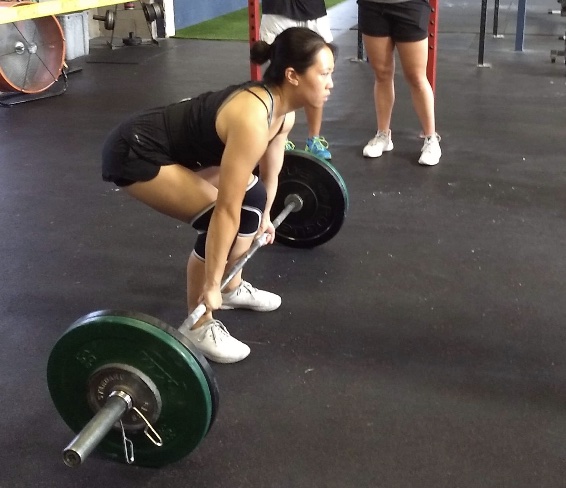
I started CrossFit a few years ago, and it completely changed the way I think about my body. I realized I could do more than I ever imagined. Today, I can deadlift 2.15 times my body weight and squat 1.76 times my body weight. Knowing my bones and muscles are stronger than I ever expected gives me confidence not just in the gym, but in everyday life, from lifting furniture to carrying 5 gallon water jugs up the stairs. CrossFit taught me that strength training is not just about aesthetics. It is preventative healthcare that protects my future self.
Why Waiting for a DEXA Scan Is Too Late
DEXA scans are diagnostic tools. They tell you when bone loss has already occurred. They do not prevent it. Most women are not screened until age 65 unless they have significant risk factors. That means bone loss can progress silently for decades before anyone looks at it.
By the time a scan shows osteopenia or osteoporosis, the focus shifts from building bone to slowing further loss.
A Message to My Asian Women in Their 20s and 30s
Many of us were taught to be small, light, and quiet with our bodies. Learning to lift can feel scary or overwhelming, especially when we grew up hearing that our self worth is tied to being petite, book smart or graceful. I get it … I went through the same struggle.
But lifting is not just about the gym. It is about independence and confidence. Strong bones and muscles let you carry big rice bags from the Asian grocery store, help your family, and live life without fear. I have learned this myself and want other women to feel the same empowerment.
You do not need a DEXA scan or a diagnosis to start. Strength training is preventative healthcare and your 20s and 30s are the perfect time to begin. If you want guidance on starting strength training safely, building bone health, and creating a plan that works for your lifestyle, you can schedule an appointment with me in Lafayette and we’ll get started together.
Click Here to schedule your next appointment with the experts at MEND
References
[1] Peak Bone Mineral Density and Its Determinants in an Asian Indian Population, ScienceDirect https://www.sciencedirect.com/science/article/pii/S1094695011002368
[2] The Association of Bone Density and Hip Fracture Risk Among Asian Women, PMC
https://pmc.ncbi.nlm.nih.gov/articles/PMC12628431
[3] Bone Mineral Density in Older U.S. Filipino, Chinese, Japanese, and White Women, PubMed
https://pubmed.ncbi.nlm.nih.gov/33047307
[4] Ethnic Differences in Bone Mineral Density Among Midlife Women in a Multi-Ethnic Southeast Asian Cohort, PubMed
https://pubmed.ncbi.nlm.nih.gov/31324992
[5] Osteoporosis in Asian American Women, National Institutes of Health
https://www.chfs.ky.gov/agencies/dph/dpqi/cdpb/Documents/NIHOsteoinAsianAmwomen.pdf
[6] Wayne PM et al., Effect of Tai Chi on Bone Mineral Density in Postmenopausal Women: A Systematic Review and Meta-Analysis, Osteoporosis International https://pubmed.ncbi.nlm.nih.gov/22972691/
[7] Xu DQ et al., Effect of Tai Chi Exercise on Bone Mineral Density in Postmenopausal Women: A Meta-Analysis, Journal of Zhejiang University Science B https://pubmed.ncbi.nlm.nih.gov/20632066/