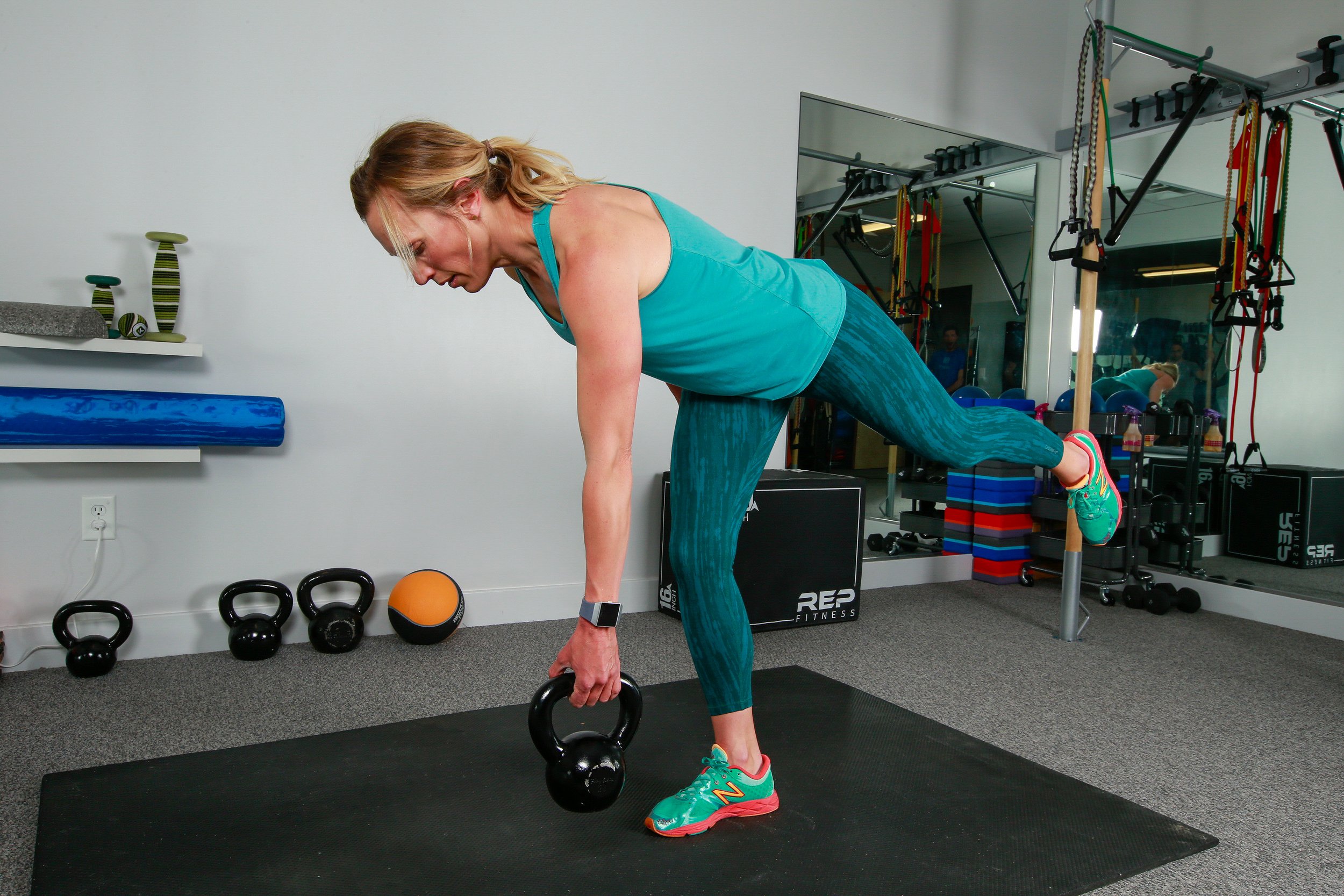
Strength training is an essential intervention we utilize in our Boulder Physical Therapy practice to rehabilitate all levels of running athletes. Previous research has shown significant benefits of strength training in runners on injury prevention, 50% less risk for future injury, and performance, primarily through improvements in running economy compared to their peers utilizing endurance training alone. Previous research has been conducted using moderate to heavy loads (75-85% of 1 repetition max) without detrimental effects to running performance or the often quoted but consistently disproven fear of weight trained runners increasing body mass.
The mechanisms behind these improvements in running performance, running economy, and running speed continued to be studied by researchers. In general these positive adaptations can be summarized into three main areas.
-
Muscle fiber type – strength training has been shown to prolong the time required before an athlete must recruit their fast twitch or type II muscle fibers. Thus becoming more efficient through longer utilization of their slow twitch or type I fibers. In addition, authors have found an improvement in the oxygen utilization and fatigue resistant subtype of type II fibers (Aagaard et al. Scan J Med Sci Sports. 2011).
-
Improvements in rate of force development – heavy strength training, especially eccentric focused strength training, consistently has been shown to improve the speed at which a muscle develops force. RFD is a critical component of sports performance and running economy allowing a runner to move more quickly through their running gait.
-
Improvements in tendon stiffness – strength training improves the elastic quality of our muscle’s tendons improving their ability to store and release energy. This mechanism reduces our muscle’s required effort during gait conserving valuable fuel and oxygen. For example, researchers have estimated runners would burn 1/3 more oxygen and fuel if they were without these evolutionary adaptation.
Click Here to learn which strength training exercises are best for your run training
Article Tags
Related Articles
Soreness Rules- How to Train, Recover, and Progress Without Setbacks
By: Erica Tran, PT, DPT, OCS If you’ve ever wondered “Is this soreness okay, or am I making things worse?”...
From Simulator to Fairway: A PT’s Guide to Transitioning from Indoor to Outdoor Golf
By: Hope Whitman, PT, DPT, OCS Indoor golf is one of the best tools we have for building swing mechanics,...
Knee Sleeves and Weight Belts: Help or Hype?
By: Ian Nay, PT, DPT, OCS There is a clear psychological component with both knee sleeves and belts. Athletes consistently...
How to Improve Running Mechanics: The Role of Big Toe Extension and FHL Dry Needling
By: Maggie Gebhardt, PT, DPT, OCS, FAAOMPT For runners in Boulder and Lafayette, efficiency is key. One overlooked factor in...
The New 2026 ACSM Guidelines Just Made Strength Training Easier: Here’s Why Colorado Women Should Care
By: Erica Tran, PT, DPT, OCS If you live in Colorado, being active is part of life. Hiking, skiing, trail...
Low Back Pain Treatment for Athletes in Boulder County: Fix the Root Cause, Not Just the Pain
By: Kristin Carpenter, PT, DPT, OCS, FAAOMPT Low back pain affects 60–80% of people at some point in their lives...
ACL Rehab After Surgery: How Dry Needling and NMES Help Restore Quadriceps Strength
By: Lucas Glomb, PT, DPT, OCS ACL reconstruction is a common surgery for athletes and active individuals, but one of...
The Top 4 Exercises For Bulletproof Shoulder In Climbers
By: Rani Helvey-Byers, PT, DPT, OCS As climbers, we like to torture our shoulders by placing them in extreme positions...