Manipulation, exercise, and taping are the three interventions physical therapists reach for first with sacroiliac (SI) joint pain. For years, though, the SI joint has been one of the most argued-about diagnoses in orthopedic PT. That changed somewhat in late 2025: a multispecialty consensus guideline endorsed by more than twenty medical societies, including the American Academy of Pain Medicine and the American Society of Regional Anesthesia and Pain Medicine, gave clinicians a shared framework for diagnosing and managing SI joint complex pain (McCormick et al., 2025).
The Research on Manipulation, Exercise, and Taping
Where does conservative PT fit into that framework? An earlier systematic review in the Journal of Physical Therapy Science looked at exactly that question. Al-Subahi and colleagues reviewed nine studies using manipulation, Kinesio taping, or exercise for SI joint dysfunction and compared outcomes on pain and disability (Al-Subahi et al., 2017). All three interventions reduced pain and improved function. Manipulation produced the largest and fastest gains, with measurable improvement in as little as three to four days in some of the included studies.
Why SI Joint Testing Is Harder Than It Looks
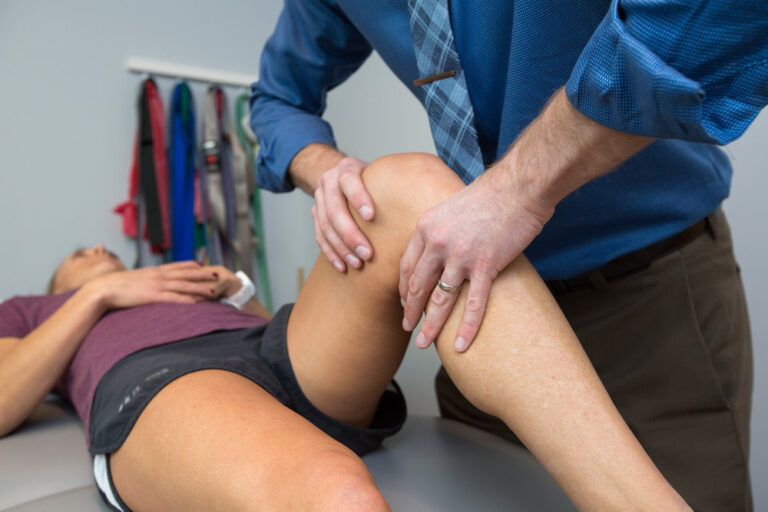
None of this means diagnosis is settled. Our own review of static and dynamic SI provocation tests found several of the individual tests clinicians use to identify it perform little better than chance on their own. What holds up better is clustering several provocation tests together rather than relying on any single one, which gives a much stronger read on whether the SI joint is actually the source of the pain.
Manipulation Works, Just Not for the Reason You’ve Heard
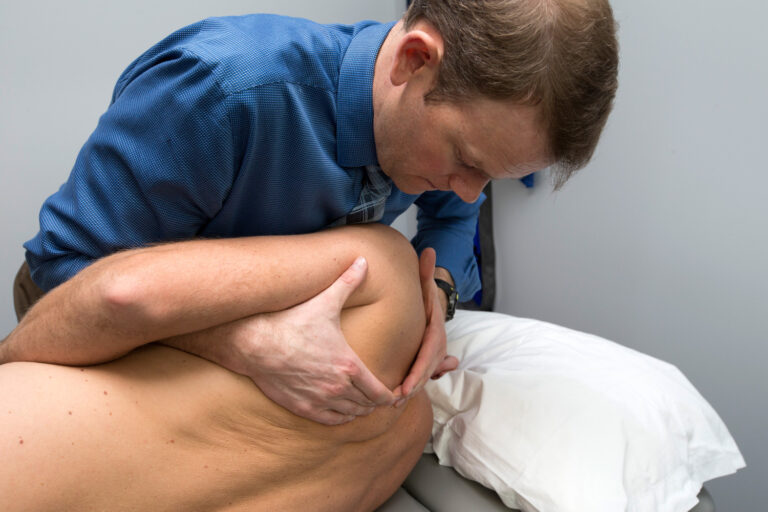
Once SI joint pain is confirmed, treatment doesn’t need to wait on a perfect explanation of mechanism. A classic imaging study found manipulation reduces pain and improves mobility without measurably shifting the position of the sacrum or ilium. The old explanation that manipulation works by putting the joint “back into place” doesn’t hold up, even though the treatment itself does. The more likely mechanism is a nervous system and soft tissue response, not a mechanical repositioning.
What This Means for Treatment
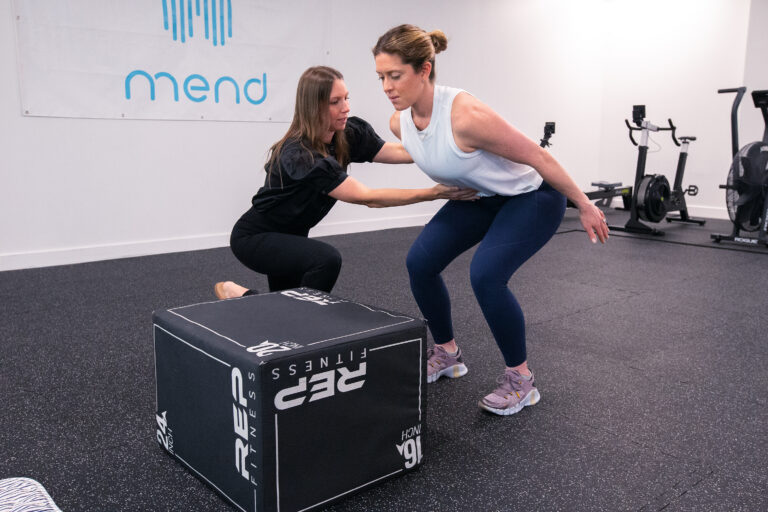
The practical takeaway holds up across all of it: a course of manual therapy and progressive exercise, delivered by someone trained in SI-specific testing, is a reasonable and well-supported first step before considering injections or surgery. That’s especially true given how often SI pain shows up during pregnancy, after a fall, or with repetitive one-sided loading, like an uneven training split or a job that keeps you standing on one leg. For a broader look at how SI pain typically presents and what a full course of treatment looks like, see our overview on SI pain and physical therapy treatment.
If you’re dealing with one-sided low back or buttock pain that hasn’t responded to a few weeks of general exercise, an SI-specific evaluation is the next step. Book an evaluation at Mend’s Boulder or Lafayette clinic.