
Blog

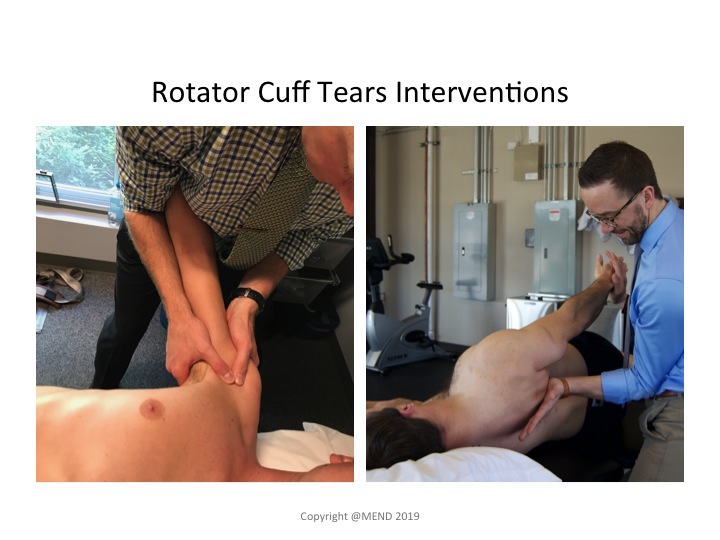
Rotator cuff tears are a common injury in middle to older aged adults. Tears can be gradual or degenerative in nature associated prior injury (tendinopathy) or acute and traumatic from a fall or sudden trauma to the shoulder. The severity of the injury including tear depth and size, as well as, the number of tears...
Very few evidence based treatments for musculoskeletal pain require the utilization of electricity. One notable exception is the utilization of muscular stimulation on post operative musculature. This category of treatments under the larger umbrella of modalities have not fared well in the research due to having little or no effect, their inability to beat a...

An important shift has taken place in medicine away from the old paternalistic model of care toward the development of the therapeutic alliance. Patients are now encouraged to engage and interact with their medical providers in order to find an optimal path forward. The alliance aims to incorporate patient values and expectations, the best available...

Shoulder pain remains one of the top 3 reasons patients seek care from their primary care physician and Physical Therapist. The most common diagnosis causing pain among these patients is subacromial impingement syndrome. Impingement can be found along with rotator cuff tendon pain (tendinopathy) or partial rotator cuff tears on clinical exam and imaging. Impingement...

Rotator cuff injuries span the spectrum from acute strains to chronic tendon pain (tendinopathy) and rotator cuff tears. Physical Therapy remains the gold standard, first line treatment for all rotator cuff injuries due to its’ cost and clinical effectiveness treating these disorders. A Physical Therapy first strategy has been reinforced by recent research demonstrating equivalent...

Our current understanding of posture has changed dramatically over the past 20 years due to the influx of scientific literature on posture and muscle and joint pain. Previously, posture was thought to be strongly associated with muscles imbalances including tightness or weakness. For example, forward shoulders were thought to be associated with shortened pectoral muscles....

Subacromial impingement syndrome is the most common cause of shoulder pain. These symptoms are easily treated with Physical Therapy interventions including manual therapy and exercise. Specifically, strengthening exercises for the shoulder blade and shoulder muscles improve both the quantity and quality of shoulder movements treating both the source of impingement pain and the underlying cause....