
By: Maggie Gebhardt, PT, DPT, OCS, FAAOMPT
One of the most remarkable and distinct characteristics of trigger points is referred pain. Elimination of trigger points being one of the intents of dry needling. When looking at the referred pain patterns of easily accessible muscles you will find that many of them can refer and mimic many pelvic floor pain complaints.
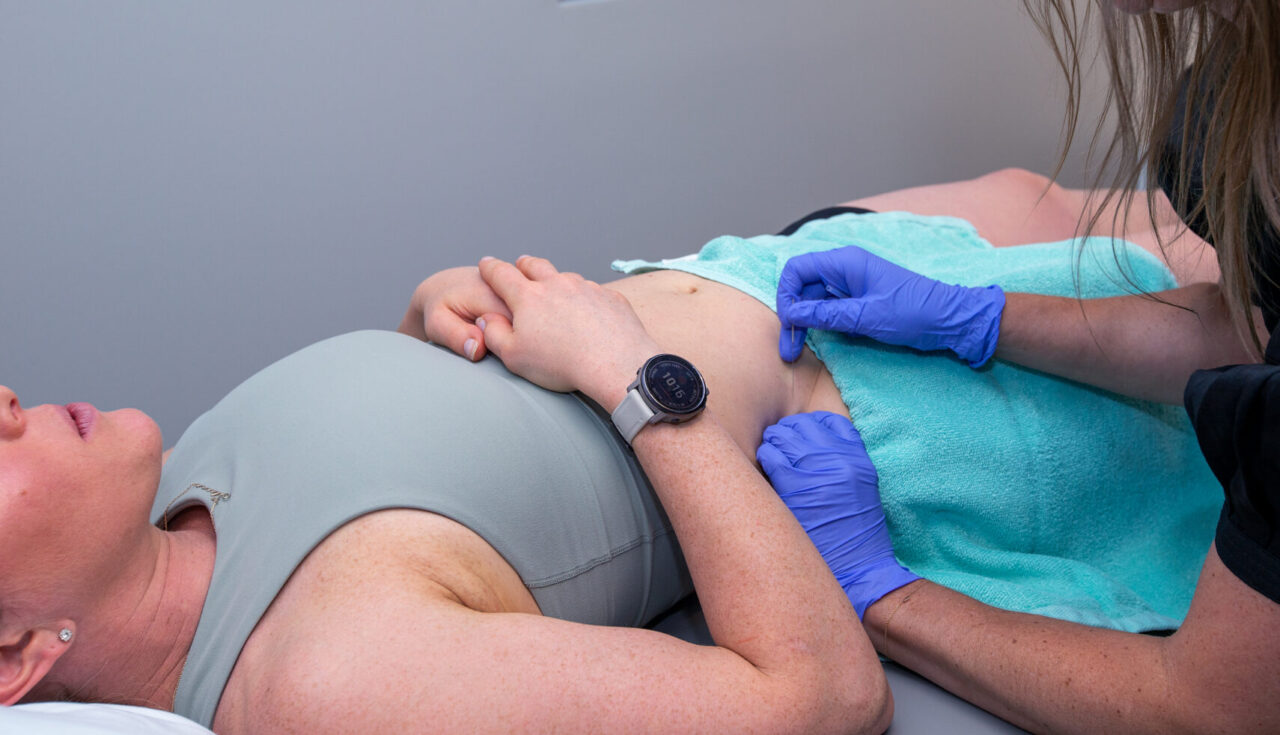
In 2004, John Jarrell, MD, MSc, published an article entitled Myofascial Pain in the Pelvis. This study is important in that it linked the presence of abdominal trigger points with chronic pelvic pain. The abdominal muscles are easily investigated and treated with dry needling by a Physical Therapist when applicable. Jarrell went on to further speculate that visceral disease and/or dysfunction may lead to the development of a “myofascial dysfunctional state.” All of this to say that it would be prudent to investigate the abdominal muscles in a patient a patient who may be coming to you with pelvic floor pain complaints and who also has a history of visceral disease.
In addition to the abdominal muscles, there are many other muscles that dry needling can positively impact. Some of the muscles with trigger point referral patterns that can refer in the region of the pelvic floor are: obturator internus, adductor magnus, quadratus lumborum, piriformis. When these muscles are investigated and found to have active trigger points, the treatment of them with dry needling can have a beneficial impact on the pain the patient may be experiencing in their respective areas of referred pain, in particular the pelvic floor.
Dry needling can be an incredibly powerful tool to be able to relieve someone of a pain that has usually persisted for an extended period of time and typically has been unresponsive to numerous interventions. Oftentimes, these patients are passed around from one practitioner to the next with very little resolution. Now, with just a thorough examination of muscles that are accessible to every physical therapist irrespective of training those patients have an opportunity to experience significant improvement in their pain as well as the ability to participate comfortably in their daily life.
Click Here to schedule your next appointment with the experts at MEND