
By: John Crawley, PT, DPT, OCS
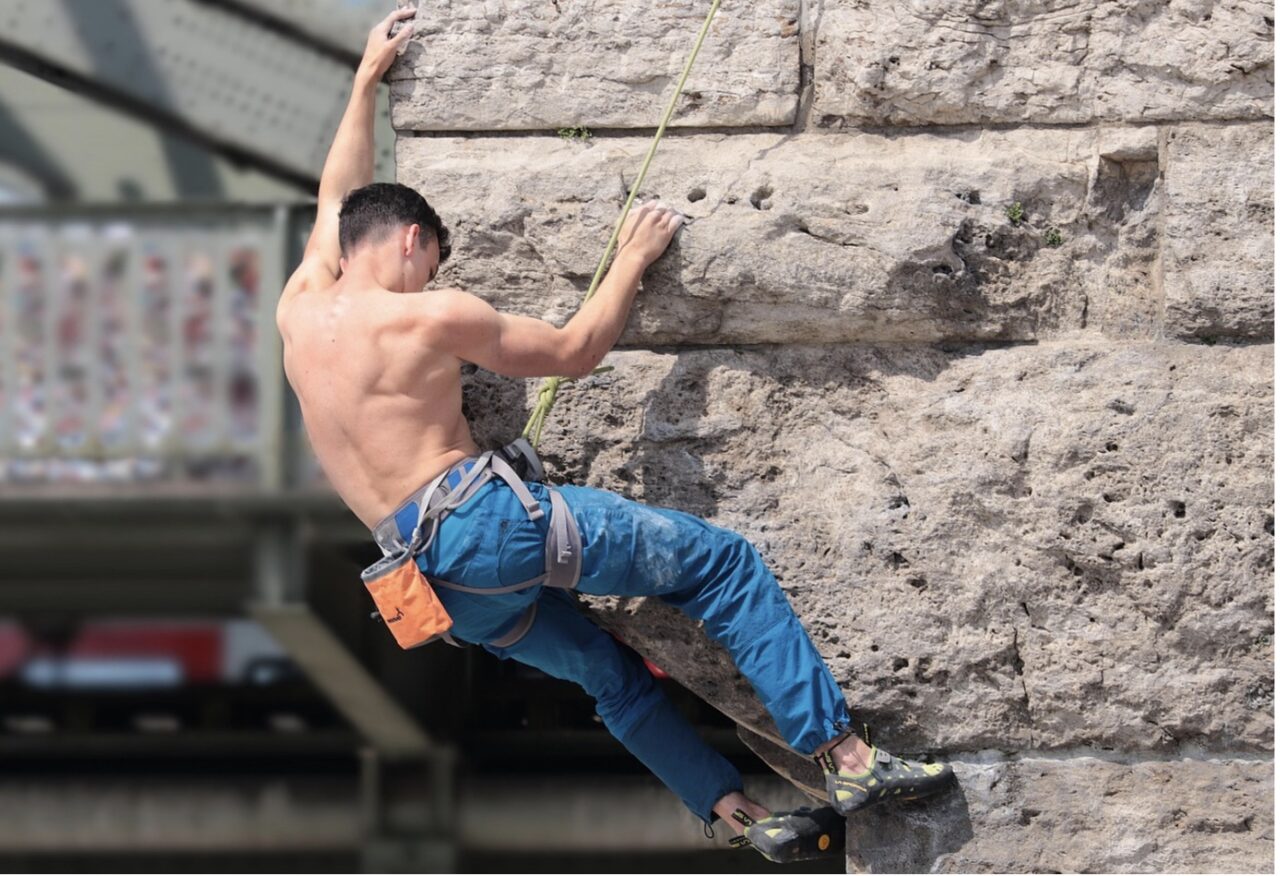
A good functioning shoulder is essential to a climber’s performance. When the shoulder is healthy, reaching for holds and holding strenuous positions feels secure. Whether you’re yarding on a deep lock-off at the gym, pressing out a corner in Eldo, or snatching holds during big deadpoints while in Rocky Mountain National Park, shoulders play an essential role in our ability to adapt the geometry of the rock we are ascending.
Sometimes, the forces generated during climbing movement leads to a “shift” or a feeling of “looseness” rather than a tear. This is acute shoulder instability. It’s that nagging sensation that your shoulder isn’t sitting quite right in the socket. The feeling of instability is affected by the connective tissue elements of the shoulder including the labrum and shoulder ligaments as well as by muscles of the shoulder such as the rotator cuff.
Recognizing “The Shift”: Symptoms of Instability
Acute instability occurs when the ligaments and the labrum are stretched or stressed, allowing the humeral head (the ball) to move excessively in the socket. For a climber, this often manifests as:
● The “Dead Arm” Sensation: A sudden, sharp pain followed by temporary weakness after a hard move.
● Apprehension: Avoiding specific positions—like a high Gaston or a wide compression move—because it feels like the joint might “slip.”
● Deep Aching: A dull ache deep in the joint that persists after a session on steep terrain. You might find it difficult to raise your arm up above shoulder height secondary to high levels of pain.
● A pinch: When moving your arm overhead or across your body there can be a pinch in the shoulder. The pinch area is variable.
The Healing Timeline: When Can I Climb Again?
Recovering from an instability episode requires patience to allow the ligaments to stiffen while we train the muscles to take over the load.
1. Phase 1: Protection (Days 1–10): Calm the joint down. No “testing” the shoulder.Focus on reducing inflammation. This often requires putting a pause on your climbing or at least lowering the intensity of your climbing by 60% or more.
2. Phase 2: Stabilization (Weeks 2–6): As the shoulder settles out after the initial injury, movement is reintroduced. During this time it is a good idea to work on shoulder stability, proprioception, and muscular endurance. Climbing is possible but it often has to be at a much lower intensity than prior to the injury.
3. Phase 3: Power & Integration (Weeks 6–12): At this [oint general strength training is introduced to build up the shoulders resiliency. In addition to strength training, climbing specific movement and loading conditions are reintroduced.
Early Exercises
The goal of climbing injury rehab is to rebuild confidence in your shoulder while reducing pain. Early rehab should focus on load management, circulation, optimizing your shoulders ability to keep the humerus and glenoid fossa well aligned.
1. Inverted Rows (stability and endurance)
An easy to complete pulling exercise. The exercise movement allows for quick adjustments in difficulty while providing an approximate pulling action of the shoulder that can be expected when climbing.
● Climbing Benefit: improves stability and shoulder endurance, good scapular and humeral muscular activation.
2. Body on Arm pulls (muscular coordination)
Builds back muscular timing and sequencing for climbing specific movement
● Climbing Benefit: a lower load means to reintroduce the shoulder to climbing specific demands.
3. Push up (stability and endurance)
A push up is easily modifiable and good at improving shoulder stability.
● Climbing Benefit: antagonist exercise to round out the shoulders function.
How to Modify Your Climbing Technique
Climbing with a shoulder injury can be tricky. The shoulder can have variable sensitivities and loading preferences depending on where the injury was sustained and how severe the injury is. However, there are elements of how we move on the wall that can be altered to decrease pain and improve participation.
● Shorten the Lever: Avoid wide, “spready” moves. Keep your hands closer to your centerline to reduce torque.
● Decrease the range: Often the extremes of range of motion are the most painful and will feel the most unstable. Reduce the overall range of the shoulder initially after injury to decrease the amount of stress on the injured tissues. Often the post painful positions are when the arm is all the way straight out to the side, pulled across your body, or all the way above the head.
● Static Over Dynamic: Focus on slow, intentional movement. If you can’t reach a hold under control, skip it for now.
● Change the angle: Just like with range of motion, changing this parameter is highly dependent on where you hurt your shoulder and how back. Some individuals will feel better on vertical terrain while others will feel better on steeper terrain .
Expert Climbing PT in Boulder, Colorado
Getting your rehab right can be a challenge. Having an expert to guide you through the process can help you to reduce the amount of guess work and optimize your return to climbing. At Mend we specialize in the management of climbers and their injuries. We don’t just tell you to “rest” or give you generic basic exercises. We help you to build a shoulder that is better than it was before the injury by building effective loading programs that include high value exercise and educating you on all of the essential information needed to crush your rehab.
Click Here to schedule your next appointment with the experts at MEND