Blog

Each day over one hundred Americans die from an opioid overdose. Over prescription and use of prescription pain relievers has largely contributed to these unnecessary deaths and the $78 billion dollar economic burden of the opioid epidemic. Authors estimate over 2 million Americans are currently suffering from a substance abuse disorder related to these prescriptions....

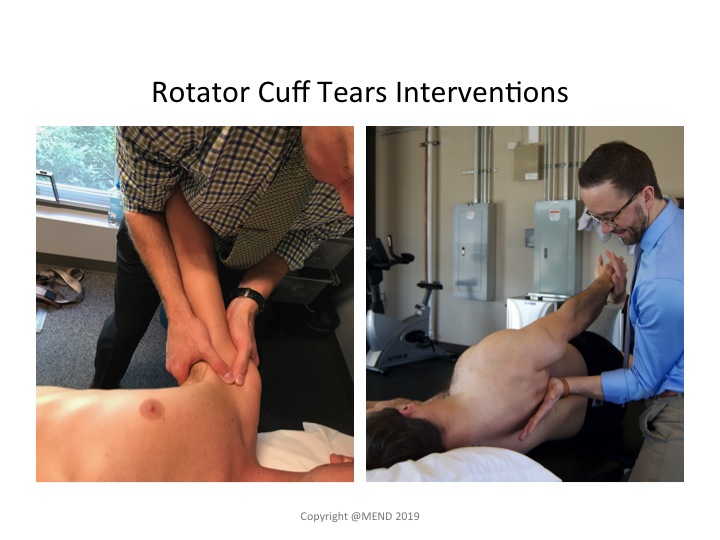
Previous research has found no significant difference at either 1 or 2 year follow up between Physical Therapy or surgery for rotator cuff tears.  One disproven argument you may still hear against the conservative care of these tears is they may worsen over time including larger tear sizes or further movement of the torn ends...

Subacromial impingement syndrome is the most common cause of shoulder pain. These symptoms are easily treated with Physical Therapy interventions including manual therapy and exercise. Specifically, strengthening exercises for the shoulder blade and shoulder muscles improve both the quantity and quality of shoulder movements treating both the source of impingement pain and the underlying cause....

In our previous blog post we described how few (16%) partial rotator cuff tears progress over time.  Understanding the non progressive nature of the injury allows patients an opportunity to explore non surgical options including Physical Therapy.  In this study they followed partial rotator cuff tears over time, but a more recent study followed patients...

Our current understanding of posture has changed dramatically over the past 20 years due to the influx of scientific literature on posture and muscle and joint pain. Previously, posture was thought to be strongly associated with muscles imbalances including tightness or weakness. For example, forward shoulders were thought to be associated with shortened pectoral muscles....

Shoulder pain remains one of the top 3 reasons patients seek care from their primary care physician and Physical Therapist. The most common diagnosis causing pain among these patients is subacromial impingement syndrome. Impingement can be found along with rotator cuff tendon pain (tendinopathy) or partial rotator cuff tears on clinical exam and imaging. Impingement...

Very few evidence based treatments for musculoskeletal pain require the utilization of electricity. One notable exception is the utilization of muscular stimulation on post operative musculature. This category of treatments under the larger umbrella of modalities have not fared well in the research due to having little or no effect, their inability to beat a...

Shoulder impingement is the most common cause of shoulder pain and is commonly treated with Physical Therapy interventions including upper body strengthening and manual therapy.  Dry needling is gaining traction in both clinical practice and the medical research as an effective treatment option for musculoskeletal pain.  When combined with other forms of manual therapy, including joint...