By: Rani Helvey-Byers, PT, DPT, OCS
As climbers, we like to torture our shoulders by placing them in extreme positions and then asking them to generate an immense amount of force in said positions. Because of this, we can’t just train our shoulders in one plane. If we want resilient shoulders, we need to at least train them through four foundational movement patterns:
-
Horizontal Push
-
Horizontal Pull
-
Vertical Push
-
Vertical Pull
Each exercise pattern stresses the shoulder differently and develops a unique set of stabilizers that protect the joint during the end ranges of motions that are critical for climbing.
Below are the top climber-specific strength training exercises for each category, plus why they matter for climbers.
1. Horizontal Push: Scapular Push-Up Progressions
Why this matters for climbers
Climbers often lack horizontal pushing strength because climbing is so pull-dominant. But horizontal push patterns are essential for anterior shoulder stability and healthy scapular mechanics.
Push-ups—especially when you add a plus at the top—strengthen:
- Serratus Anterior – causes scapular protraction and upward rotation, two movements of the shoulder blade that are crucial for keeping the shoulder centered during overhead movement.
- Anterior Deltoid and Pectorals – work together to provide anterior dynamic shoulder stability and reduce excessive reliance on the anterior structures of the shoulder during pushing movements like mantles and gastons.
-
Rotator Cuff – a group of small stabilizing muscles that work together to keep the humeral head centered in the socket during movement, especially when the arm is overhead or under load. This is critical for reducing the risk of a variety of shoulder issues when climbing.
Climbing Carryover
-
Better shoulder control and strength on mantles and slab presses
-
Reduced risk of shoulder impingement, biceps tendinopathy, rotator cuff issues, and more
-
Improved scapular endurance for longer climbs and sessions
Video:
2. Horizontal Pull: Bent over Rows or Ring Rows
Why this matters for climbers
Horizontal pulling builds the muscles that anchor the scapula to the rib cage. Without this strength, the shoulder becomes unstable—especially during techniques such as lock-offs.
This pattern targets:
-
Middle Traps and Rhomboids – work together to retract and stabilize the scapula on the rib cage, creating a solid base for the shoulder so the arm can generate force efficiently and safely without overtaxing the rotator cuff muscles or passive structures (ligaments, labrum, etc).
-
Posterior Deltoid – assists with shoulder extension and horizontal abduction, and—crucially for climbers—helps decelerate the arm and control the shoulder during dyno’s or strong pulling motions, thereby reducing strain on the rotator cuff and biceps tendon.
-
Rotator Cuff (as stabilizers, see above.)
Climbing carryover
-
Stronger, more controlled lock-offs
-
Better positioning during side pulls and underclings
-
Less neck and upper trap tension
Video:
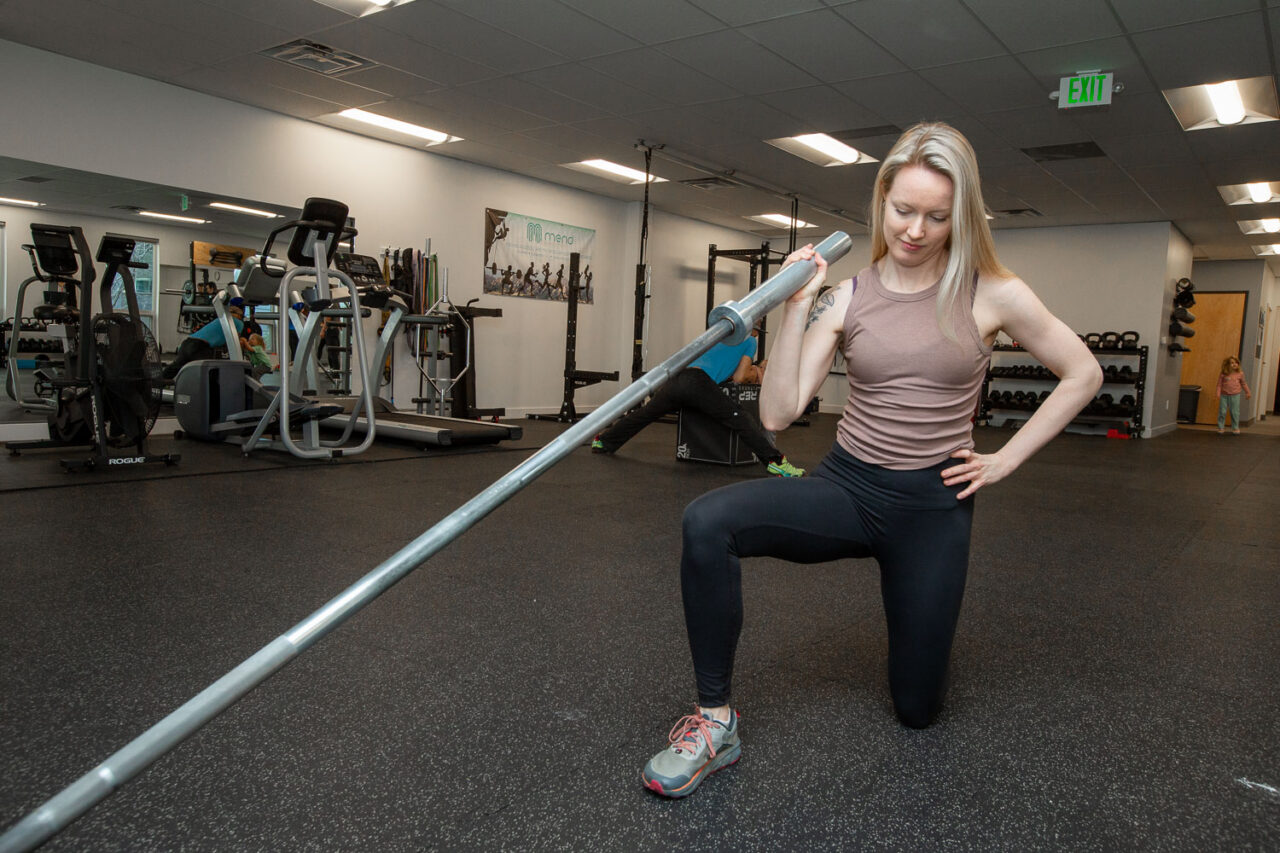
3. Vertical Push: Half-Kneeling Landmine Press or Dumbbell Overhead Press
Why this matters for climbers
Vertical pushing is essential for training overhead strength with scapular upward rotation—a position climbers live in. Most of the muscles active here are muscles we’ve already talked about, except now we’re asking them to activate under increasingly end-range positions.
Deltoids (especially anterior and lateral fibers): Helps drive and stabilize the shoulder as it moves into progressive flexion (overhead motion).
Upper And Lower Trapezius: Work together to coordinate scapular upward rotation so the shoulder blade provides a stable base to allow the arm to move.
Serratus anterior: See above, but now we’re asking this muscle to work under increasingly challenging positions.
Rotator cuff muscles: See above, but now we’re building strength and load tolerance in these muscles under increasingly challenging positions.
Climbing carryover
Stronger presses and gastons
Improved confidence reaching overhead from poor feet
Video:
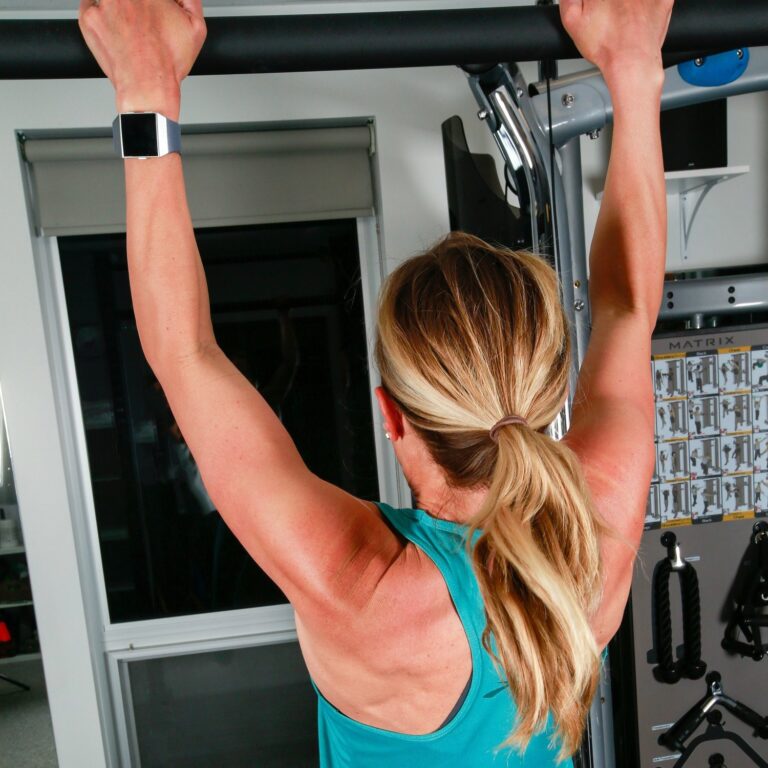
4. Vertical Pull: Scapular Pull-Ups / Pull Ups (Assisted or Not-Assisted)
Why this matters for climbers
This is kind of a no-brainer because we live here most of the time in climbing. We need to train how to engage the shoulder without relying on the passive structures, elbow or biceps—a critical skill for both performance and injury prevention.
They train:
-
Lower Trapezius – depresses and upwardly rotates the scapula, keeping the shoulder blade stable and properly positioned as the arm moves overhead. Strong lower traps reduce upper-trap dominance, support efficient overhead pulling, and protect the shoulder during long hangs, lock-offs, and dynamic reaches.
-
Latissimus Dorsi – A powerful shoulder extensor and adductor which also helps depress and stabilize the scapula. For climbers, strong lats are essential for efficient pulling, maintaining an active hang, and transferring force from the trunk to the arm.
-
Rotator Cuff – See Above
This is the foundation of a strong active hang.
Climbing carryover
-
Safer dynamic catches
-
Improved endurance on steep terrain
-
Reduced biceps and shoulder irritation
Video
Click Here To Schedule Your Next Appointment With The Experts At MEND