By Dr. Erica Tran, PT, DPT, OCS
Grip strength seems like a small thing: how hard can you squeeze a dynamometer? It’s actually one of the most predictive measures of overall health we have as physical therapists. It’s tied to bone density, cardiovascular health, fall risk, and mortality risk, and most people have no idea what a normal number looks like for their age.
Here’s what the research shows, and what to do with that information.
What Is Grip Strength, and Why Does It Matter?
Grip strength is the force your hand produces when squeezing, usually measured with a hand dynamometer, a tool that gives you a number in kilograms or pounds.
What makes it useful clinically is that it’s a fast, cheap proxy for whole-body strength and muscle health. Low grip strength is linked to higher fall risk, slower recovery from illness or surgery, and, particularly relevant for postmenopausal women, lower bone mineral density. Some researchers have proposed using it as a simple screening tool for osteoporosis risk.
Normal Grip Strength by Age: Women
| Age range | Average grip strength (dominant hand) |
|---|---|
| 20s | ~27 to 35 kg |
| 30s (peak) | ~29 to 36 kg |
| 40s | ~25 to 32 kg |
| 50s | ~22 to 30 kg |
| 60s | ~19 to 27 kg |
| 70s | ~16 to 24 kg |
Normal Grip Strength by Age: Men
Men follow the same general shape, a rise into the late 20s and 30s and then a gradual decline, with meaningfully higher absolute numbers at every age.
| Age range | Average grip strength (dominant hand) |
|---|---|
| 20s (peak) | ~45 to 55 kg |
| 30s | ~45 to 52 kg |
| 40s | ~40 to 48 kg |
| 50s | ~37 to 45 kg |
| 60s | ~33 to 40 kg |
| 70s | ~28 to 36 kg |
Both tables draw on Wang and colleagues’ 2018 normative reference study, which analyzed hand-grip data from 1,232 participants aged 18 to 85 as part of the NIH Toolbox project. It’s one of the most widely cited grip strength datasets for U.S. adults.
A note on these numbers: they’re reference ranges compiled from population studies, not hard clinical cutoffs. The exact figures shift depending on the dynamometer used, the testing protocol, and whether the dominant or non-dominant hand is measured. Use them as a general benchmark, not a pass-or-fail test.
The Pattern That Matters Most
Across both sexes, grip strength peaks around the third or fourth decade of life and then declines gradually. That decline isn’t inevitable in the way most people assume. It’s largely a use-it-or-lose-it story, and grip strength responds to training at any age.
This is where the data gets useful instead of just interesting: a below-average score for your age isn’t a life sentence. It’s information. It tells you where you stand and gives you a number to train toward. We see the same pattern in older adults working through general strength decline, which is worth a read if grip weakness and functional aging is the piece you’re actually trying to solve for.
Grip Strength, Cardiovascular Health, and Mortality Risk
This is the part most people don’t expect: grip strength isn’t just a marker of hand and forearm strength. It’s one of the strongest simple predictors we have of cardiovascular health and overall mortality risk.
A meta-analysis of 42 prospective cohort studies covering more than 3 million participants found that grip strength independently predicted all-cause mortality and cardiovascular disease risk in community-dwelling populations. For every 5 kg decrease in grip strength, cardiovascular disease risk increased by roughly 21 percent and all-cause mortality risk increased by roughly 16 percent.
The most striking finding comes from the Prospective Urban Rural Epidemiology (PURE) study, published in The Lancet in 2015. Researchers followed nearly 140,000 adults across 17 countries and found that grip strength predicted all-cause and cardiovascular mortality more strongly than systolic blood pressure, a measurement most people consider a standard, essential vital sign. Grip strength also predicted heart attack and stroke risk. A similar signal shows up in cognitive health: lower grip strength has been associated with higher dementia risk in a study following over 466,000 adults for nine years.
Why would squeezing a dynamometer predict something as serious as cardiovascular death? Researchers believe grip strength works as a proxy for overall muscle mass, quality, and function throughout the body, not just the hand. Weaker overall musculature is linked to lower physical activity levels, reduced metabolic health, and a body less resilient to physiological stress. Grip strength isn’t the cause of better cardiovascular outcomes. It’s a marker of a body that’s generally stronger, more active, and more resilient.
The practical takeaway isn’t that gripping harder protects your heart. It’s that grip strength is a fast, low-cost signal of your broader strength and health status, and building real strength across your whole body, which shows up in your grip too, is genuinely protective.
What to Do With Your Number
If you’re curious where you stand, a hand dynamometer test takes about two minutes. From there:
- If you’re in the average range for your age, grip work as general maintenance, folded into your regular strength training, is enough.
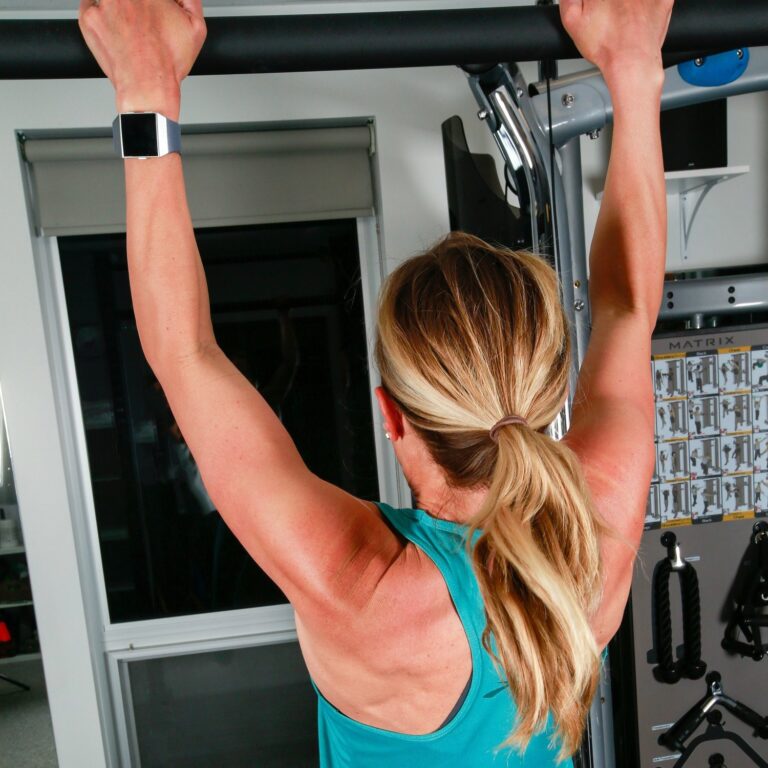
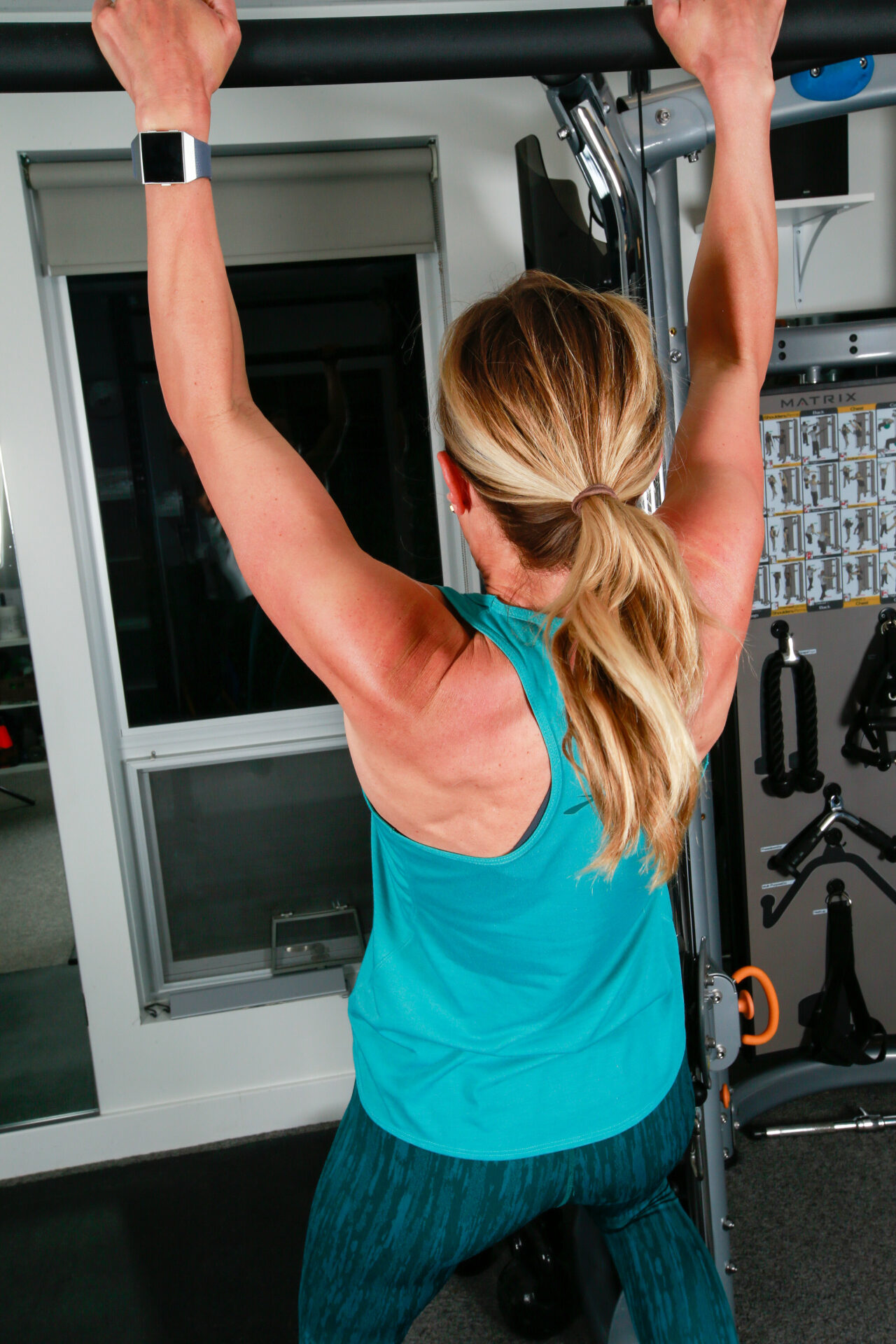
- If you’re below average, targeted grip and forearm work, like farmer’s carries, dead hangs, and thick grip training, can move the needle faster than most people expect.
This same logic applies to bone health. If you’re managing osteopenia or osteoporosis, the strength work that improves your grip score is often the same loading strategy we’d build into a broader strength training program.
Explore MPowered Training: Mend’s MPowered Training program is built on principles from the LIFTMOR randomized controlled trial, which found that supervised high-intensity resistance and impact training improved bone mineral density and physical function in postmenopausal women with low bone mass. If pelvic floor symptoms are part of your picture, pairing that strength work with pelvic floor-informed care matters. The same loading that builds bone puts real load through the pelvic floor, and coordinating the two keeps the program both safe and effective.
FAQs
Not by itself. It’s a signal worth paying attention to, especially alongside other risk factors like inactivity, recent falls, or a bone density diagnosis. It’s not a diagnosis on its own.
Yes. Grip strength responds to resistance training at any age, including in older adults. Farmer’s carries, dead hangs, and thick-grip tools all target it directly, and general strength training improves it as a side effect.
A hand dynamometer is the standard tool and the one used in the research behind these normative values. We use one during evaluations at Mend, but a rough sense of grip endurance (how long you can hang from a bar, for example) is a reasonable proxy if you don’t have access to one.
Consult with Mend Physical Therapy
Curious where your own grip strength stacks up, or want a plan built around your numbers? Book an appointment with Erica Tran at Mend’s Lafayette clinic, and we’ll figure out what your body actually needs, not just what the averages say.
References
- Wang YC, Bohannon RW, Li X, Sindhu B, Kapellusch J. Hand-Grip Strength: Normative Reference Values and Equations for Individuals 18 to 85 Years of Age Residing in the United States. J Orthop Sports Phys Ther. 2018;48(9):685-693. doi:10.2519/jospt.2018.7851
- Osei-Hyiaman D, Ueji M, Toyokawa S, et al. Influence of Grip Strength on Metacarpal Bone Mineral Density in Postmenopausal Japanese Women: A Cross-Sectional Study. Calcif Tissue Int. 1999;64(4):263-266. doi:10.1007/s002239900615
- Li S, et al. Low Grip Strength is a Strong Risk Factor of Osteoporosis in Postmenopausal Women. Orthop Surg. 2018. doi:10.1111/os.12360
- Sirola J, Tuppurainen M, Honkanen R, Jurvelin JS, Kröger H. Associations Between Grip Strength Change and Axial Postmenopausal Bone Loss: A 10-Year Population-Based Follow-Up Study. Osteoporos Int. 2005;16(12):1841-1848. doi:10.1007/s00198-005-1944-y
- Leong DP, Teo KK, Rangarajan S, et al. Prognostic Value of Grip Strength: Findings from the Prospective Urban Rural Epidemiology (PURE) Study. Lancet. 2015;386(9990):266-273. doi:10.1016/S0140-6736(14)62000-6
- Wu Y, Wang W, Liu T, Zhang D. Association of Grip Strength With Risk of All-Cause Mortality, Cardiovascular Diseases, and Cancer in Community-Dwelling Populations: A Meta-analysis of Prospective Cohort Studies. J Am Med Dir Assoc. 2017;18(6):551.e17-551.e35. doi:10.1016/j.jamda.2017.03.011
- Watson SL, Weeks BK, Weis LJ, Harding AT, Horan SA, Beck BR. High-Intensity Resistance and Impact Training Improves Bone Mineral Density and Physical Function in Postmenopausal Women With Osteopenia and Osteoporosis: The LIFTMOR Randomized Controlled Trial. J Bone Miner Res. 2018;33(2):211-220. doi:10.1002/jbmr.3284
These are peer-reviewed studies published in indexed medical journals. Full citations and abstracts are available via PubMed for anyone who wants to read the primary research.