By: Rani Helvey-Byers, PT, DPT, OCS
The shoulder is the second most commonly injured site in Brazilian Jiu-Jitsu.1 If you train regularly, there’s a good chance you’ve dealt with shoulder pain at some point. The higher rate of injury in the shoulder stems from its being an incredibly mobile joint – a fact that makes it vulnerable when pushed into extreme positions. And – let’s face it – BJJ is the poster child for extreme positions.
The good news is that shoulder injuries don’t have to completely ambush your progress. In fact, most of them are easily treatable, especially when addressed early. The key is not to ignore your shoulder pain when it crops up.
Let’s break down why they happen and what you can do about them.
The Shoulder Is the Most Vulnerable Joint in Jiu-Jitsu
Our shoulders are designed for mobility, not stability. Think of the shoulder joint as akin to a golf ball sitting on a tee. The humeral head (golf ball) sits in an incredibly shallow socket (tee). This allows it to move freely. However, it has to rely heavily on muscles and soft tissues to keep it stabilized. Without the control provided by structures such as the rotator cuff, labrum, glenohumeral ligaments, and more, the shoulder becomes incredibly unstable.
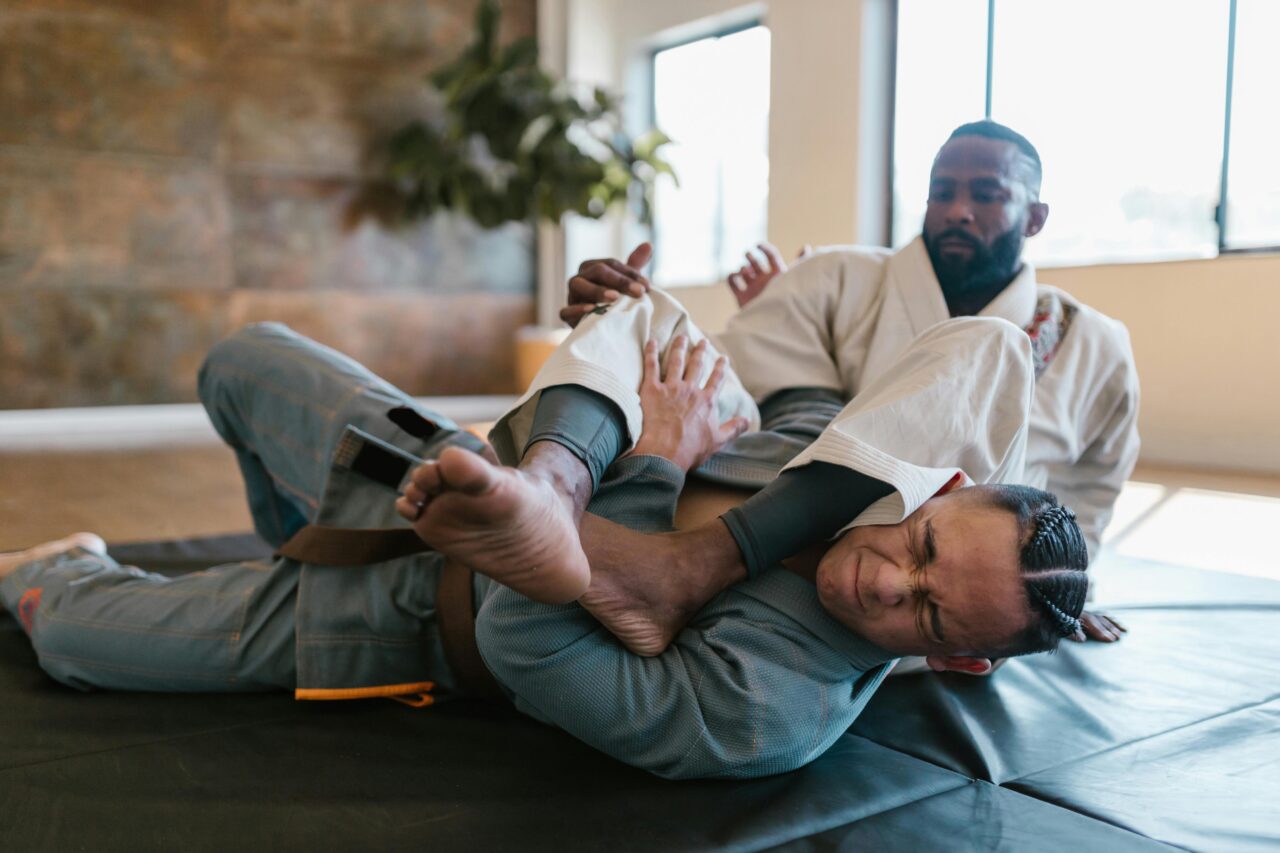
During Brazilian Jiu-Jitsu, not only is it frequently forced into extreme ranges of motion, but these end ranges are placed under significant load. Positions like kimuras, americanas, armbars, and posts place large rotational forces on the joint. Sometimes this causes acute injuries such as dislocations or rotator cuff tears. However, injury can also be much more gradual. Over time, the repeated forceful movements into end ranges of motion can lead to irritation of the soft tissue structures.
Common shoulder issues in grapplers include:
rotator cuff strain, tears, or tendinopathies
labral irritation or tearing
AC joint irritation or sprains
shoulder subluxations, dislocations or chronic instability
These injuries often start gradually before becoming painful enough to affect training.
The Most Common Ways Shoulders Get Injured in BJJ (And How To Mitigate that Risk)
Kimuras and Americanas
These submissions apply rotational force to the shoulder. If you resist too long before tapping, the stress can strain the rotator cuff or injure the labrum. Even defending these positions repeatedly during training can lead to irritation over time. Be sure to warm up your shoulders with gentle mobility and light muscular activation drills prior to training. You should not wait until pain begins to tap.
Posting During Scrambles
Posting with your arm during a takedown or scramble can place a large, unexpected force through the shoulder joint. This is especially problematic If the arm is locked out or out to the side as the joint can become overloaded quickly. When possible, keeping a slight bend in your elbow and staying close to your body when you post, will allow the shoulder muscles to more effectively absorb the force instead of the joint taking the load.
Framing From Bottom Positions
Frames are essential for guard retention and escaping side control, but they also put significant stress through the shoulder. If the shoulder stabilizers are fatigued or weak, the joint may start to feel painful when applying pressure through your frame. To mitigate this risk, ensure you are appropriately strengthening your shoulder muscles outside of class, and avoiding rolling when over-fatigued.
Overuse From Training Volume
I get it, BJJ is kind of an obsession for a lot of us. Many grapplers train multiple days per week (if not multiple classes a day) with very little recovery. Over time, repetitive pulling, gripping, and pushing can overload the shoulder muscles and lead to irritation. Finding the right training schedule that allows you to train this amazing sport while also respecting your body’s need to recover is going to be critical.
Signs Your Shoulder Is Getting Irritated
Early shoulder injuries often feel subtle at first. Common warning signs include:
pain when reaching overhead
discomfort during frames or posting
weakness when pushing or pulling
soreness deep in the shoulder after training
pain when sleeping on that side
These symptoms are often the body’s early signal that the shoulder is getting overloaded. Ignoring them and continuing to train through pain can lead to more significant injuries.
When You Can Keep Training (With Modifications)
In many cases, shoulder pain does not mean you need to stop training completely (phew). You may be able to continue training if:
pain is dull/achy and stays below about 3/10 during, directly after, or the next day after training
symptoms improve after warming up
pain does not worsen through time
Simple modifications might include:
tapping earlier during shoulder locks
avoiding heavy posting on that arm
reducing training intensity, frequency, and/or duration temporarily to provide more opportunity for recovery
If you’re feeling pain, it’s a good idea to get evaluated before symptoms worsen. The sooner you can get your shoulder treated, the faster you can stop it from progressing or becoming chronic.
When You Should See a Physical Therapist
Consider getting your shoulder assessed if you notice:
sharp pain during training
pain >3/10
pain that progresses during a training session
shoulder instability or “slipping”
weakness lifting your arm
persistent pain lasting more than 1–2 weeks
pain that interferes with sleep, daily activities, or functional/sports activities
The Bottom Line
Shoulder pain is extremely common in Brazilian Jiu-Jitsu, but most cases improve quickly when addressed early and do not need to take an extended amount of time off from training.
If your shoulder pain is lingering or affecting your training, working with a physical therapist who understands grappling can help you recover faster and reduce the risk of future injury.
References:
Stegerhoek PM, Brajovic B, Kuijer P, Mehrab M. Injury prevalence among Brazilian Jiu-Jitsu practitioners globally: a cross-sectional study in 881 participants. BMJ Open Sport Exerc Med. 2025;11(1). doi:10.1136/bmjsem-2024-002322